Visiting Argentina without trying an asado would be like visiting Paris without seeing the Eiffel Tower, or London without a glimpse of Big Ben. Argentina is famous the world over for the quality of its beef, and Argentines enjoy it enormously at home, in restaurants, out on the street, and pretty much anywhere a grill can be set up.
An asado bears little resemblance to the typical barbecue found elsewhere in the world. Asados are a cornerstone of Argentine cuisine and, above all, a way of bringing people together. Families gather every Sunday to share one, and the whole day tends to revolve around it. If you get the chance to take part in this ritual with Argentines, it won't disappoint.
And if this is your first trip to Argentina, or you're only staying a short while, there are plenty of other ways to experience an asado. In this article, you'll find everything you need to know to make the most of this slice of Argentine culture. We also recommend food tours that include visits to some of the best steakhouses in Buenos Aires.
From the Gauchos to a National Symbol: The Origins of Asado
Asado wasn't born on a city grill, but out on the pampas. Around the 18th century, the cattle brought over by Spanish colonizers had multiplied and roamed almost freely across the plains. Gauchos, the horsemen who worked with this livestock, began cooking it directly over the embers, seasoned with nothing more than fire and salt. There were no ovens or elaborate tools involved: just a knife, plenty of meat, and an open flame.
Over time, this style of cooking made its way from the countryside into the city. Asado started catching on in Buenos Aires in the early 20th century, alongside the arrival of meatpacking plants and better ways of preserving and transporting beef. By the mid-20th century, having a grill at home had become the norm.
Today, Argentina's beef consumption is estimated at around 50 kilos per person per year. That's noticeably lower than the roughly 100 kilos consumed back in the late 1950s, but it still ranks among the highest in the world.
So when you sit down for an asado in Argentina, you're not just eating grilled meat: you're taking part in a ritual with over two centuries of history, one that remains the go-to plan for any Sunday family gathering.
What Cuts of Meat Are Served at a Traditional Asado
An asado begins when the "asador," the person in charge of the grill, loads it up with charcoal or wood. Once the embers are glowing red, they're spread out beneath the grill. When the grill has reached the right temperature, the asador lays out the meat to cook slowly, quickly, or at both speeds at once, depending on which cuts have been chosen.
If you notice the asador's seat at the table is empty, don't worry: their job is to keep moving back and forth, keeping an eye on the food.

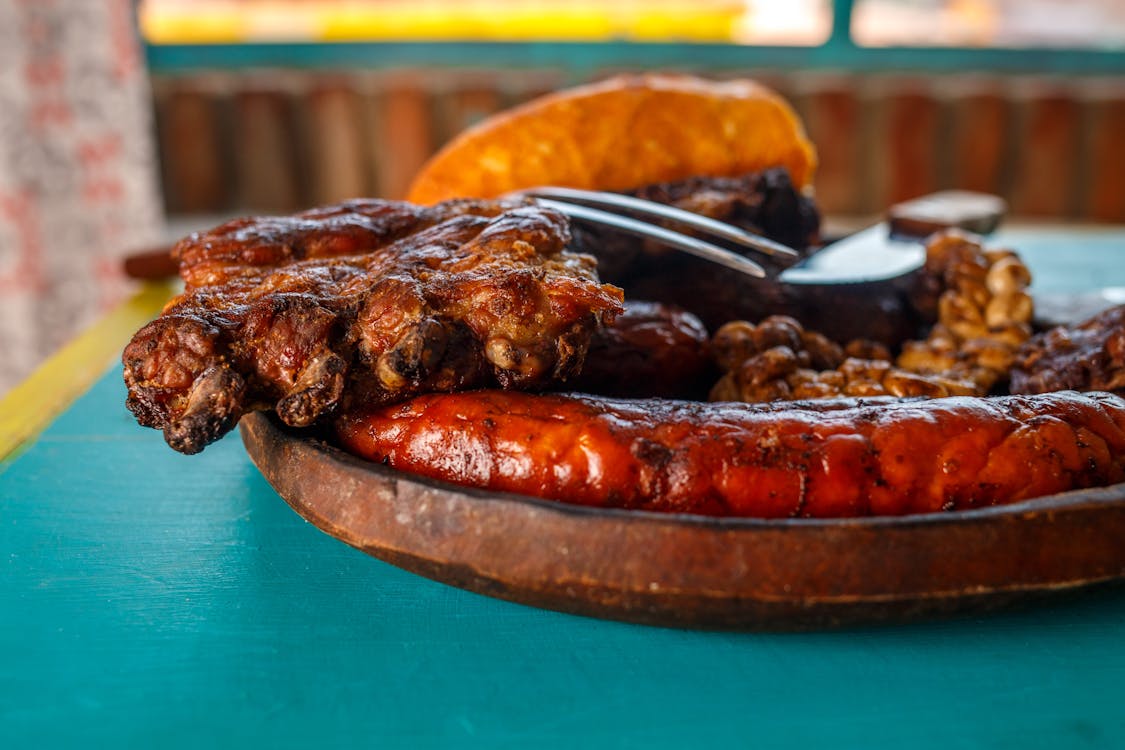
Argentines aren't shy about eating more than 500 grams of meat per person at an asado, and whatever's left over usually gets finished off the next day. But first come the starters: morcilla (blood sausage) and chorizo served in bread, sweetbreads (mollejas), and often provoleta cheese. It's all incredibly tempting, and you'll want to dig in, but pace yourself, you'll need room for everything still to come!
Once the meat is ready, the asador brings it out on a wooden board, where it gets carved and shared among the guests. The most common cuts served at an asado include:
Tira de asado: short ribs, cut crosswise through the bone.
Bife de chorizo: a juicy cut from the rear of the animal, quite similar to a sirloin steak.
Entraña: the cow's diaphragm, thin and packed with flavor, known in English as skirt steak.
Vacío: a flat, wide, and very juicy cut, ideal for sharing.
Not everything reaches the table at once: the asador serves the cuts in batches as they finish cooking. Grilled vegetables usually make an appearance too, cooked right over the embers. Bread also comes to the table after being warmed over the fire, a great way to soak up all those juices you won't want to leave behind on the plate!
And no asado is complete without its condiments: chimichurri, a blend of herbs, oil, and vinegar, and salsa criolla, another popular mix of tomatoes, peppers, onion, oil, and vinegar. Both pair perfectly with the meat.

Of course, when you're eating like this, you need something to drink, right? In Argentina, pairing great wine with great beef is never a challenge, after all, the country is world-famous for both. A bottle of Malbec from Mendoza is the perfect companion to an asado.
If the idea of wine pairing has you hooked and you'd like to go a bit further, take a look at our catalog of wine tours in Buenos Aires.
How to Order Your Meat at an Asado: Levels of Doneness
If you're invited to an asado or order meat at a parrilla, chances are you'll be asked how you'd like it cooked. In Argentina, there are generally three levels of doneness:
Jugosa (juicy): browned on the outside, nicely pink on the inside, and quite juicy. This is the most popular choice among Argentines, though some foreign visitors might find it a bit too rare for their taste.
A punto (medium): slightly more cooked than "jugosa," with a drier interior that still shows some pinkish juices.
Bien cocida (well done): no trace of pink, a browner color, and a drier, firmer texture.
None of these is "the right one": it simply comes down to personal taste. If you're not sure, ordering it "a punto" is a safe middle ground to start with.
Where to Enjoy a Great Asado in Buenos Aires
The ideal way to experience a true Argentine asado is to be invited by a local. But if that particular stroke of luck hasn't come your way, the next best option is a parrilla, as steakhouses specializing in asado are called here. Buenos Aires is home to hundreds of outstanding parrillas for every budget, from choripán stands near the football stadiums to high-end restaurants.
One of the names you'll hear most often is Don Julio, in Palermo, which in recent years has landed among the world's best restaurants according to the 50 Best awards. Another must-visit is La Cabrera, also in Palermo, known for its generous portions and side dishes. And La Brigada, in San Telmo, offers a more traditional, historic option that has been open since 1992.
None of these places tend to have tables available without a reservation, so if you've got one in mind, it's worth booking several weeks ahead.
If you'd rather have the whole experience organized for you, the best bet is to try an Argentine asado with the Parrilla Tour. Another option is the Asado Argentino with Locals experience in Buenos Aires, which opens the doors of a local home so you can enjoy an asado the way it's meant to be, in someone's house.
And if, on top of eating well, you want to experience the more gaucho side of the tradition, Estancia Santa Susana offers a full day in the countryside with a show and an asado cooked in the traditional style.

How long does an asado last?
Quite a bit longer than a regular meal: a Sunday asado can start around midday and stretch into the late afternoon. It's not meant to be eaten quickly, but shared unhurriedly.
Can you have an asado without being invited to someone's home?
Yes. The simplest way is to head to a parrilla, where you can try the same cuts and enjoy much of the same ritual, minus the family gathering afterward. You can also join a food tour or a countryside experience that includes asado.
Does asado always come with wine?
It's not mandatory, but it is the most common pairing: red wine, especially Malbec, is the classic companion.
Are there options for people who don't eat meat?
At a parrilla, you'll almost always find grilled vegetables and some kind of salad option, though it's not really the restaurant's specialty. If you're traveling with someone vegetarian, it's worth calling ahead or choosing a restaurant with a more varied menu.