As one of South America's top tourist destinations, Iguazu Falls welcomes visitors all year round. Generally speaking, you can enjoy this natural spectacle in any month, but some periods are more favorable than others depending on the climate and tourist season. On that last point, if you're after quieter times, I'd recommend avoiding Easter week (April 10–16), winter break (the second and third weeks of July), and the summer season (December to March).
As for the climate, you can check temperatures throughout the year and read our article, where I'll help you plan the best travel dates with all the information on when to visit Iguazu with the best tours.
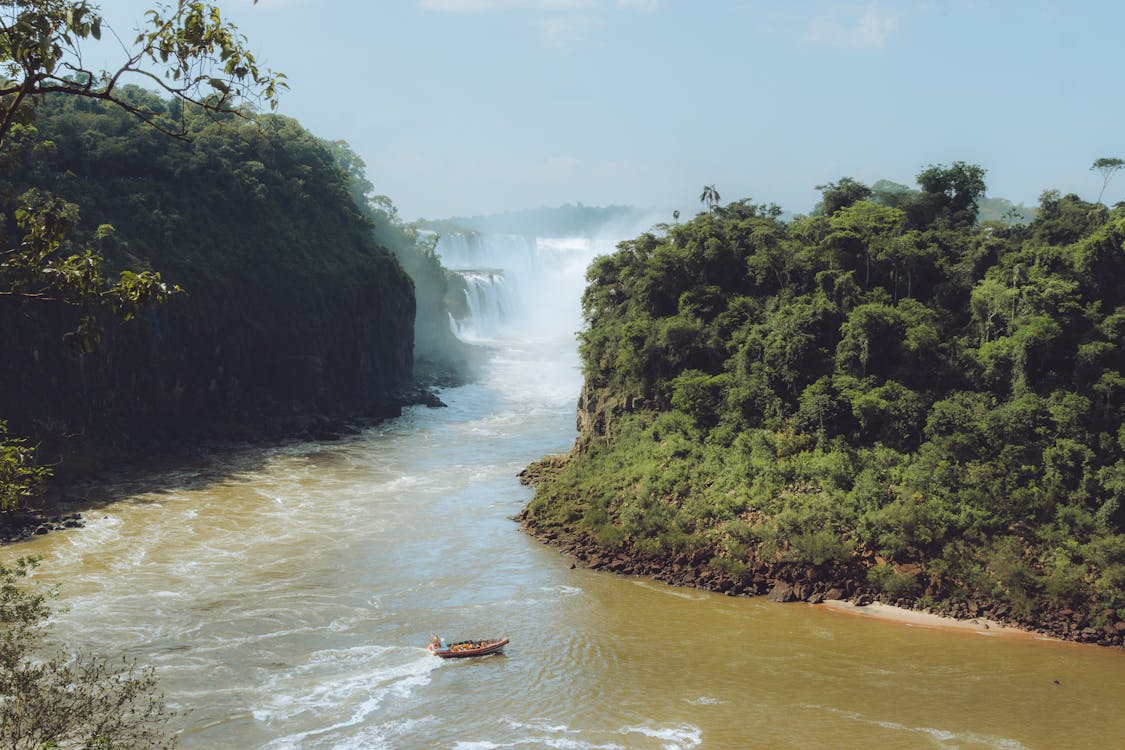
When to travel to Iguazu: a season-by-season summary
- Summer (December to March): temperatures up to 33°C, very high water flow due to rain, and the biggest crowds of tourists. It's also peak season, with higher prices for hotels and flights.
- Autumn (March to June): temperatures between 13°C and 30°C, less rain and a strong water flow. Many travel guides consider this the best time of year to visit the Falls.
- Winter (June to August): cool temperatures (averaging 15°C), the driest month of the year, and the lowest tourist numbers — except during the July school holidays.
- Spring (September to November): temperatures between 25°C and 30°C, the jungle in bloom, and a good balance between water flow, weather, and crowd size.
- Key tip: if you're after the best balance between water flow, pleasant weather, and fewer tourists, April and the months of September–October tend to be the most recommended dates.
Iguazu's climate in summer
In summer (December to March), temperatures can feel scorching (average highs of 33°C) for anyone not used to heat and humidity. It's a good idea to drink plenty of water to stay hydrated, use sunscreen and a hat since the sun is very strong this time of year, and pack mosquito repellent too, since the heat and humidity keep them quite active.
While rainfall is fairly evenly spread throughout the year, there's more precipitation during the spring–summer period, so I recommend always keeping a rain jacket on hand — the rain usually doesn't last long, but it can be intense.
It's worth keeping in mind that the flow of the Iguazu River varies a lot by season: in winter it usually ranges between 1,200 and 1,800 cubic meters per second, while during the rainy-season floods it can far exceed that figure. When this happens, the park may temporarily close the Devil's Throat walkway for safety reasons, so if you're traveling during a period of heavy rain, it's worth checking the trail status the day before your visit.
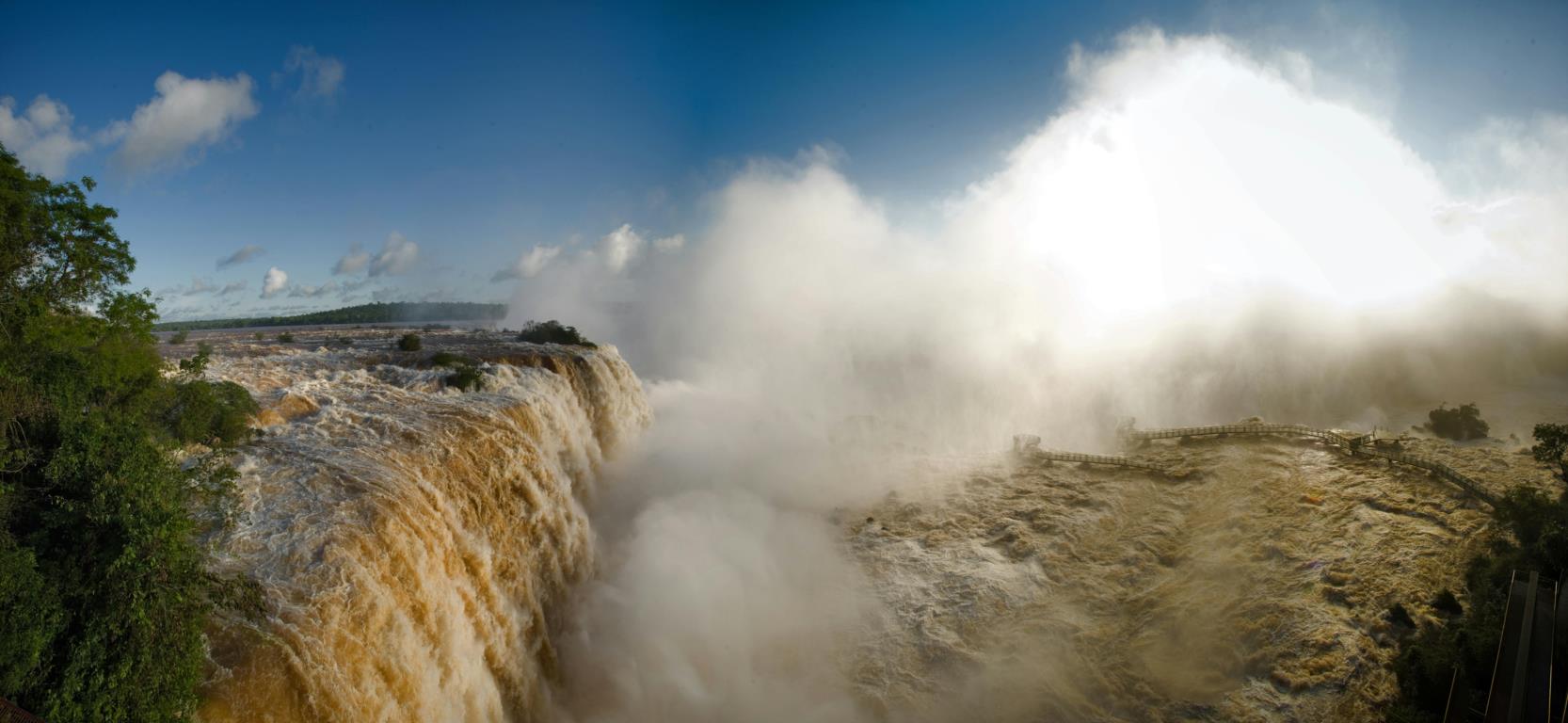
Summer days are longer: sunrise starts around 6 am and it gets dark around 10 pm. It's a great time to fully enjoy Iguazu Falls, cool off in the streams, and go hiking through the parks to take in the wildlife and vegetation. In summer, the yellow lapacho and the ibirá pytá are in full bloom, while the ceibo stands out in the jungle with its orange-red flowers. Other species you'll be able to spot include the palo rosa, laurels, and guatambú.
As for Iguazú wildlife, along the trails and around the falls you may come across agoutis, guinea pigs (cuises), brocket deer, crab-eating foxes, tegu lizards, and jaguars. In the water, you might spot a caiman, the anhinga (or neotropic cormorant), and water turtles, along with plenty of fish. Summer is also when a huge number of bird species can be seen, including eagles, parrots, macaws, and toucans. Butterflies abound too, in a wide range of colors and sizes.
Iguazu's climate in autumn
Autumn (March to June) is considered the best time to travel to Iguazu, since rainfall decreases and temperatures become more pleasant and moderate. Highs hover around 30°C and lows around 13°C. Another point in its favor: once the rainy season winds down, the water level at the falls is spectacular, turning it into an incredible natural show.
This is the time of year when the parks and jungle turn shades of gold and ochre. For those who enjoy wildlife spotting, autumn is when you'll see the most animals, birds, and insects along the trails, in the trees, and near the falls. The shifting colors of the local vegetation, the sounds of the jungle, the coolness coming off the falls, and the scent of the orchids are some of the standout experiences you can have in Iguazu during the low season.
During autumn, you can watch the vegetation of Iguazu National Park (vines, ferns, grasses, and shrubs) shift into brown and reddish tones. The "Niño Azoté" or "Barba de Chivo" — a small ornamental tree with feathery foliage — shows off its pink and white flowers. Another beautiful sight this time of year comes from large trees like the Cupay or the Cedro, which can grow over 30 meters tall; you'll notice the dark brown color of their fruit. This season also brings out the greenish tones in the streams and waterfalls.
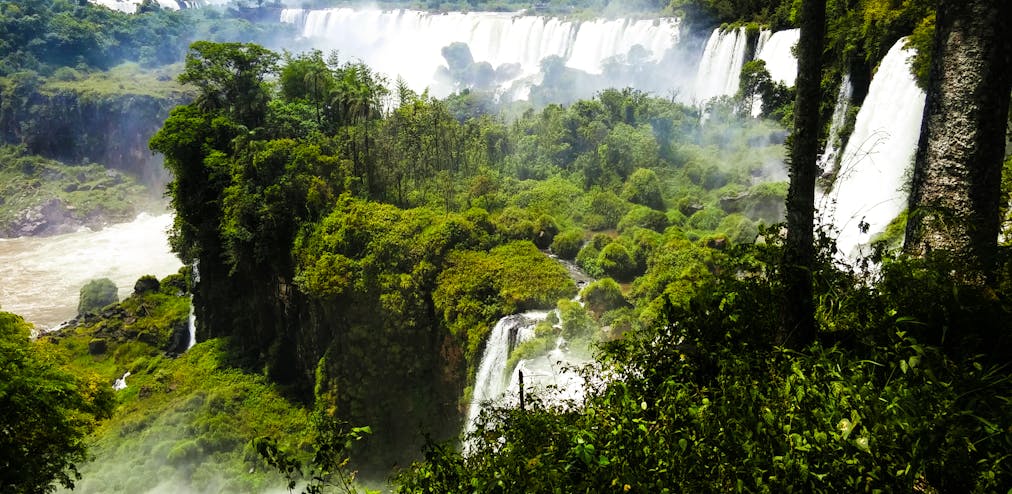
As for the weather, mornings and afternoons tend to be warmer, while temperatures drop a few degrees at night. So it's worth traveling with a light jacket to handle the temperature shift. This is an ideal time for anyone who wants to enjoy long walks and excursions, since the absence of intense heat and humidity makes everything more comfortable. That said, don't forget your mosquito repellent — they're around all year long.
If you're staying several days, keep in mind that the Argentine side of the park is larger and takes more time to explore, while crossing over to the Brazilian side (Foz do Iguaçu) lets you enjoy a panoramic view of the Falls. The border-crossing process is simple: you just need a valid passport or national ID, and many agencies offer combined tours covering both countries.
Iguazu's climate in winter
Iguazu's climate is subtropical and humid year-round, typical of the jungle, but it's worth noting that during the winter months (June to August) there can be cool days (average temperatures of 15°C), so it's a good idea to pack some warm clothing. The coldest month, and also the driest of the year, is July, with an average temperature of 16°C, highs of 25°C, and lows of 10°C. This shows that even in Iguazu's coldest month, temperatures never really drop that low. So you don't need overly heavy clothing during the day, though it's a good idea to bring a sweater and a jacket for the evening, when temperatures tend to dip.
The advantage of traveling in winter is that it's the driest time of year. Low rainfall means much lower humidity, ideal conditions for hikes and outdoor excursions. One thing to note: if you travel in August, it's warmer than June and July, and it's a great pick for anyone hoping to find fewer tourists, since after the July winter break in Iguazu, the number of travelers drops off.
Every season has its charm, and August stands out as the point where winter ends and spring begins — an ideal time to appreciate the jungle vegetation, as the first flowers and the beautiful colors that will lead into September's spring start to appear. A great example is the black lapacho, which, in late winter, before shedding its leaves, covers itself entirely in pink blossoms, adding beauty to the whole landscape.
Iguazu's climate in spring
During the spring months (September to November), temperatures start climbing compared to winter, settling between 25°C and 30°C. This is when humidity starts to become more noticeable, leading to lusher vegetation in the parks and reserves.
As temperatures rise, the days grow longer, afternoons get warmer, and while nights still hold onto some warmth, the humidity starts to make itself felt. In October, days start turning warmer and rainfall increases, so I always recommend bringing a rain jacket, since activities continue despite the rain.
In short, spring is another great time to travel to Iguazu, since you'll be able to enjoy all the activities on offer, like hikes, horseback rides, city tours, and the various boat excursions. Wherever you go, don't forget your camera! This is when nature's colors intensify, flowers burst into bloom everywhere, and butterflies and birds start fluttering through the air.
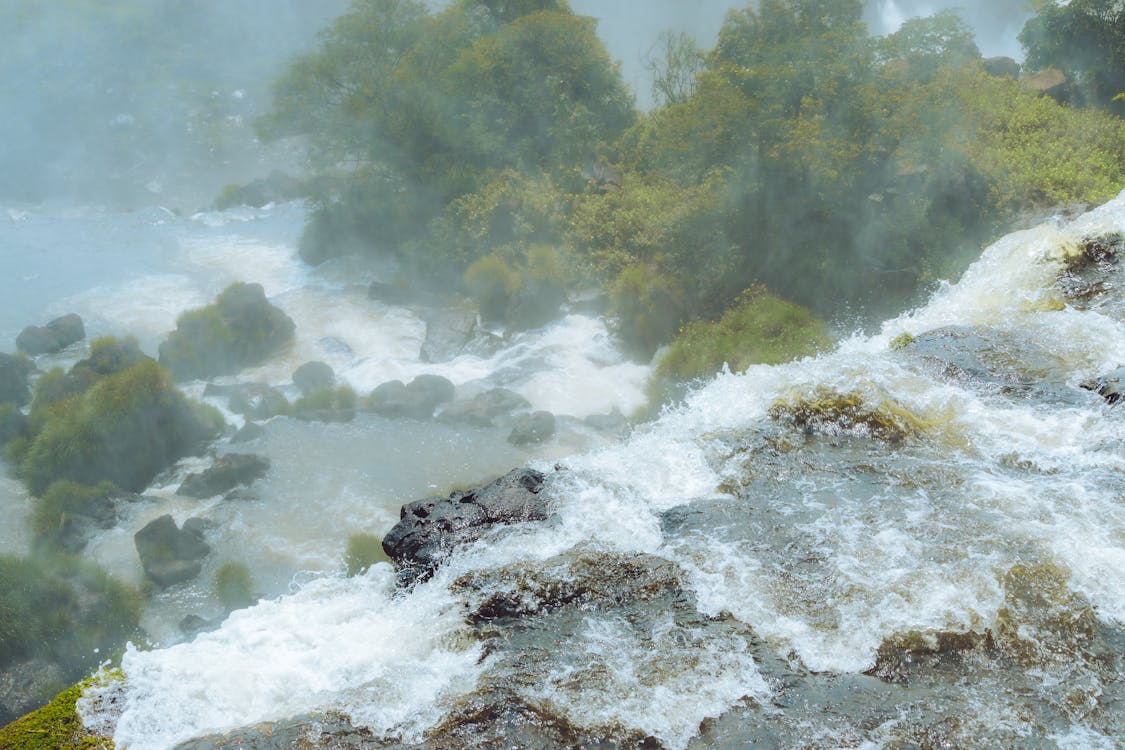
Full Moon Walk at Iguazu Falls
If your travel dates line up with a full moon, it's worth planning around the Full Moon Walk, a guided nighttime excursion inside Iguazu National Park that only takes place on those specific nights of the lunar calendar — generally five nights a month. The tour is done in guided groups, includes a ride on the jungle's ecological train, and ends at the Devil's Throat viewing platform, where you can watch the falls lit only by natural moonlight.
Spots are limited, and bookings open between 30 and 90 days before each date, so if your trip lines up with one of these nights, it's worth reserving as soon as registration opens. You can check the calendar of available dates and book directly on the official Iguazu National Park website.
What's the best month to visit Iguazu?
April tends to stand out as the best month: the water flow is still high thanks to summer rains, temperatures are pleasant, and there are fewer tourists than during the December-to-February peak season. September and October are also great choices.
When are there fewer tourists at Iguazu Falls?
Winter (June to August), outside of the July school holidays, is the season with the fewest visitors. Autumn and spring also tend to see fewer crowds than summer.
Can you visit the Devil's Throat all year round?
Yes, although during the heaviest rainy-season floods, the park may temporarily close the walkway for safety reasons. It's worth checking the trail status before your visit if you're traveling during a period of heavy rain.
Is it worth visiting the Brazilian side of the Falls too?
Yes, it's a great way to round out your visit: the Argentine side offers a more immersive, extensive tour, while the Brazilian side (Foz do Iguaçu) gives you a panoramic view of the whole set of falls.