
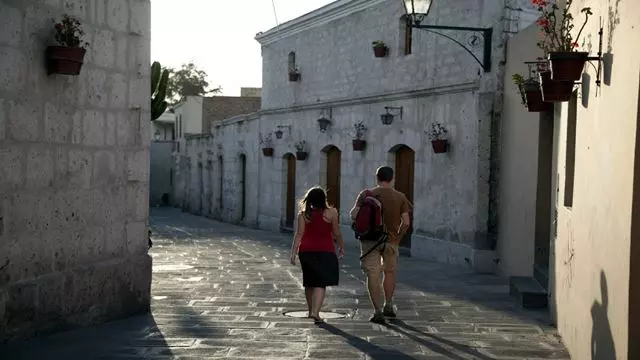
Explore Arequipa on foot through its historic center, Plaza de Armas, colonial courtyards and distinctive sillar architecture, the volcanic stone that gives the city its nickname as the White City. Walking tours may also take you to Santa Catalina, traditional neighborhoods and Yanahuara, combining local stories, striking views and a closer look at everyday Arequipeño life.
Filters


Frequently asked questions
A Walking Tour excursion in Arequipa usually focuses on exploring the city on foot, especially the historic centre and nearby areas. Depending on the itinerary, it may include squares, colonial streets, churches, traditional houses, markets, viewpoints, or explanations about architecture made with sillar, the region’s distinctive volcanic stone. Some tours also discuss Arequipa’s history, food and local customs. The attractions covered, meeting point and entrance tickets vary by service, so read the full description before booking. It is also worth checking whether a guide, admissions and transfers are included. A Walking Tour is a close, interactive way to discover Arequipa and understand its urban character. However, it may not replace a complete visit to attractions that require additional time or a separate entrance ticket.
A Walking Tour in Arequipa suits travellers who enjoy exploring a city on foot, hearing local stories and noticing details that may be missed on a panoramic ride. It can work well for couples, groups of friends, solo travellers and families with older children, provided everyone is comfortable walking for several hours. The physical demand depends on the route: some itineraries may include uneven pavements, stairs, slopes and limited rest stops. Arequipa is also located at a significant elevation, so some visitors may prefer to acclimatise before undertaking prolonged activity. If you have reduced mobility, travel with young children or prefer a slower pace, ask about accessibility, distance, elevation changes and breaks. Choosing an itinerary that matches your fitness level will make the experience more enjoyable and help prevent unnecessary strain.
The length of a Walking Tour excursion in Arequipa depends on the route and planned stops. Some options are short and provide a useful first introduction to the city, while others allow more time for explanations, photographs or visits to specific places. Do not choose only by the number of hours: check the total walking distance, pace, rest breaks and whether admissions or additional activities are involved. The best time of day depends on your travel plans and the season. Early hours often bring more comfortable temperatures and pleasant light, while sunlight can be strong later in the day. A late-afternoon tour may offer attractive lighting, but confirm the exact schedule and route conditions. The service description should clearly state the estimated duration and meeting time before you book.
Arequipa can be visited throughout the year, but walking conditions vary by season and time of day. In general, the drier period tends to bring a lower chance of rain and is convenient for exploring the city on foot. During the wetter months, showers may be more frequent, so check the forecast and, when possible, choose an excursion with a flexible policy. Sun exposure can be strong even when temperatures feel moderate because of the city’s elevation. When selecting a Walking Tour in Arequipa, also consider the departure time, duration and whether the route includes sheltered areas or rest stops. Sun protection and a layer for changing temperatures are useful in every season. The best date is the one that fits your schedule while offering comfortable conditions and an itinerary suited to your preferences.
To choose a Walking Tour in Arequipa, compare the itinerary, duration, language, group size, meeting point and walking pace. Read carefully what is included and what must be paid or arranged separately, especially entrance tickets, food, drinks and transfers. It is also useful to check the cancellation policy, accessibility information and procedures for weather-related changes. For the walk, bring comfortable shoes with good grip, light layers, sun protection, a hat or cap, water and a small backpack. A power bank may be helpful for your phone, and identification can be required for services involving access to certain places. Avoid carrying bulky luggage. If you are not used to high-altitude destinations, walk at a relaxed pace, stay hydrated and tell the guide immediately if you feel unwell.