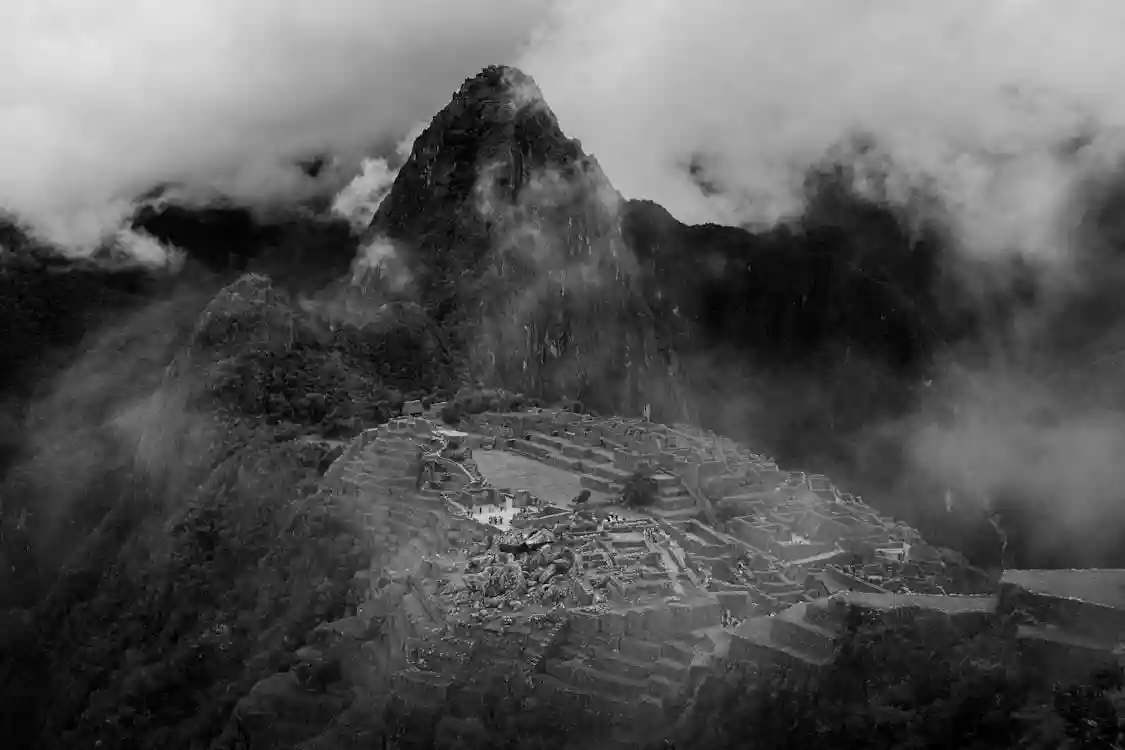
The Inca Trail is one of the routes to reach Machu Picchu on foot and the only one that ends by entering the citadel through the Sun Gate at dawn. It's a 43-kilometer trek that takes four days to complete, winding through high-altitude forests, trails over 4,000 meters high, and archaeological sites such as Runkurakay, Sayacmarca, Phuyupatamarca, and Wiñay Wayna. The descent leads into a subtropical rainforest.
Choosing the right month matters more than it seems, for two reasons that affect the entire trip: rain , which alters the trail and visibility; and permits , which are limited and sell out months in advance. A third reason could be the temporary closure of the Inca Trail for maintenance, as happened between January and March 2026.
In this guide, you'll find the best information on those three variables. You'll also be able to compare tours to Machu Picchu via different routes , allowing you to decide based on your travel dates, fitness level, and available time . You can view all the available tours in the Cusco area.

When to go to the Inca Trail
The dry season, from April to September, is the best time to hike the Inca Trail . Between May and September, the weather is best and there are fewer people than during the peak season. The trail may close for maintenance in February, and between December and March, the rains are heavy .
There are 500 permits per day, for both visitors and support staff , and for May through August it's advisable to book about six months in advance. Nights at high altitude can approach 0°C, even during the dry season.
Let's look at each period in detail.
Inca Trail from April to September: the dry season
This is the window recommended by almost all tour operators, with one exception: not all months of the dry season are the same . April still carries some moisture from the rainy season: the forest is greener, there are more clouds, and the path can be muddy in the lower sections , but in return, there are few people.
For many, May is the best balance : clearer skies, a firm path, and slots that fill up later than in the middle of winter.

Inca Trail in June, July and August: peak season
This is the time of year with the highest probability of clear skies and the greatest demand , because it coincides with the Northern Hemisphere's winter holidays. The downside is twofold: permits run out sooner, and the nights are the coldest of the year . At the high camps on the second day, warm clothing and a sleeping bag are essential.
If your date is fixed and falls within these months, book the permit first and then the flight .
Inca Trail in September and October
September maintains the dry season with fewer visitors than July and August. October is already in the transition period towards the rains, with a higher probability of cloud cover and showers, which can affect the clear view of the citadel.
Inca Trail from November to March: rainy season
Between November and March, the rains intensify, peaking between December and February . The road remains open in January and March, but with slippery sections, higher river levels, and reduced visibility at the high passes —precisely where the views are the main attraction. This time of year is only feasible if your schedule leaves you no other option and if you're comfortable with bad weather: bring a poncho or a good quality waterproof jacket and be prepared for some sections of the route to be completed without panoramic views.
For any month, the weather on the trail is unpredictable. A day might start sunny in the valley and end foggy at the pass, so the safest approach is to choose the month carefully and pack gear for three different weather conditions.
Inca Trail: distances, altitude, capacity and closing
| Distance | 43 km in the classic 4-day version, starting from km 82 |
| Highest point | Warmiwañusca, at 4,215 m |
| Machu Picchu | 2,438 m |
| Quota | 500 places per day, including guides, porters and cooks |
| Is it closing? | Possibly during February, for maintenance at the end of the rainy season. In 2026 it was closed from January 31 to March 1. |
| Permission | Only through authorized agencies, using passport information. |
| Age | Not recommended for children under 12 years (4 days) or 8 years (2 days) |
Inca Trail permits: quotas, deadlines and passport information
Access to the trail is limited to 500 people per day, and that quota isn't just for visitors : it includes the guides, porters, and cooks who accompany each group. In practice, the number of places available for travelers is considerably less than 500, which explains why they fill up so quickly.
Permits are only issued through agencies authorized by the Ministry of Culture of Cusco and cannot be obtained independently. There are three rules you should know before booking.
- Deadlines: For the months of May to August, permits can be sold out up to six months in advance.
- Details: The permit is issued with the name, passport number, nationality, and date of birth, and an error cannot be corrected afterwards, because the permit is neither transferable nor refundable.
- Conditions: Inca Trail bookings are non-refundable once confirmed, so please check the dates before paying.
For the two-day Inca Trail, less advance booking is required, around a month. It's a separate option, with its own demand during peak season.
4-day Inca Trail: stage by stage
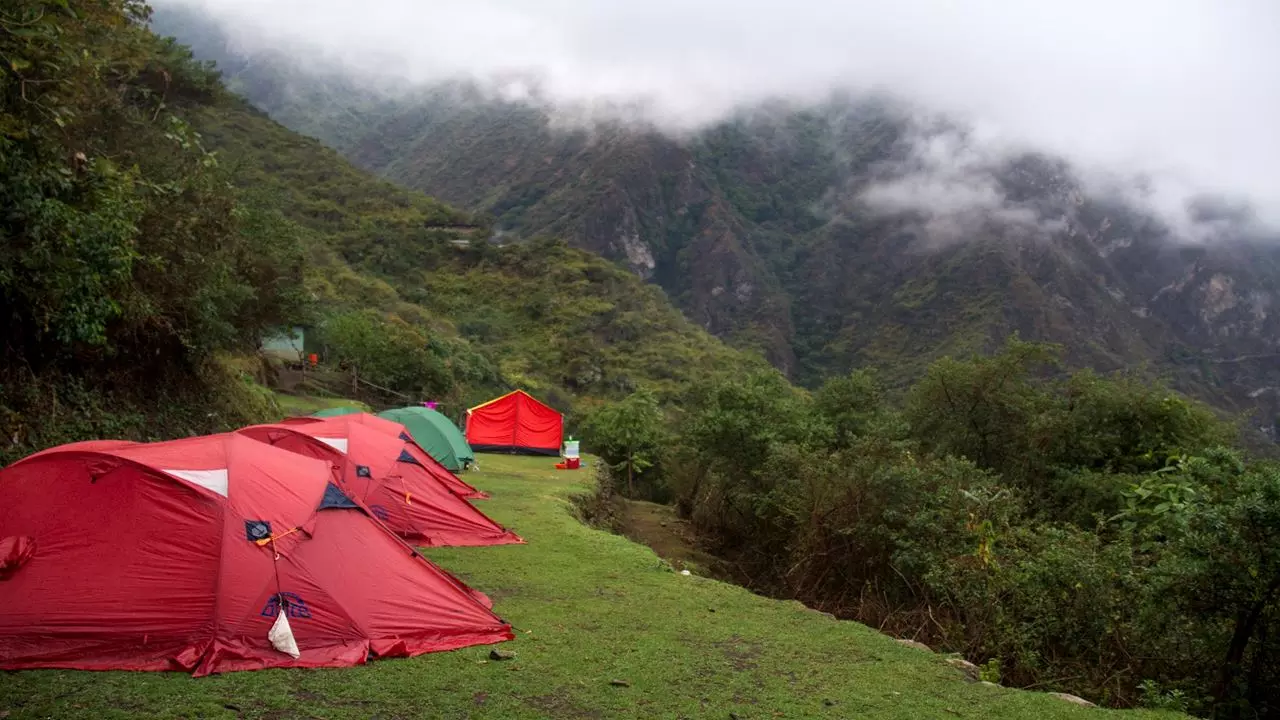
The The 4-day Inca Trail excursion is the complete version of the trek , with three nights camping. It departs at 5:30 am from Cusco, passes through Ollantaytambo, and begins the hike at kilometer 82 in Piskacucho.
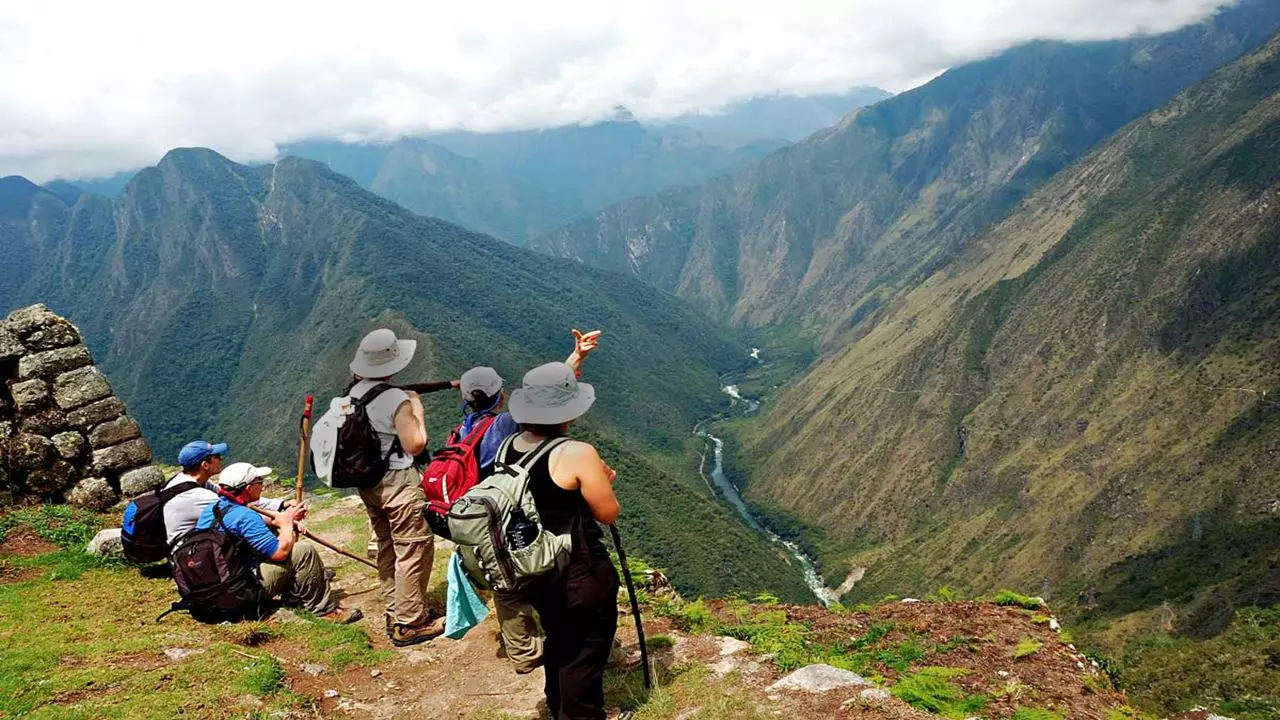
Day 1: from Piskacucho to Wayllabamba
It's about 12 kilometers and takes between five and six hours, with an initial stretch to Miskay and another along the Cusichaca River until lunch . It's the easiest day, designed to get into a rhythm and start acclimatizing, and it ends at the Wayllabamba campsite .
It serves as proof: if you struggle with this day, the second one will be difficult.
Day 2: Warmiwañusca, the highest pass
This is the day that defines the trek. You set off at dawn to climb Warmiwañusca, at 4,215 meters, the highest point of the route. In Quechua, this name is usually translated as "dead woman," due to the mountain's silhouette.
In total, it's a 10-kilometer hike that takes six to seven hours, with a long climb and a two-hour descent to lunch. The campsite is located in the Pacaymayu River valley. Physically, it's the most demanding day: due to the altitude, accumulated fatigue, and the cold of the previous night.
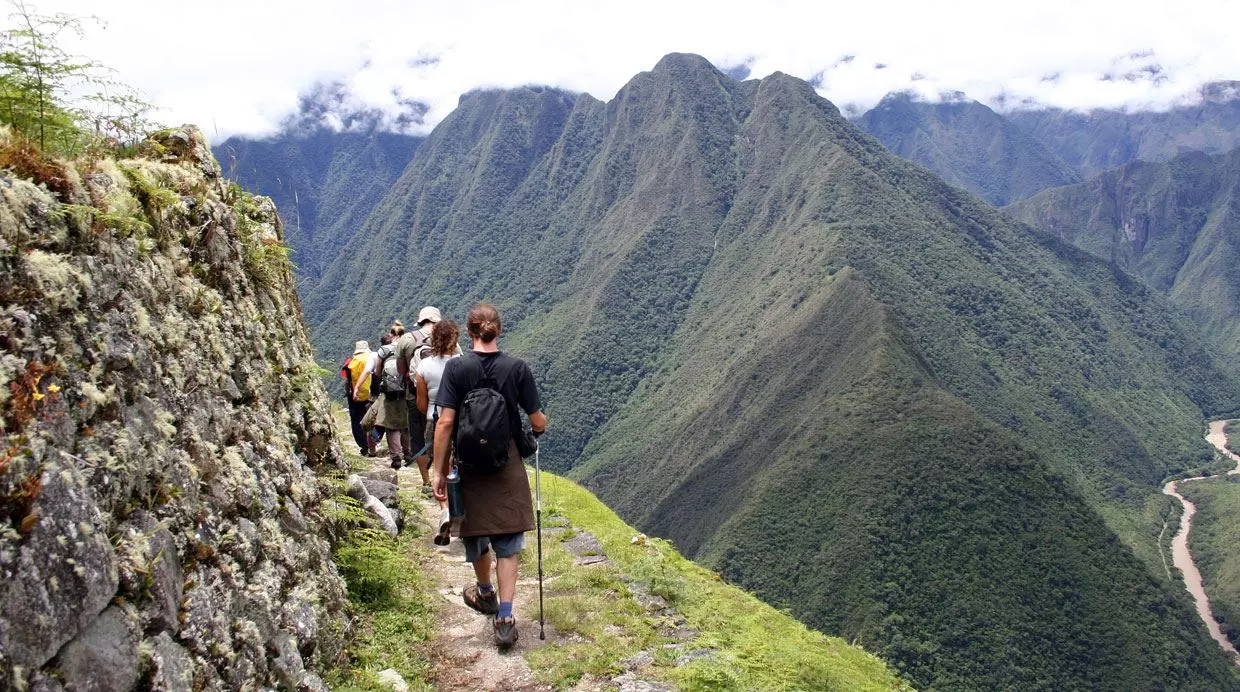
Day 3: the archaeological sites section
It is the longest stretch, 16 kilometers and between seven and eight hours, but also the richest in history. It begins with a two-hour climb to Runkurakay , at 4,000 meters, a semicircular building that served as a checkpoint and rest stop along the route.
The trail then passes through Sayacmarca and Phuyupatamarca, the latter a complex of baths and terraces whose name translates as "village above the clouds," and ends at Wiñay Wayna , where the final camp is set up. The Quechua name for this site translates as "forever young," and its agricultural terraces, built on a very steep slope, are among the most photographed features of the route.
Day 4: Inti Punku and Machu Picchu at sunrise
The hike departs around 5:30 a.m. to reach Inti Punku, the Sun Gate, before dawn, offering the first view of Machu Picchu from above . It's only 5 kilometers and takes between three and four hours. Afterward, there's a guided tour of the citadel lasting about two hours, followed by free time.
If you want to climb Huayna Picchu or Machu Picchu Mountain , you must request a spot when booking, as the entrance fee is not included. The return trip is by bus to Aguas Calientes, train to Ollantaytambo, and bus to Cusco.
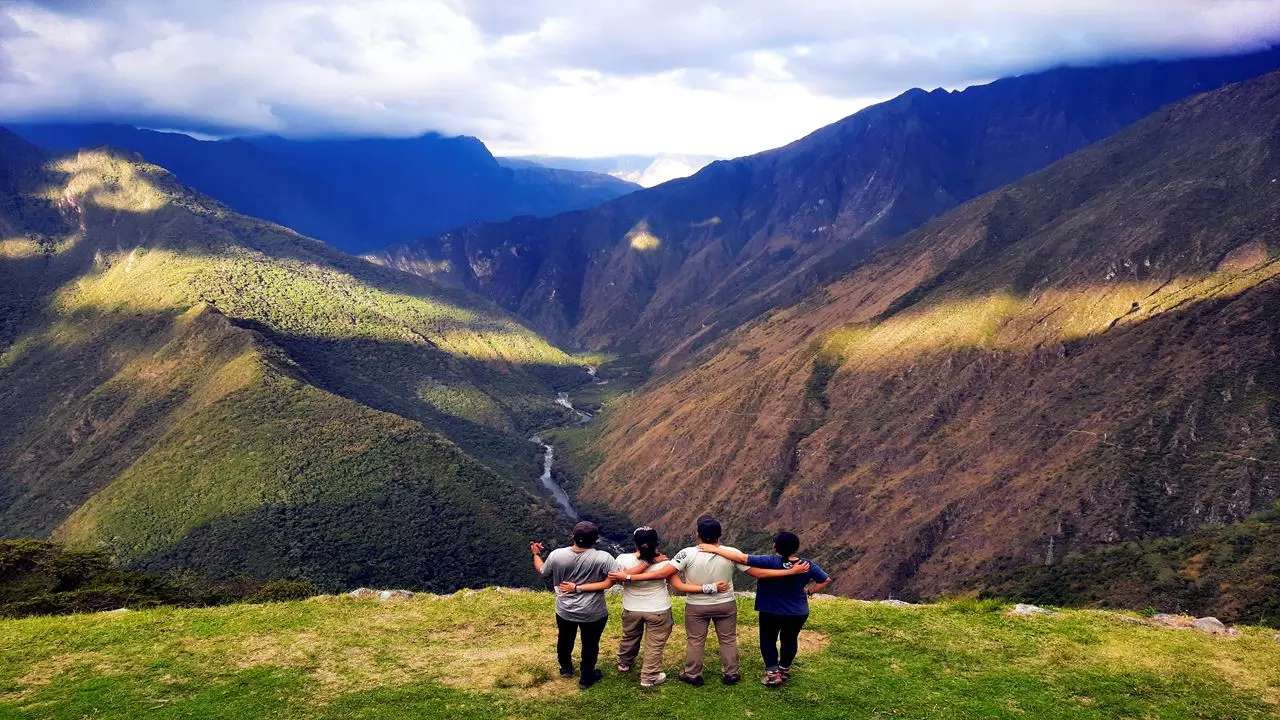
There are two service plans. The Classic plan includes a guide and cook, and the return trip is on the Expedition train. The Comfort plan offers the return trip on the Vistadome train and porters for personal luggage. In both plans, tents, sleeping mats, trekking meals, oxygen, and a first-aid kit are included ; trekking poles, sleeping bags, travel insurance, and tips are not.
2-day Inca Trail
The Inca Trail to Machu Picchu in two days is the shorter version , ideal for those with limited time or who don't want to camp. The first day includes a 12-kilometer hike. The journey begins in Cusco, heading to the Ollantaytambo train station , and from there, a 90-minute train ride takes you to kilometer 104, where the hike starts.
In about three hours, you'll reach Wiñayhuayna, one of the most picturesque spots on the trek, and an hour later, the Sun Gate , with its first view of Machu Picchu. This leg of the journey usually takes between four and six hours, depending on your pace. You'll spend the night in a hotel in Aguas Calientes, with dinner and breakfast included . The following day, there's a two-hour guided tour of the citadel and the return trip by train.
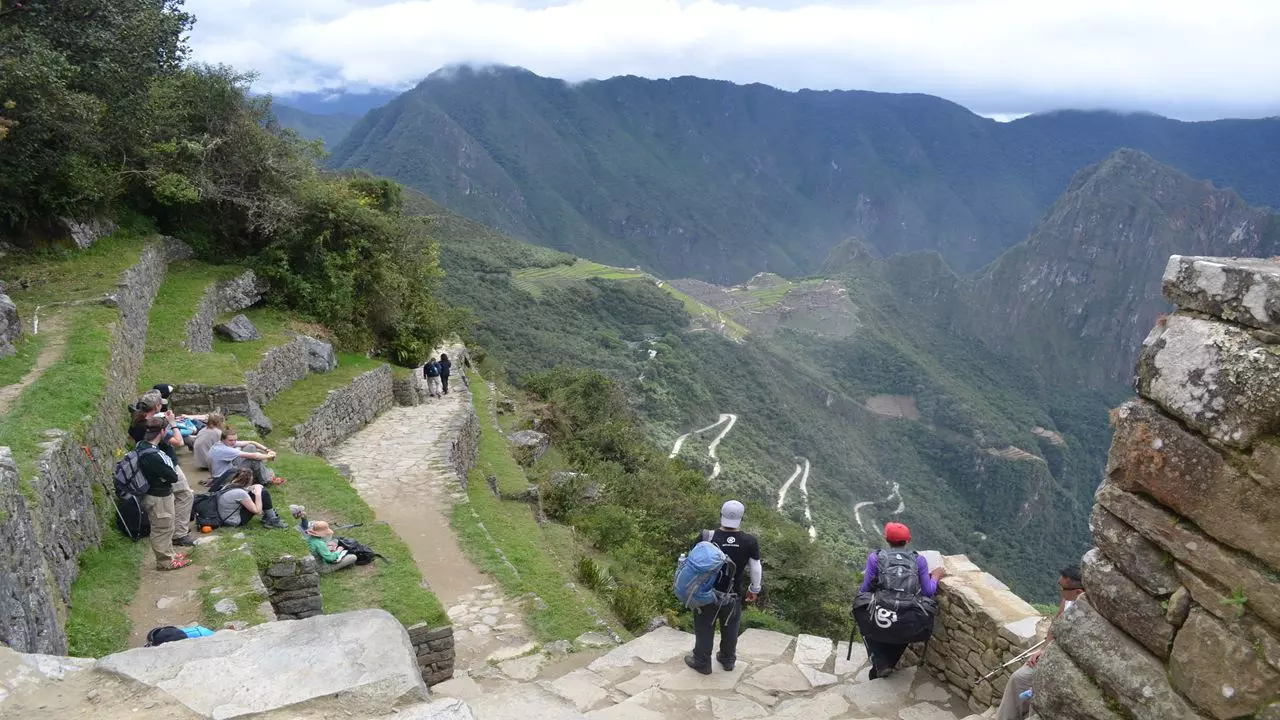
The most important difference with the four-day version is that you don't cross Warmiwañusca or the high camps, and you enter Machu Picchu when you are already arriving from the town and not at dawn through the Sun Gate.
In return, the logistics are much simpler: hotel, food, and transfers are all taken care of. The difficulty level is medium, the minimum recommended age is 8, and it runs from March to January.
Machu Picchu by train from Ollantaytambo: the alternative without trekking
If your date falls in February, if you're not in the necessary physical condition, or if you want to see Machu Picchu without hiking, the option is... Two-day train trip to Machu Picchu . Operates every day of the year, and is easy.
The first day begins at Ollantaytambo station with a train ride of approximately one and a half hours to Aguas Calientes , the town at the foot of the citadel. The second day involves a 30-minute bus ride along the Urubamba River to an altitude of 2,438 meters . This is followed by a two- to two-and-a-half-hour guided tour and free time. As with the other excursions, the ascent to Huayna Picchu or Machu Picchu Mountain is optional and costs extra .
If you're looking to reach Machu Picchu on foot and see the citadel from the Sun Gate, that experience is exclusive to the trail.
The first question to consider is the timing. If you're traveling in February and the road is closed, the only option is the train. If you have several days, are comfortable with the altitude, and want the full trek, the four-day trek is the one that justifies the trip. If you only have two days, or if you don't want to sleep in a tent, the shorter version gives you the essentials of the trail, and you can save the sunrise for another time.
| 4 days | 2 days | By train (2 days) | |
|---|---|---|---|
| How to get there | On foot, with camp | One day's walk, hotel in Aguas Calientes | Train and bus |
| Difficulty | High | Average | Low |
| Minimum age | 12 years old | 8 years | No limit indicated |
| View from Inti Punku | At dawn on the 4th | The first day, before going down to Aguas Calientes | No |
| Season | March to January | March to January | All year |
| Anticipation | About 6 months in peak season | About a month | About 30 days |
Alternatives to the Inca Trail if permits are unavailable
When permits run out, there are other ways to reach Machu Picchu on foot. These operate with fewer restrictions, although none enter through the Sun Gate .
The Salkantay Trail to Machu Picchu has four- and one-seater versions. Five days . The route circles the snow-capped Salkantay, one of the highest mountains in the region , and is a more demanding high-altitude trek than the classic route.

The four-day trek to Choquequirao leads to an Inca complex often compared to Machu Picchu, but it receives far fewer visitors. And if a day hike at high altitude appeals to you, the Rainbow Mountain (Vinicunca) , about fifteen hours round trip , offers a unique perspective from over 5,000 meters.
On the other hand, the Sacred Valley of the Incas tour, including Pisac, Ollantaytambo, and Chinchero, is a good way to experience a lower altitude than Cusco before starting your trek. It's ideal for acclimatization days in the city. Furthermore, Ollantaytambo is the town from which trains depart for Machu Picchu.
What to pack for the Inca Trail: clothing, footwear, and luggage
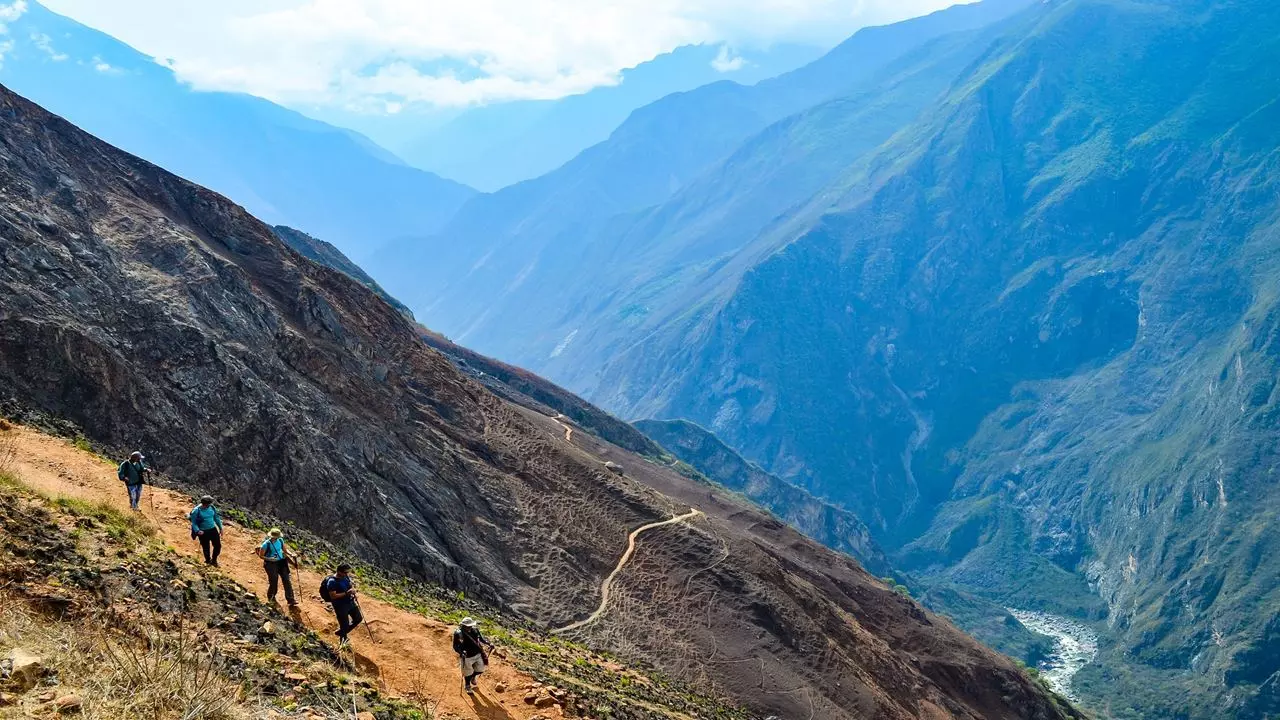
The trail crosses several climates in just a few days. The first section is cold and high-altitude, but at the end you descend into a hot, humid subtropical rainforest. Therefore , layering is key, rather than heavy clothing : a lightweight base layer, a warm layer, a waterproof jacket or poncho, and dry clothes for sleeping.
Insect repellent and sunscreen are essential even on cloudy days, because at that altitude radiation is high.
Regarding footwear, a piece of advice often repeated by guides and worth following is: don't wear brand-new boots or shoes on the trek . It's best to break in your footwear beforehand, as new shoes can cause blisters and injuries on long hikes. If you've bought new boots, walk in them for several weeks before your trip.
Luggage you won't be using on the journey can be left at your accommodation in Cusco, which usually has a designated area for this. There's a 5-kilo limit for hand luggage on the train to Machu Picchu , so it's a good idea to pack a separate small backpack. Have your passport with you—not a copy, the original is required .
Physical preparation: how to avoid altitude sickness on the Inca Trail?
The effort required for trekking is less about technique than about endurance and altitude. The days typically involve six to eight hours of hiking on the second and third days, with sustained ascents over rocky terrain. A pre-trek medical check-up is advisable if you have a history of heart or respiratory problems , and training with long hikes and elevation gain in the preceding weeks makes a noticeable difference.
Cusco is at about 3,400 meters, so arriving a day or two before the trek helps your body acclimatize . Altitude sickness is common in the first 48 hours, and common symptoms include headache, nausea, and fatigue. While trekking teams carry first-aid kits and oxygen, this doesn't replace proper acclimatization. Drink water, eat light meals, and avoid alcohol for the first few days.
How far in advance should I book the Inca Trail?
For the four-day trek during peak season (May to August), bookings should be made approximately six months in advance. Permits cost $500 per day and include support staff.
Is it possible to do the Inca Trail without an agency?
No. Permits are only issued through agencies authorized by the Ministry of Culture of Cusco.
How difficult is the Inca Trail?
The four-day trek is difficult due to the altitude and the six- to eight-hour hikes. The two-day version is of medium difficulty.
Is it possible to do the Inca Trail with children?
The four-day excursion is not recommended for children under 12; the two-day excursion, for children under 8.
Why is the Inca Trail being closed?
Every February, the Inca Trail closes to visitors. In 2016, the closure was from January 31 to March 1, and the Machu Picchu Archaeological Park justified it as necessary for maintenance and conservation work. This includes repairing retaining walls, clearing vegetation, repairing the paving stones, bridges, and staircases, and stabilizing slopes . These tasks are carried out during the rainiest month, when the risk of landslides is high, and involve approximately 60 people, including specialists and workers.
What is the best time to hike the Inca Trail?
From April to September is the dry season. May and September combine good weather with fewer people than June, July, and August.
How much does the Inca Trail permit cost?
The price varies depending on the season and each operator's terms and conditions, so we haven't set a fixed price here. Please check the current price when booking and confirm what's included.