
To plan a 7-day trip to Cusco, dedicate the first two days to the city and acclimatizing, the third and fourth to the Sacred Valley, the fifth to Machu Picchu, and the last few to an adventure excursion. Cusco is about 3,400 meters above sea level, so it's best to leave the highest excursions, like Rainbow Mountain, for the end. Seven days is enough to see the essentials at a relaxed pace.
In this guide, you'll find out what to do in Cusco in 7 days , how to plan a trip to Machu Picchu, how to get to Cusco from Argentina, and which day trips from Cusco are suitable. You'll also find information on treks, trains, and two pre-arranged packages to Cusco and Machu Picchu.
If you'd like to see the options before reading, check out our excursions in Cusco . And if you'd prefer us to organize a tailor-made trip for you, with accommodation, transfers, and tours all in one booking, choose from our best travel packages to Cusco .

Cusco in 7 days: Where to start?
A successful trip to Cusco and Machu Picchu is planned with three things in mind: altitude, time of year, and the logistics of Machu Picchu . Altitude determines the order of your days. Time of year determines the weather and the number of people. And logistics, including entrance fees and train tickets, determines when it's best to book.
The most logical order is from least to most strenuous. First, the city, which can be explored on foot at a leisurely pace. Then the Sacred Valley, which is lower than Cusco, and only finally the treks and high-altitude excursions.
What to do in Cusco in 7 days: city and acclimatization
The first two days are for exploring the city on foot . Cusco was the capital of the Inca Empire and still has Inca stone walls in its streets, such as those on Loreto Street, where the famous twelve-pointed stone is located. The Plaza de Armas and the San Blas neighborhood are the best starting points.

The first day is best spent doing little: walking around the town center, having a light lunch, and resting . On the second day, you can add a visit to Qoricancha, Sacsayhuamán, Qenqo, Puca Pucará, and Tambomachay , the closest ruins, which are visited on a half-day tour.
These two activities help you get to know the city from a different perspective and are useful for the first few days, because they do not require physical effort.
Cooking class and tour of the San Pedro Market
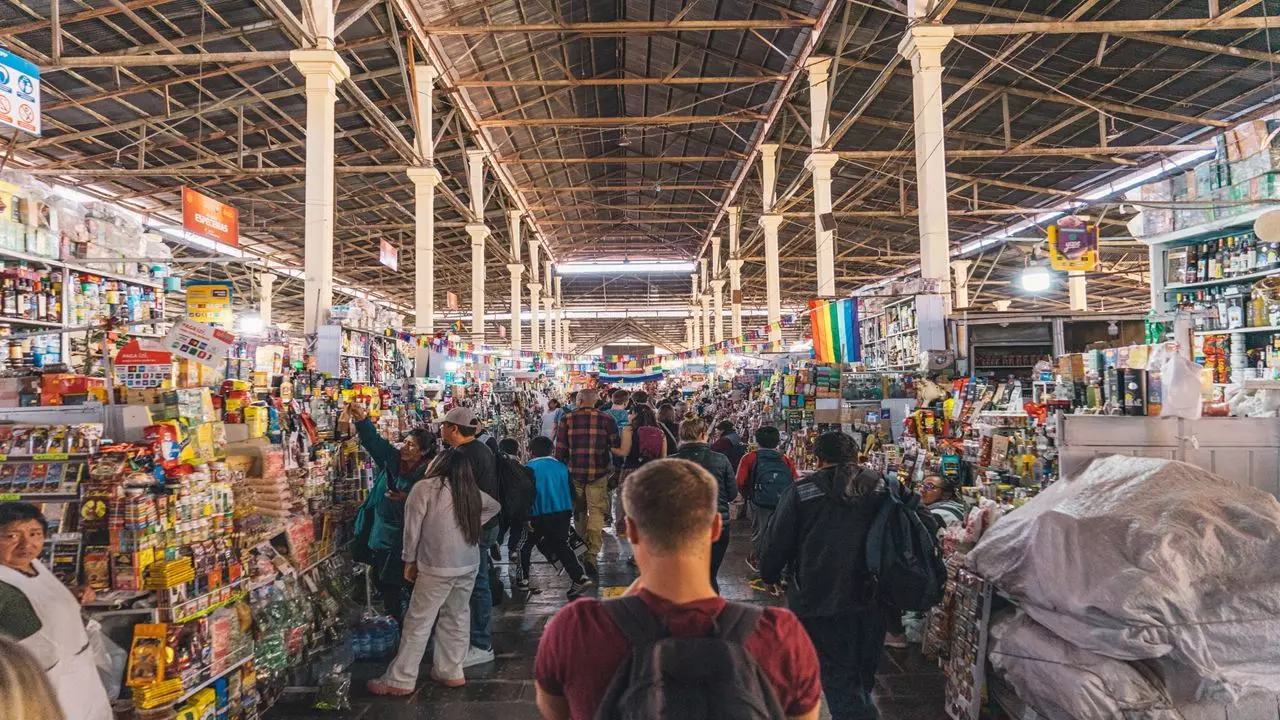
The San Pedro Market opened in 1925 and has over a thousand stalls selling fruits, cheeses, vegetables, and handicrafts . It is one of the main places where Cusco residents do their shopping, and in Inca times it formed part of the road leading to what is now the Plaza de Armas.
The cooking class and tour of the San Pedro Market begins with a guided walk through the stalls. Afterward, you walk a few blocks to a cooking studio, where a Peruvian chef teaches a four-course menu with a tasting at the end of each course.
The menu includes a mashua cream soup (made with an Andean tuber), three ceviches featuring high-altitude ingredients like tarwi and camu camu, a stuffed rocoto pepper, and desserts with lucuma, aguaymanto, and chirimoya . It's a great activity for your first day, as it's done sitting down and at a relaxed pace. Please let us know when you book if you have any dietary restrictions.
Inca astronomy at the Cusco planetarium
The Incas used the stars to organize agriculture and rituals, and Cusco is a great place to understand this. The planetarium is located in the Llaullipata Ecological Reserve, near Sacsayhuamán , and has been powered by solar energy since 2007.
The Inca astronomy activity at the planetarium includes a talk on how the sky was used in daily Inca life and a dome projection showing the Southern Hemisphere sky with constellations such as the Southern Cross. Weather permitting, it is complemented by observation through telescopes.
It works well as a way to end the second day, as it doesn't require much walking. Bring a jacket: it gets cold at night at this altitude.

Day trips from Cusco: the Sacred Valley of the Incas
The Sacred Valley is located about 15 km northeast of Cusco and is at a lower altitude, around 2,800 meters. This makes it ideal for days three and four : there's less altitude and more space for walking. The Urubamba River flows through the valley, surrounded by Inca agricultural terraces that are still in use.
The main stops are Pisac, Ollantaytambo, Chinchero, Maras, and Moray . Doing them all in one day is exhausting, so it's best to split them into two days.
Next, the two excursions that cover the entire valley.

Sacred Valley of the Incas: Pisac, Ollantaytambo and Chinchero
The Sacred Valley of the Incas tour, including Pisac, Ollantaytambo, and Chinchero with lunch, is the classic itinerary. Pisac is about 30 km from Cusco: it has an archaeological site with temples and terraces overlooking the valley, and a craft market.
The tour continues with a buffet lunch in Urubamba, followed by a visit to the fortress of Ollantaytambo, which served as a military barracks, religious center, and agricultural hub. From there, you can see over a hundred terraces with irrigation canals. The final stop is the Chinchero market, known for its Andean ceramics and textiles.
It's a moderately challenging excursion. If the entrance ticket isn't included, it can be purchased at the first ruin visited and is also valid for Ollantaytambo.
Chinchero textile tour, Maras and Moray
The Chinchero Textile, Maras, and Moray tour completes the valley with three very different sites. In Chinchero , an Andean town known for its textiles, you'll visit a workshop where natural dyeing and traditional fibers are demonstrated. There's also a colonial church built on the site of an Inca palace.

Moray has circular terraces that the Incas used to test crops in different microclimates , like an agricultural laboratory. The Maras salt mines are more than 3,000 salt ponds fed by a natural spring, in use since before the Incas.
It is a half-day excursion of low difficulty, ideal for the fourth day, after the longer tour of the valley.
How to get to Machu Picchu from Cusco
Machu Picchu is about 130 km northwest of Cusco, at an altitude of 2,430 meters , and is not accessible by car. There are three ways to get there: by train from Ollantaytambo or Poroy to Aguas Calientes and then by bus to the entrance, by hiking the Inca Trail, or by alternative treks such as Choquequirao.
To plan a trip to Machu Picchu, you first need to decide how many days to dedicate to it. A quick visit can be done in one day; a more comfortable option includes a night in Aguas Calientes, allowing you to arrive early and avoid the rush. Tickets and trains sell out during peak season, so these are the first things you should book.
The citadel was built around 1450, during the reign of the Inca Pachacuti, and Hiram Bingham brought it to the world's attention in 1911. Here are the ways to get there.

Tour to Machu Picchu by train from Ollantaytambo
The tour to Machu Picchu by train from Ollantaytambo It's the most direct option. A bus takes you from Cusco to the Ollantaytambo station in the Sacred Valley, and from there you take the train to Aguas Calientes , with views of green mountains and snow-capped peaks.
From Aguas Calientes, a bus takes you up to the entrance. The guided tour lasts about two and a half hours, with free time afterward . For an additional cost, you can also climb Huayna Picchu, which is steep and narrow but offers the most expansive view of the site.
Train to the entrance of Machu Picchu from Poroy
Poroy is a station about 20 minutes from Cusco. The train to Machu Picchu from Poroy avoids the road transfer to Ollantaytambo and departs directly from the city .
The trip to Aguas Calientes takes a little over three hours, and then a bus takes you up to the citadel. The tour is with a private guide and lasts about two hours, with free time for photos. It's a good option if you want to minimize ground transportation.

Luxury train trip to Machu Picchu from Cusco
For a unique experience, take the luxury train trip to Machu Picchu from Cusco. Use the Hiram Bingham train, which departs from Poroy and has dining cars, an observation car and a kitchen car , for up to 84 passengers.
During the three-hour journey, the train follows the Urubamba River through the canyon and passes by the snow-capped Verónica mountain . Lunch is served on board, and on the return trip, dinner with live music is added. The guided tour of the citadel lasts about two and a half hours and concludes with afternoon tea at a luxury hotel.
Ceviche cooking class in Aguas Calientes
Those spending the night in Aguas Calientes can add a culinary activity to their experience. The ceviche cooking class in Aguas Calientes is held in a room with windows overlooking the Vilcanota River .
The chef guides the preparation step by step, from selecting the ingredients to the cutting techniques. The dish is a ceviche made with fresh trout from the Vilcanota River, marinated in lime juice and served with red onion and sweet potato . The dish is then enjoyed with a pisco sour or a glass of wine.

Inca Trail to Machu Picchu in 2 days
The Inca Trail has a limited daily capacity and closes in February, so it's the excursion best booked well in advance. If you don't have time for the full trek, the 2-day Inca Trail to Machu Picchu is the shorter version . It's a 12 km hike, about six hours long, and of moderate difficulty.
On the first day, you take the train to kilometer 104, where the hike to the Inca site of Wiñay Wayna begins . Then you reach Inti Punku, the Sun Gate, with your first panoramic view of Machu Picchu . You spend the night in Aguas Calientes, and the following day you enter the citadel with a guide.
Trekking the Inca Trail to Machu Picchu in 4 days
The trekking of the Inca Trail to Machu Picchu in four days and three nights is the complete version : 43 km divided into 12, 10, 16 and 5 km, with camps in Huayllabamba, Pacaymayu and Wiñaywayna.
The highest point is the Warmiwañusca pass, at 4,215 meters, on the second and most demanding day. Afterwards, you pass through Runkurakay, Sayacmarka, and Phuyupatamarka, finally arriving at Machu Picchu at dawn via Inti Punku (Sun Gate).

Along the way, you'll see over 400 species of orchids, the Andean cock-of-the-rock, Peru's national bird, and archaeological sites with canals and fountains . Since it takes four days, it replaces the rest of the itinerary: if you choose it, you'll have to shorten other excursions.
Trekking to Choquequirao
Choquequirao is an Inca site accessible only on foot, and it's much less crowded than Machu Picchu . The trek lasts four days and three nights, is considered difficult, and is not recommended for children under 12.
It begins in San Pedro de Cachora, at 2,800 meters, and descends to the Apurímac River canyon before climbing to the ruins. It's about 44 km long and takes three days to hike. The site features plazas, temples, and agricultural terraces, and the sunset can be enjoyed from the religious sector . This option is ideal for those who have already visited Machu Picchu or are looking for a challenging trek.

Adventure excursions in Cusco
Since altitude is no longer a problem after five days, this is the best time for more challenging excursions . With the city, the valley, and Machu Picchu covered, you'll have one or two days left for an adventure trip . Excursions in Cusco, Peru, range from trekking to over 5,000 meters to ziplining in the cloud forest or an expedition into the Amazon .
Rainbow Mountain in Vinicunca
The Rainbow Mountain in Vinicunca is the most popular high-altitude excursion from Cusco . The journey from the city takes about three and a half hours, through arid landscapes, snow-capped peaks, and herds of alpacas.
The hike begins in Chillihuani, at about 4,200 meters, and climbs for approximately four hours to the summit, at about 5,200 meters. From the top, you can see the colorful bands of the mountain and the Ausangate Glacier, the highest peak in the region. The descent takes about two hours.

Zipline in Santa Teresa, Machu Picchu
Santa Teresa is located at 1,550 meters above sea level, in the cloud forest zone, which has a warmer climate. It is about 30 km from Machu Picchu and about 220 km from Cusco , and can be reached by road, passing through Santa María.
He The zipline in Santa Teresa combines zip lines of 450, 600, and 950 meters with a 120-meter suspension bridge over mountains and a river. The activity lasts about two hours, and the guides teach different flying techniques, such as the "condor flight."
Due to the distance, it is better combined with the route to or from Machu Picchu than as a separate excursion from Cusco.
Lodge in the Manu jungle
If you're looking for a change of scenery, the Manu rainforest lodge tour takes you from the Andes to the Amazon in three days and two nights . It's a great option for those with more time who want to experience the rainforest's flora and fauna.
The first leg goes from Cusco to Paucartambo, about 110 km away and 2,906 meters high, and then descends into the cloud forest to a lodge at 1,700 meters.

The following day, the search continues for the Andean cock-of-the-rock, Peru's national bird, with the option of rafting on the Koñeq or Alto Madre de Dios rivers. The journey then continues by boat from the port of Atalaya to another lodge, with day and night hikes. On the final day, a visit is made to the parrot clay lick, a place where birds gather to eat clay.
Best time to travel to Cusco and Machu Picchu
The best time to visit is during the dry season, from May to September , when skies are clearer. June, July, and August are the busiest and most expensive months , and Machu Picchu gets very crowded. May and September are good alternatives to avoid crowds and high prices.
From November to March it rains more. Also, the Inca Trail closes in February for maintenance . Whatever the date, book your Machu Picchu tickets and train tickets in advance.
Altitude and acclimatization in Cusco
Cusco is located at an altitude of approximately 3,400 meters , and most visitors experience fatigue, headaches, or shortness of breath during the first few days . This is called altitude sickness and can be prevented by taking it easy on the first day, eating light meals, drinking plenty of water, and limiting alcohol consumption.
Ideally, you should stay between five and seven days to fully acclimatize, which is why the seven-day option works well. More demanding excursions, like Vinicunca, are best done towards the end, once your body has adjusted.
If you take medication or have any health condition, consult your doctor before traveling.

Packages to Cusco and Machu Picchu from Argentina
Organizing everything yourself offers freedom, but it takes time, especially coordinating trains and tickets. Packages to Cusco and Machu Picchu take care of that: they include accommodation, transfers, and excursions in a pre-arranged itinerary .
The next two tours last seven days and six nights, as outlined in this guide. One is more traditional, while the other includes adventure activities.
Essential Cusco: 7 days with Machu Picchu
The Essential Cusco package focuses on the region's classic sights . After your arrival transfer and a free day, the second day explores the city and four nearby ruins: Qoricancha, the Cathedral, Sacsayhuaman, Qenqo, Puca Pucara, and Tambomachay.
The third day covers Chinchero, Maras, and Moray. The fourth day visits Pisac and Ollantaytambo, then continues by train to Aguas Calientes, where you spend the night. The fifth day is a guided tour of Machu Picchu, and the sixth day explores the South Valley: Tipón, Pikillaqta, and Andahuaylillas, with its church known as the "Sistine Chapel of the Americas."

Adventure tourism in Cusco: 7 days
The adventure tourism package in Cusco follows the same acclimatization schedule, but replaces the days in the valley with more active pursuits . After the city tour, the third day includes a via ferrata and canopy tour in the Sacred Valley, with zip lines ranging from 250 to 700 meters.
The fourth day is Machu Picchu, with a train ride from Ollantaytambo and a guided tour. The fifth day is free to rest before the most demanding excursion: Rainbow Mountain, on the sixth day, with a four-hour climb from Chillihuani. This is a good example of how to order excursions from least to most strenuous.
Cusco itinerary in 7 days: summary
This is one possible order, which you can adapt to your dates and preferences:
Day 1: Arrival, walk through the center and cooking class at the San Pedro Market.
Day 2: City tour of nearby ruins and Inca astronomy at the planetarium.
Day 3: Sacred Valley with Pisac, Ollantaytambo and Chinchero.
Day 4: Chinchero textile, Maras and Moray.
Day 5: Machu Picchu by train, with or without an overnight stay in Aguas Calientes.
Day 6: Rainbow Mountain in Vinicunca.
Day 7: Free time, shopping in San Blas and departure.
If you choose a multi-day trek, such as the Inca Trail or Choquequirao, skip the valley excursions. And book your train tickets, Machu Picchu entrance fees, and Inca Trail permits in advance, as they have limited availability.

Where to stay in Cusco and what to keep in mind
The most practical option is to stay no more than a 15- or 20-minute walk from the Plaza de Armas. The San Blas neighborhood is a good area: it's quiet, has restaurants and artisan workshops, and is close to the cobblestone streets of the historic center, where a craft market operates on Saturdays.
Since the excursions depart from the city, a centrally located hotel saves you travel time. If you're staying overnight in Aguas Calientes, leave your large luggage in Cusco : only carry-on luggage up to 5 kg is allowed on the train.
In our catalog of hotels and accommodations in Cusco you will find options to better organize your stay and make the most of your time.
How much does it cost and how many days are needed to visit Machu Picchu?
Seven days is enough to see Cusco, the Sacred Valley, and Machu Picchu at a leisurely pace. Five days is possible, but you'll have to cut back on the Sacred Valley or the adventure excursion. With ten days, you can add a multi-day trek or explore the Manu rainforest.
The total cost depends on the time of year, the type of train, and the excursions chosen. Machu Picchu is usually the biggest expense of the trip, due to entrance fees and the train fare. Therefore, it's advisable to compare the prices of each excursion and package before making a decision.