
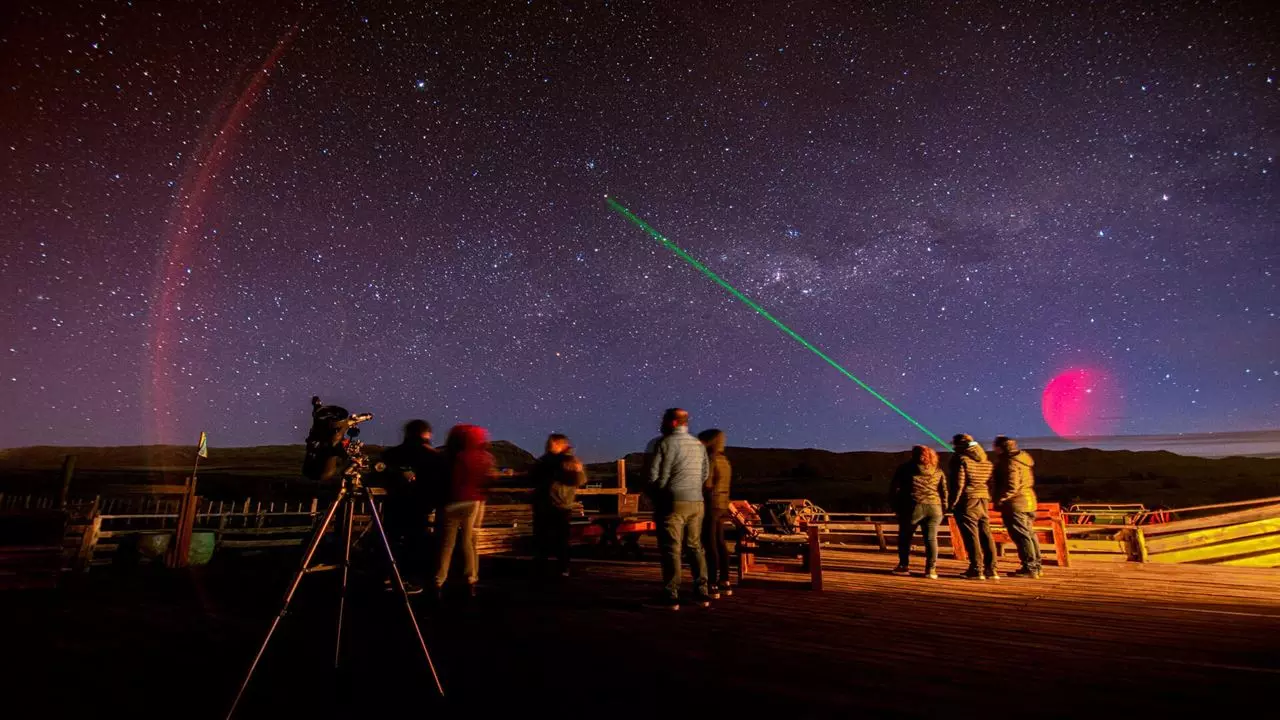
Stargazing in El Calafate combines guided night walks, constellation spotting and views of the Milky Way over the Patagonian landscape. Away from city lights, the region’s crisp air and expansive skies create an unforgettable setting for discovering the southern stars.
Filters
Frequently asked questions
Stargazing excursions in El Calafate may combine transportation from an agreed meeting point, a nighttime outing away from the brightest urban areas, and an introduction to the southern sky. Depending on the experience, they may also include a short walk, constellation interpretation, telescopes or binoculars, and a guide. Services vary considerably, so check the inclusions before booking. Visibility always depends on the weather and the level of darkness available that night. The itinerary may be adjusted for safety or weather-related reasons. If you are interested in observing stars in El Calafate, read the full description and confirm the meeting point, transportation arrangements, accessibility, and whether food or drinks are included. This will help you choose an excursion that matches your expectations without assuming that every stargazing activity offers the same equipment or services.
Observing stars in El Calafate can be enjoyable for couples, families, solo travelers, and anyone interested in photography or astronomy. No previous knowledge is usually required, since guides generally adapt their explanations to beginners as well as more experienced participants. However, many stargazing excursions take place outdoors at night, so travelers should be comfortable with cold temperatures, darkness, and possible periods of waiting. If you are traveling with children, older adults, or people with limited mobility, check the minimum age, walking distance, terrain, and accessibility conditions. It is also useful to ask whether participants need to stand for long periods. These excursions in El Calafate suit travelers looking for a calm and educational activity, but they may not be ideal for those who prefer a short program or an indoor experience.
The duration of a stargazing excursion in El Calafate depends on the chosen program, transportation, walking time, and included activities. Some options may focus on a short observation session, while others allow more time for learning about the sky, taking photographs, or using optical equipment. For this reason, there is no single standard duration. Read the itinerary and activity details carefully before booking. Remember that the experience normally takes place at night and may occupy several hours of your schedule, especially when transportation to and from your accommodation is included. To plan your trip comfortably, avoid booking it immediately before another tour or a flight. Confirm the starting time, estimated return time, and the policy for situations in which weather conditions prevent the observation from taking place.
The chance of observing stars in El Calafate depends on nighttime darkness, cloud cover, wind, rain or snow, and overall visibility. Longer nights generally provide more time in darkness, but weather conditions can change and do not guarantee a successful observation. During periods with more daylight, the available window for seeing the night sky may be shorter. Therefore, the best time depends on your priorities and on the available experience, not only on the calendar. Before booking a stargazing excursion, check the operating season, the weather policy, and whether rescheduling or cancellation options exist. It is also wise to keep some flexibility in your itinerary and understand that no astronomy activity can guarantee clear skies or visible stars every night.
When choosing among stargazing excursions in El Calafate, compare the type of experience, duration, group size, transportation, walking requirements, and included services. If photography is important to you, check whether cameras or tripods are allowed and what assistance the guide provides. If you prefer an educational activity, look for an experience that includes explanations about the night sky. For the evening, bring warm layered clothing, comfortable closed shoes, a hat, gloves, and a jacket suitable for outdoor conditions. Water, protection for your equipment, and a flashlight may also be useful if recommended by the organizer. Avoid shining white light directly at other participants. Before booking, confirm the meeting point, luggage restrictions, accessibility, and the policy for unfavorable weather. These details make it easier to choose an excursion that fits your interests and comfort level.