
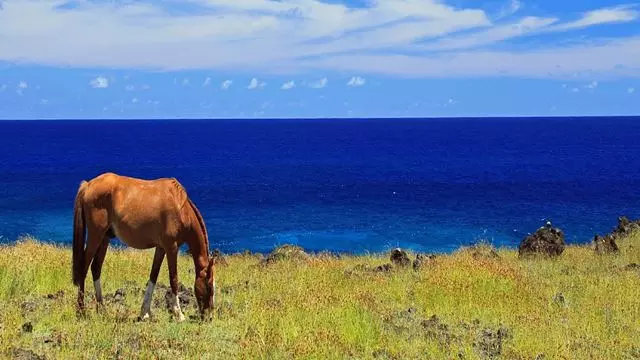
Horseback riding on Easter Island is a relaxed way to discover the island’s volcanic scenery, open countryside and dramatic Pacific coast. Expect guided rides along scenic trails with views of iconic moai landscapes, combining adventure, nature and a closer connection to Rapa Nui culture.
Filters
1 results
Frequently asked questions
Horseback riding excursions on Easter Island generally offer a guided ride through volcanic landscapes, open grasslands, coastal trails, or areas near attractions, depending on the selected itinerary. The experience usually combines nature, panoramic views, and a relaxed way to explore the destination. Before booking, check exactly what is included: ride duration, transportation, guide, helmet, insurance, required experience, and any entrance fees or cultural visits. Access to certain places may be regulated, and not every excursion reaches the same locations. Choose a tour that clearly explains the route, meeting point, difficulty, animal welfare practices, and weather policy. This helps you compare Easter Island horseback riding options and avoid assuming that all services provide the same experience.
Horseback riding excursions on Easter Island can suit experienced riders and beginners, provided the activity’s requirements match each participant and an initial briefing is offered. Difficulty depends on the terrain, pace, duration, and whether the ride is relaxed or physically demanding. Before booking, ask about minimum age, weight limits, fitness requirements, and restrictions for pregnant travelers or people with injuries. Children must meet the stated conditions and should be supervised. If you have never ridden, choose an introductory route and explain your concerns in advance. Be honest about your experience and physical condition. A suitable excursion should prioritize passenger safety, responsible handling, and the welfare of the horses throughout the ride.
The duration of horseback riding excursions on Easter Island varies by itinerary. Some are short outings, while others last several hours or occupy half a day. Check whether the stated duration includes transfers, preparation, safety instructions, and breaks, or only time in the saddle. There is no single best season for every traveler. Your choice should consider the forecast, your tolerance for sun and wind, and the type of scenery you want to enjoy. Easter Island weather can change, so departures may be adjusted for safety. Review the rescheduling or cancellation policy, check conditions close to the date, and select a departure time that fits your itinerary and physical energy.
To choose among horseback riding excursions on Easter Island, compare the itinerary rather than price alone. Review the landscapes, attractions, difficulty level, duration, and group size. Confirm the guide’s language, meeting point, transportation availability, and what happens if weather conditions change. If local culture matters to you, look for an excursion that provides respectful context without promising access to restricted areas. Read the booking and cancellation conditions, and check which equipment is supplied. Reviews from other travelers can be useful, but they should complement the official description. The best Easter Island riding tour is the one that matches your experience, available time, physical comfort, and expectations instead of simply offering the longest route.
For horseback riding on Easter Island, wear comfortable clothing that covers your skin, long trousers, and closed shoes with a secure grip. Bring sunscreen, water, sunglasses, and a light layer for wind or changing temperatures. Avoid loose garments, sandals, and accessories that could catch on equipment. Always wear the provided helmet and follow the guide’s instructions, especially when mounting, dismounting, and keeping a safe distance between horses. Do not feed the animals or push the group’s pace. Ask whether backpacks, cameras, or phones are allowed, and protect your belongings. Arrive early, disclose relevant medical conditions, and respect trails, cultural heritage, horses, and environmental rules during your Easter Island excursion.