
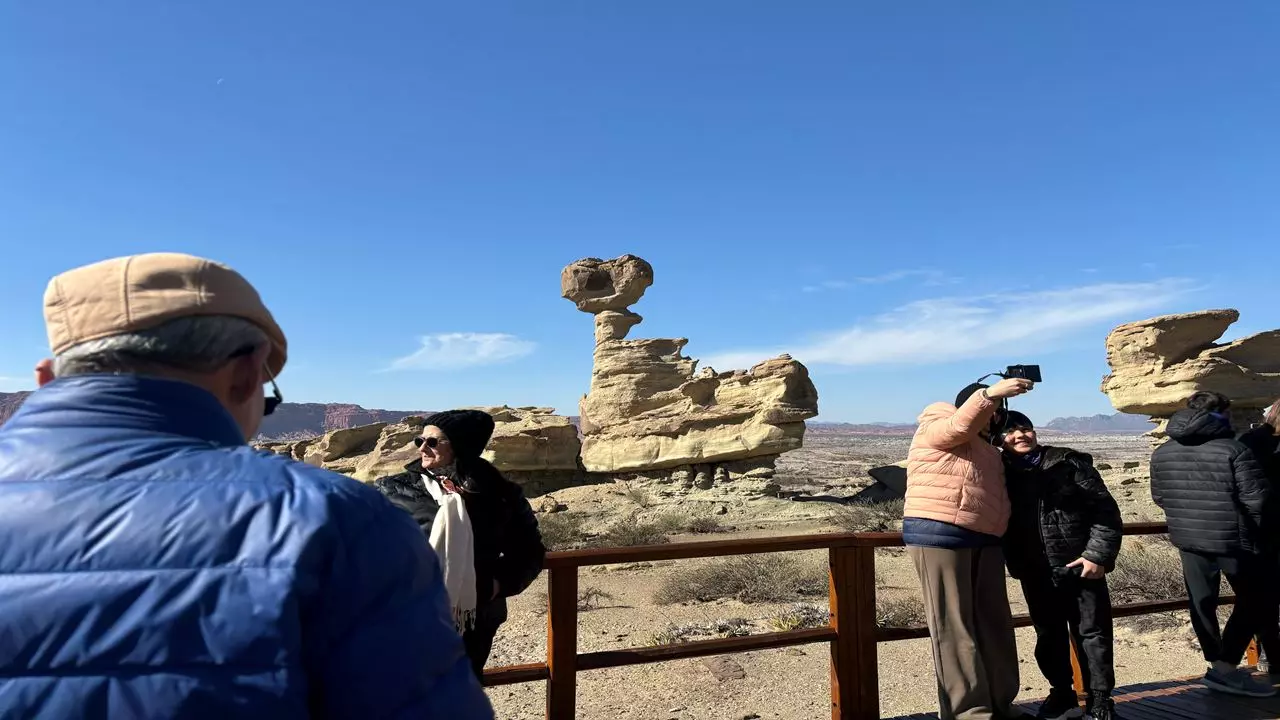
Wildlife watching in San Juan invites you to look for guanacos, vicuñas, Andean condors and other native species across its rugged desert landscapes. Explore places such as Ischigualasto and the high mountain valleys, where dramatic geology, wide-open spaces and low-impact encounters make every sighting special.
Filters
Tailor-made trips
Start planning
Design your own tailor-made trip through Argentina
Tell our local experts how you dream your trip and we'll craft a 100% personalized itinerary — no templates, just your journey.
Frequently asked questions
Wildlife observation travel packages in San Juan may combine visits to natural environments, walks, guided observation outings, and time for photographing landscapes and animals. The exact experience depends on the itinerary, duration, season, and local conditions. Some packages may include transfers, accommodation, meals, guided excursions, or entrance fees, but these services are not guaranteed in every option. Before booking, read the complete itinerary and confirm what is included and what requires an additional payment. It is also useful to check whether the activity takes place in protected areas, the difficulty level, and whether wildlife is observed from vehicles, trails, or viewpoints. Since the animals are wild, sightings cannot be guaranteed. Responsible behavior and respect for distance, silence, and local regulations are essential throughout the experience.
These wildlife observation travel packages in San Juan may suit solo travelers, couples, families, and groups interested in nature, photography, or environmental education. Their suitability depends on participants’ age, fitness, and the type of outing. Some options are appropriate for beginners, while others may involve walking, uneven terrain, long periods of waiting, or early departures. Duration varies by package: it may be a few-hour excursion, a full-day activity, or a multi-day program with accommodation. Do not assume the length from the product title alone. Before booking, check schedules, distances, breaks, transportation, and physical requirements. This is especially important when traveling with children, older adults, or people with reduced mobility. Ask whether the itinerary can be adapted to your group’s needs.
The best time for wildlife observation travel packages in San Juan depends on the animals you hope to see, the environment visited, and the type of experience you want. Conditions may change between seasons and according to altitude, time of day, and the weather on each outing. Therefore, there is no single ideal date for every traveler, and animal sightings cannot be guaranteed. Before choosing, ask which months the itinerary recommends for the specific activity, what temperatures are generally expected, and whether seasonal restrictions apply. Also confirm whether excursions operate in all weather conditions and what happens if plans change. Booking ahead may be useful during periods of higher demand, but current itinerary information should always guide your decision.
To choose among wildlife observation travel packages in San Juan, first define your main goal: wildlife spotting, photography, natural interpretation, or a combination of activities. Then review the itinerary, duration, transfers, accommodation, meals, entrance fees, and any services not included. Group size and the presence of a guide can strongly affect the experience, as can the difficulty level and the amount of time devoted to observation. It is also wise to check cancellation policies, meeting points, support languages, and any health or mobility requirements. Do not choose solely by price or by the number of places visited. The best package should match your pace, interests, and realistic expectations about wild animals. Clear inclusions and practical conditions make comparison easier.
To enjoy a wildlife observation travel package in San Juan, bring comfortable, adaptable clothing, suitable footwear for the terrain, sun protection, water, and an extra layer for temperature changes. Depending on the itinerary, binoculars, a camera, spare batteries, and a small backpack may be useful; confirm in advance whether any equipment is included or available. Avoid strong fragrances, feeding animals, or approaching them for better photographs. Always follow the guide’s instructions, remain on authorized paths, and keep quiet when appropriate. Inform the provider ahead of time about allergies, dietary restrictions, or mobility limitations. Check the forecast and final departure instructions before setting out, since weather and route conditions may affect the experience. Patience is important because wildlife appears on its own schedule.