
The 7 must-do excursions in Brazil are Christ the Redeemer and Sugarloaf Mountain in Rio, a boat trip in Angra dos Reis, a Polynesian canoe trip on Ilha Grande, a day with dolphins in the Amazon, snorkeling in the Rio da Prata in Bonito, a helicopter flight over Iguazu Falls, and scuba diving in Fernando de Noronha. They combine city life, beaches, rainforest, and crystal-clear rivers. Most are day trips or shorter and require no prior experience. The best time to visit varies by region, so it's a good idea to decide what you want to see first.
In this guide, you'll find out what each excursion includes, its location, how to get there, the best time to go, and who it's for . You'll also find a comparison chart, ideas for combining destinations, and quick answers before you book.
Popular tours and trips
See all


If you want to compare all the options, check out the available tours in Brazil .
How to choose the best excursions in Brazil
Brazil is the largest country in South America, and its attractions are widely spread out. Rio de Janeiro and Manaus are thousands of kilometers apart, and Fernando de Noronha is only accessible by plane or boat. Therefore, the first step is to decide which region you will visit and how many days you have.
The seven excursions in this guide are grouped into three types of experiences. Those in Rio and the Costa Verde combine iconic landmarks and beaches. Those in Manaus, Bonito, and Iguazu showcase the natural beauty of the interior. And diving in Noronha is the best gateway to the Brazilian sea.
The following table helps you compare them at a glance. After that, you'll find each one in detail.
Comparison of 7 excursions in Brazil
| Excursion | Destination | Duration | Requirement | Recommended season |
|---|---|---|---|---|
| Christ, Sugarloaf Mountain and Selarón | Rio de Janeiro | Half a day long | Low | All year |
| Boat to the islands | Angra dos Reis | Full day | Low | All year |
| Polynesian canoe | Ilha Grande | 2 hours | Low | According to the sea and the wind |
| Amazon River Dolphins | Manaus | 4 hours | Low | June to November |
| Snorkeling in Rio da Prata | Pretty | Half a day or more | Average | May to September |
| Helicopter over the falls | Iguazu Falls | 10-minute flight | Low | All year |
| Introductory dive | Fernando de Noronha | A few hours | Low | August to December |
Which excursion in Brazil to choose based on your interests
For a first visit to Brazil, Christ the Redeemer and Sugarloaf Mountain are the best options. If you're looking for beaches and the sea, choose Angra dos Reis or Ilha Grande. For wildlife viewing, the Amazon and Bonito are the most comprehensive choices. And if you want a view you can't get from the ground, a flight over Iguazu Falls is the way to go.
With children, it's a good idea to check the age requirements for each activity. Snorkeling in Bonito, for example, is for ages 10 and up.
Excursions in Rio de Janeiro and the Costa Verde
Rio de Janeiro is the most common gateway for travelers. The city boasts mountains, bays, and beaches, and from there, you can reach the Costa Verde (Green Coast) by road, the stretch of coastline with rainforest and hundreds of islands that extends south.
Angra dos Reis, the heart of the Costa Verde, is about 160 km from Rio, a journey of around three hours. Opposite it lies Ilha Grande, a large, car-free island covered in Mata Atlântica, the tropical rainforest of Brazil's coast.
These three excursions can be done on the same trip, without taking domestic flights. If you want to explore Ilha Grande at a leisurely pace, it's best to spend at least one or two nights on the island, rather than a day trip from Rio.
Christ the Redeemer, Sugarloaf Mountain and Selarón Steps
Christ the Redeemer and Sugarloaf Mountain are the two most famous landmarks in Brazil. Christ the Redeemer stands atop Corcovado Mountain, at an altitude of 710 meters, and measures 38 meters tall including its pedestal. Sugarloaf Mountain, at 396 meters, is located at the entrance to Guanabara Bay. The two are about 11 kilometers apart.
The tour to Christ the Redeemer, Sugarloaf Mountain, and the Selarón Steps takes you up to Corcovado Mountain by van through the Tijuca Forest. At the top, you can see Rodrigo de Freitas Lagoon, Copacabana and Ipanema beaches, and the bay.
Next, visit the Metropolitan Cathedral, with its 64-meter-high stained-glass windows, and the Selarón Steps . The Chilean artist Jorge Selarón covered its 215 steps with tiles from all over the world, and today it is a symbol of the Lapa neighborhood and Rio's street life.
The tour ends at Sugarloaf Mountain. You'll ascend in two cable car rides, first to Morro da Urca and then to the summit to watch the sunset. It's an easy hike, and entrance fees are included. Wear comfortable shoes and a light jacket.
Boat trip around the islands of Angra dos Reis
The bay of Angra dos Reis is famous for its clear waters and jungle-covered islands. To reach them, you have to travel by boat, as many beaches are inaccessible by land.
The boat trip to the islands of Angra dos Reis departs from Rio, with a transfer of about three hours. In Angra, you board a schooner, a two-masted wooden boat very common in the region. The voyage lasts about four hours.
The stops include Cataguases Island, Lagoa Azul (Blue Lagoon ) where you can swim among the fish; the parish of Santana, with its 18th-century church; and Japariz Beach, where you'll have lunch at a buffet. With luck, you might even spot some turtles.
This is a low-intensity, full-day excursion. Drinks are not included, and it's advisable to confirm if snorkeling equipment is available. Bring a swimsuit, towel, sunscreen, and insect repellent.
Polynesian canoe tour of Ilha Grande
Ilha Grande is best visited without cars: you arrive by boat from Angra dos Reis, Conceição de Jacareí, or Mangaratiba, and you almost always disembark in Vila do Abraão , its main town. From there, the sea is the best way to explore the coast.
The Polynesian canoe tour to Ilha Grande departs from Chalé do Mar in Vila do Abraão. The Polynesian canoe is a narrow boat with a side float for stability, and it is paddled as a team.
The route is about 6 km: it passes through Ilha do Morcego, Praia da Crena, with a view of Pico do Papagaio , and Praia Preta, to return through Abraão Bay. There are stops to swim and take photos.
It lasts about two hours, is easy, and requires no paddling experience. It includes the canoe, paddles, life jackets, and instructors, but not hotel transfers or meals. Bring clothes that can get wet, a hat, sunscreen, and a waterproof bag. Since the trip depends on wind and sea conditions, allow for flexibility in scheduling.
Nature excursions in Brazil: Amazon, Bonito and Iguazu
Brazil's interior boasts landscapes very different from its beaches. In Manaus , the river and the rainforest shape daily life. In Bonito , in the state of Mato Grosso do Sul, the rivers are so clear you can see the fish from the surface. And in Foz do Iguaçu , the waterfalls are one of the most visited natural wonders on the continent.
Each destination requires its own flight from Rio or São Paulo. Therefore, it's advisable to dedicate at least two or three days to each one, to allow for flexibility in case the weather changes.
Below are the three excursions that best represent these places.
A day with Amazon dolphins in Manaus
Manaus is the main gateway to the Brazilian Amazon. It lies on the banks of the Rio Negro, near the point where it joins the Solimões to form the Amazon River. In these waters lives the boto , or pink river dolphin, an animal that, according to Amazonian legends, can transform into a person.
The Amazon Dolphin Day Trip departs from the Hotel Tropical dock and sails along the Rio Negro to Lake Acajatuba. There, you'll see pink river dolphins, and on the return trip, you'll enjoy views of birds and jungle landscapes.
The activity lasts about four hours and is easy. It includes a guide and transfers from your hotel, but not meals or drinks. The driest season, from June to November, is best for wildlife viewing because the water level is lower.
The Amazon rainforest has two main seasons each year. When the river is high, between December and May, the water floods the rainforest, allowing you to navigate through the trees. When the river is low, sandy beaches appear, and more animals congregate near the banks. The two seasons are distinct, and the choice depends on what you want to see.
It's important to remember that dolphins are wild animals. Always follow the guide's instructions and respect the rules regarding contact and feeding, which protect both the animals and visitors. Bring insect repellent, sunscreen, a hat, and water.
Snorkeling in the Rio da Prata in Bonito
Bonito is famous for the crystal-clear water of its rivers. This is due to the area's limestone rock, which filters the water and traps particles, resulting in such high visibility. The city is about 300 km from Campo Grande, the state capital.
Snorkeling in the Rio da Prata takes place about 56 km from the center of Bonito. First, there's a 50-minute hike through the forest, where you'll see birds and other wildlife. Then you enter the river with a mask and snorkel and float with the current among colorful fish.
The route passes by Olho d'Água , a natural spring that emerges from the riverbed. Lunch is available on-site for an additional fee. The activity requires a moderate level of fitness and is suitable for ages 10 and up. Personal and health information is required upon booking.
The use of sunscreen or other substances on the skin is not permitted, as they pollute the water. There is also an environmental fee that must be paid separately. The dry season, from May to September, is the best time to visit, with the clearest water. If there is heavy rain, the trip may need to be rescheduled.
Helicopter flight over Iguazu Falls
Iguazu Falls is located on the border between Brazil and Argentina and comprises more than 250 waterfalls. The Brazilian side is famous for its panoramic views, and from the air, the horseshoe shape of the Devil's Throat , the largest waterfall, becomes clear.
The helicopter flight over Iguazu Falls departs from a heliport near the entrance to the National Park in Brazil, about 20 km from the center of Foz do Iguaçu. It lasts about 10 minutes and flies over the Devil's Throat and the jungle surrounding the falls.
You can choose between a hotel transfer or self-guided transportation. Park entrance fee is not included. Flights are canceled in case of rain, so it's best to book them at the beginning of your trip to have another date available.
After the flight, it's worth exploring the walkways on the Brazilian side and, if you have time, crossing into Argentina to see the falls from the other side.
Excursions in Fernando de Noronha: diving in the Atlantic
Fernando de Noronha is an archipelago about 350 km off the northeastern coast of Brazil, declared a World Heritage Site by UNESCO. Much of its waters are protected by a marine national park, which explains the abundance of marine life beneath the surface.
You arrive by plane, almost always from Recife or Natal. The number of visitors is controlled, and an environmental preservation fee is charged upon entry. Therefore, it's advisable to plan your trip in advance.
Besides its beaches, the island is one of the best places in Brazil to dive for the first time.
Diving experience in Fernando de Noronha
The warm water and good visibility make Noronha an ideal place to take your first steps underwater. The diving experience in Fernando de Noronha is a baptism, meaning a first dive with an instructor, for those who are not certified.
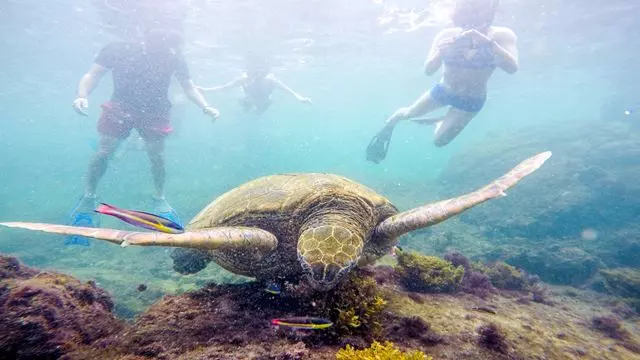
It begins with an explanation aboard a small boat. Then comes a 30-minute dive to a depth of about 12 meters. You can see reefs, colorful fish, rays, and reef sharks, and sometimes turtles.
No swimming skills or prior experience are necessary. Includes hotel transfers, instructor, and equipment. Does not include food, drinks, or marine park entrance fees, and life jackets are required in some areas and must be purchased separately.
The dry season, from August to December, offers the best visibility, which can reach up to 40 meters. Diving is possible year-round. The guides speak Portuguese, and it's advisable to wait at least 18 to 24 hours after your dive before flying.
How to organize excursions in Brazil
With seven such distinct destinations, the key is not to try to see everything in a single trip. Two or three regions are enough for a two-week stay, without spending half your time in airports. Choose according to your preferences and the time of year.
The weather also varies considerably from region to region. A good time of year in the Amazon might not be the best for the coast, and vice versa.
These ideas help to put together a logical route and prepare it well.
Suggested routes based on available days
One week: Rio de Janeiro, with Christ the Redeemer and Sugarloaf Mountain, plus Angra dos Reis or Ilha Grande.
Ten days of nature: Bonito and Iguazu, between May and September.
Two weeks: Rio and the Costa Verde, plus Manaus or Fernando de Noronha, with domestic flights.
Short getaway: Iguazu, with the helicopter flight and the walkways.
Leave a free day before each important flight. That way, if an excursion is canceled due to rain or wind, you can reschedule it.
How to get to each destination in Brazil
Rio de Janeiro is the most convenient starting point , as it has international flights and connections to the rest of the country. São Paulo is the other major gateway, and it usually offers more frequent flights to destinations within Brazil.
Angra dos Reis and Ilha Grande: by road from Rio, about three hours to the coast. To reach the island, you take a boat.
Manaus: by plane, with a direct flight or with a stopover, depending on the city of origin.
Bonito: by plane to its airport, with few frequencies, or to Campo Grande and then about 300 km by road.
Foz do Iguaçu: by plane. From Puerto Iguazú, in Argentina, you cross the border by land.
Fernando de Noronha: by plane from Recife or Natal.
Before buying your tickets, check how many layovers each leg of your journey has. On some routes, the trip takes almost a whole day, and that affects the number of excursions you can do.
Day trips in Brazil with children
For family trips, the simplest options are Christ the Redeemer and Sugarloaf Mountain, and a boat trip around Angra dos Reis. These are low-intensity outings, although they last several hours, so it's a good idea to bring water, sunscreen, and something to eat.
Snorkeling in the Rio da Prata is suitable for children as young as 10. For Polynesian canoeing, diving, and Amazon River excursions, please inquire about the minimum age for your group beforehand. For all water activities, children must use the equipment specified by the guides and be accompanied by an adult at all times.
What is the best time to travel to Brazil?
The best time to travel to Brazil depends on the region. Rio and the Costa Verde can be visited year-round, although between December and March there is more heat, heavy rainfall, and more tourists. From April to October, the weather is more stable and prices tend to be lower.
Bonito is best visited during the dry season, from May to September. In Manaus, from June to November there is less water and more wildlife is visible. In Noronha, visibility is best from August to December. Iguazu can be visited any month, with higher water levels during the rainy season.
Documents, health and advice before traveling
To enter Brazil from Argentina, you can travel with a valid national ID or passport, although it's advisable to check the requirements before leaving. For the Amazon and jungle areas, consult your doctor about vaccinations, such as the yellow fever vaccine, and mosquito protection measures.
Purchase travel insurance that covers water activities, diving, and scenic flights. When booking, check the minimum age, health requirements, the guide's language, what's included in each excursion, and any additional fees. For several activities, the guide only speaks Portuguese.
In the water, protect your cell phone with a waterproof bag and respect the rules of each park: do not touch the wildlife, do not leave waste, and do not use polluting products when prohibited.
What to pack for excursions in Brazil
For most outings, pack light clothing, a swimsuit, a towel, a change of clothes, comfortable shoes, a hat, and sunglasses. Add water and some cash in reais for taxes, drinks, and tips. In the jungle, long pants and long sleeves help protect against mosquitoes.
If you're planning water activities, ask beforehand what equipment is provided and what you need to bring. For boat trips, a light jacket is useful for the return journey, as it can get chilly in the wind.
Frequently asked questions about excursions in Brazil
These answers summarize the most frequently asked questions before booking. They help you decide quickly.
To see the details, return to the section for each excursion.
What is the most famous excursion in Brazil?
The most famous is the visit to Christ the Redeemer and Sugarloaf Mountain in Rio de Janeiro. It combines the two most recognized sights in the country and is done in a single trip.
What excursions in Brazil can you do without knowing how to swim?
Christ the Redeemer, the flight over Iguazu Falls, the Amazon river dolphins, and the introductory scuba diving in Noronha don't require you to know how to swim. The Polynesian outrigger canoe trip doesn't either, although it does have swimming stops, so let the guide know.
How many days does it take to travel around Brazil?
To explore a region at a leisurely pace, you need at least seven days. To combine Rio with the Amazon, Noronha, or Bonito, you should allow two weeks.