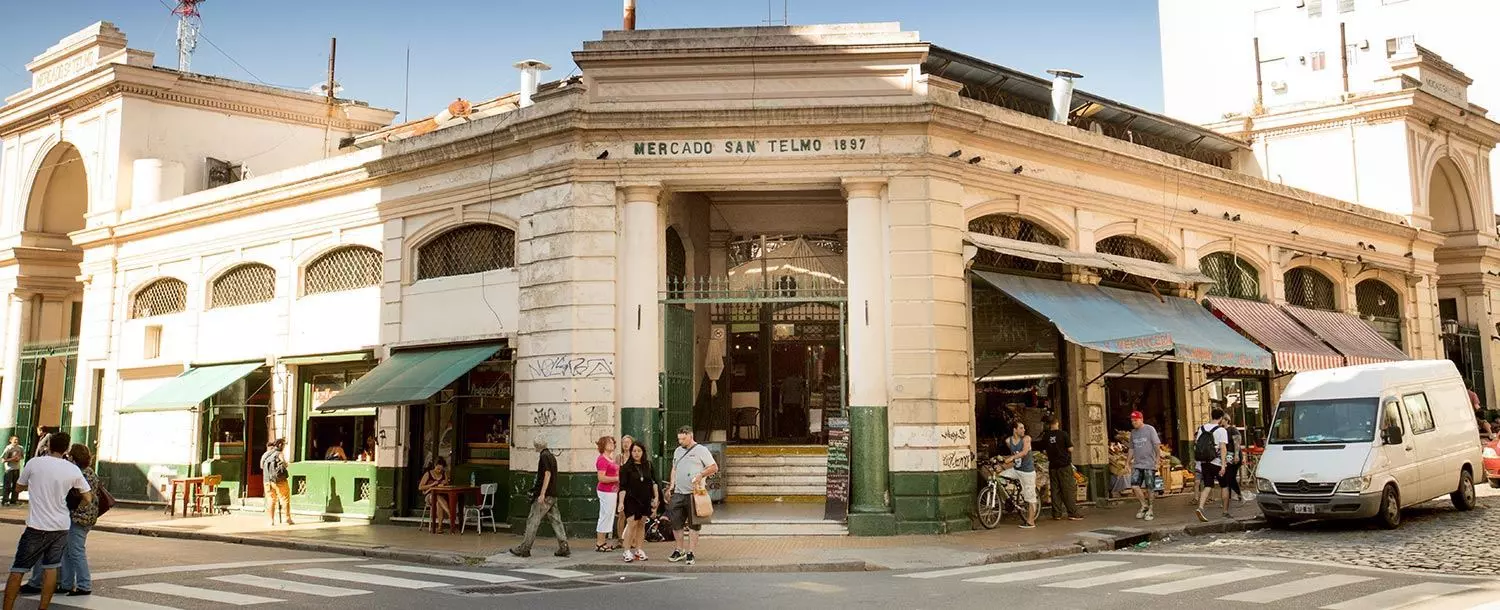
The cobblestone streets and numerous antique shops are the emblem of San Telmo, the oldest neighborhood in the City. There, each building hides years of colonial history, of Creoles and slaves. The walls bear witness to how life in Buenos Aires evolved until it became what it is today.
Whoever wants to know the beginnings of the capital of Argentina should walk its streets and places more iconic. Let's see what they are.
Minimal House
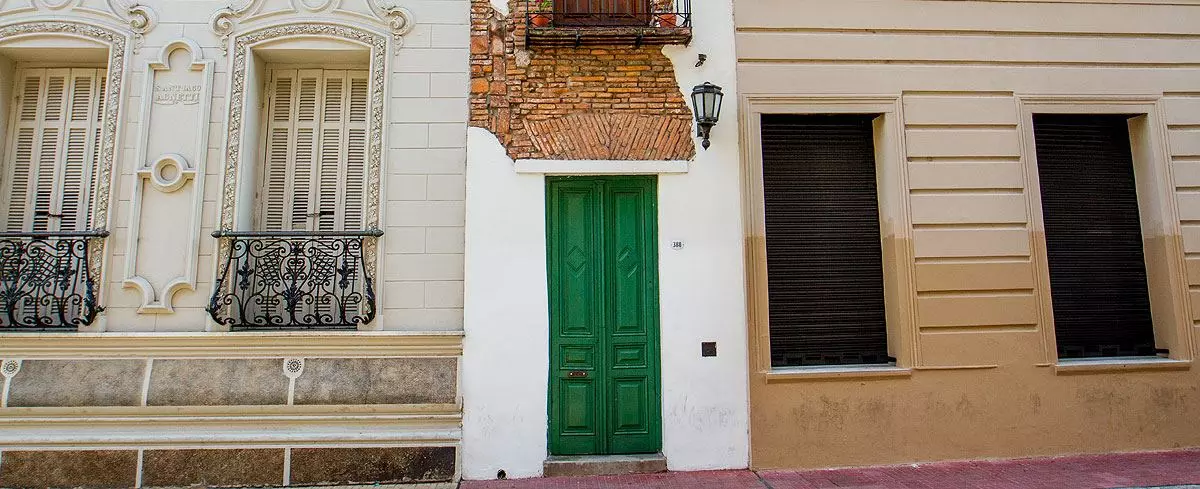
One of the main attractions of San Telmo. It is famous for being the narrowest house in all of Buenos Aires. It is only two and a half meters wide. It was part of a construction from the 1820s.
It is believed that these small homes were built for freed slaves, who were granted land adjacent to that of their former masters. This is the only example that remains in Buenos Aires.
It is said that one of the freed slaves who lived there managed to build a prosperous life and became a successful merchant. This small space holds the echoes of a past that marked the diversity and growth of Buenos Aires.
- San Lorenzo 380, C1064AFD CABA
- 01170781542
- Website
Russian Orthodox Church
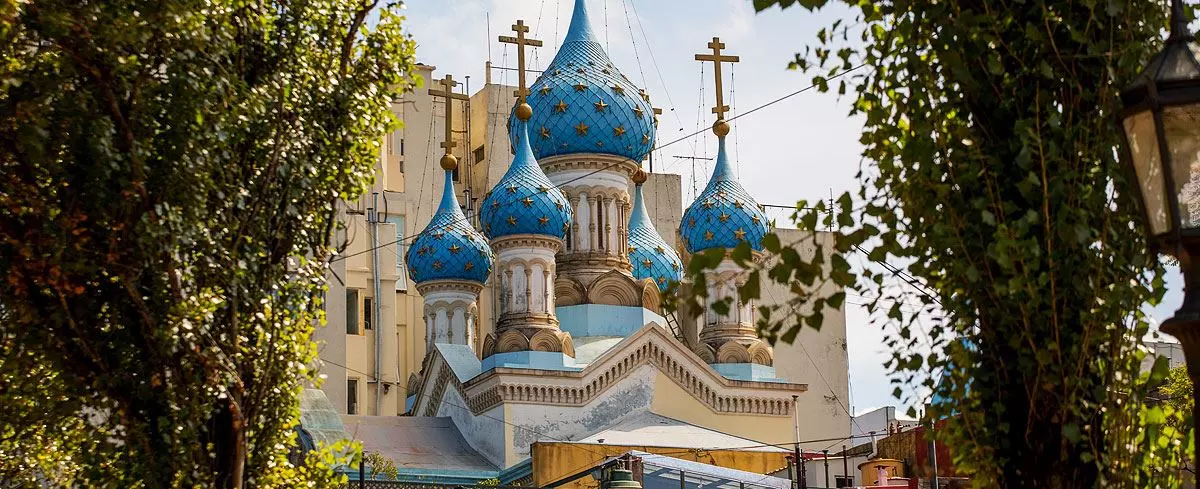
Open in 1904, it has a Muscovite style. Its full name is Russian Orthodox Church of the Holy Trinity. The original project was designed by the architect of the Holy Synod of Russia, Mihail Preobrazensky, and later adapted in Buenos Aires by Alejandro Christophersen, who designed many other buildings in Buenos Aires, such as the Palacio San Martín in Retiro.
It has some imposing blue domes that differentiate it from the buildings in the area. On its exterior it has a cross facing east and supported by chains, as is customary in Russia. The facade shows three biblical scenes and a mosaic image of the Holy Trinity brought from St. Petersburg.
- Av. Brasil 315, C1154 CABA
- 01143614274
- Website
Passage Defense
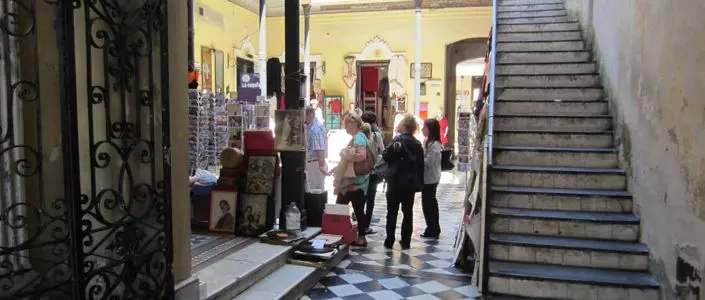
In the 19th century it was the mansion of the Ezeiza family, one of the most distinguished in the city. The rooms converge in a central gallery and the ground floor has three patios.
A school for the deaf operated in the building for several years. In 1981 it was transformed into a shopping center.
- Defensa 1179, C1065 AAU, Buenos Aires
- 01138050312
Lezama Park
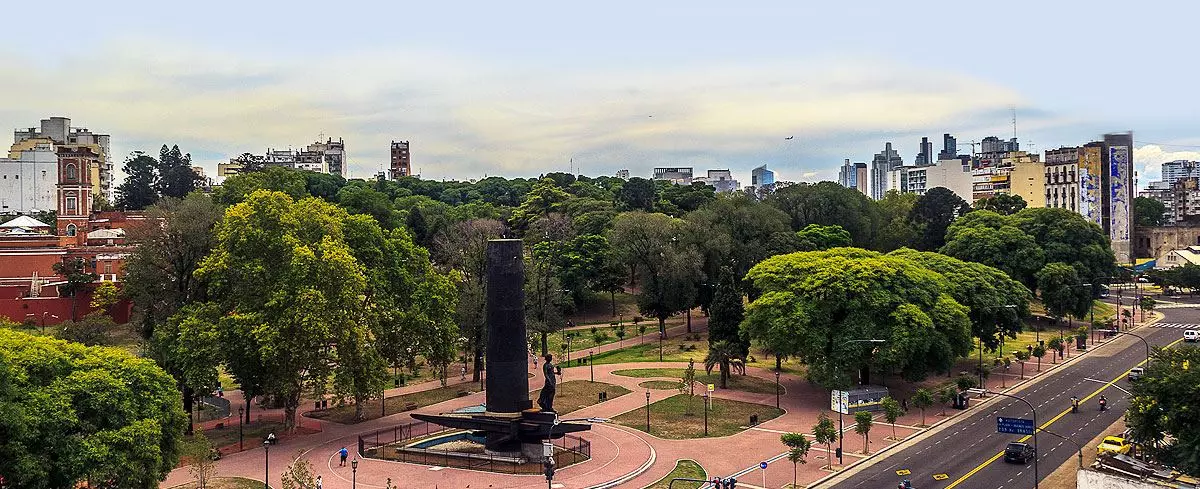
It is one of the oldest parks in the city and is open 24 hours a day. It has several trails, embankments and sculptures. From the north, you can see the domes of the Russian Orthodox Cathedral.
This property houses the National Historical Museum, which opened its doors in 1897 and promotes Argentine history. A journey is made through the cultures of the native peoples, the time of the conquest and the establishment of the colonial order, the May Revolution, the Buenos Aires society in 1810 and the crossing of the Andes, among other outstanding episodes.
The most outstanding piece is the curved saber of San Martín. This weapon used by the liberator of America is guarded by grenadiers.
- Av. Brasil, C1143 CABA
- Website
Museum of Modern Art

It exhibits more than 7,000 works by important Argentine artists from the 40s, 50s and 60s. Some of the most outstanding are those of Nicolás García Uriburu, an Argentine artist famous for having painted the canals of Green Venice.
There are also pieces by Salvador Dalí, Pablo Picasso, Joan Miró and Henri Matisse. The museum hosts traveling exhibitions, one very popular being Tomás Saraceno's The Cosmic Dust Spider Web Orchestra, and has a bookstore with publications on local artists.
- Av. San Juan 350, C1147 AAO, Buenos Aires
- 01143616919
- Website
Zanjon de Granados
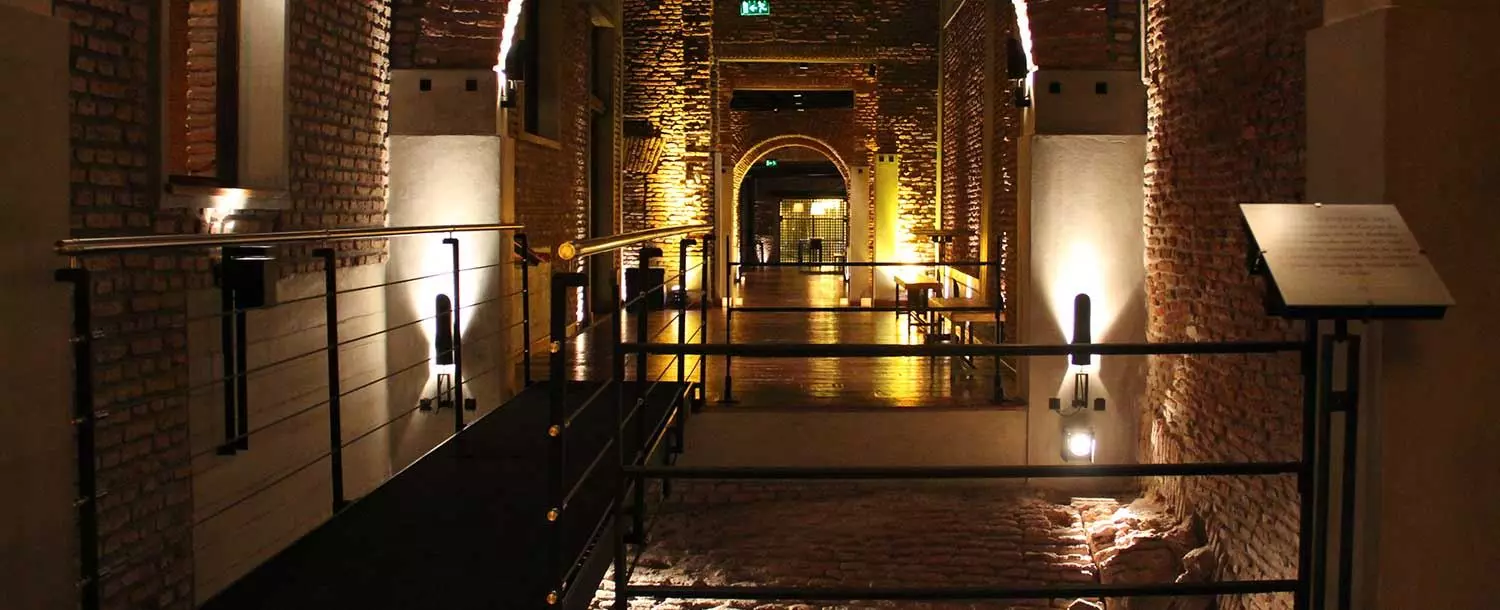
This complex is located where a stream ran, one of the three that carried water from the highlands of the city to the Río de la Plata. These currents were called the Terceros and this one in particular, El Tercero del Sur, was known as El Zanjón de Granados.
Under the a historic building from the 19th century, a section of the stream bed was found with remains of foundations, walls, floors, cisterns and cesspools built and destroyed between 1730 and 1865.
In 1985 the river it was tubed and those underground tunnels can now be visited.
During the tour you learn about 4 centuries of life in Buenos Aires. Containers, utensils and remains of constructions from 1700, 1740 and 1830, cisterns, cisterns and a drainage system are exhibited.
- Defensa 755, C1065 CABA
- 01170781542
- Website
Walrus Book
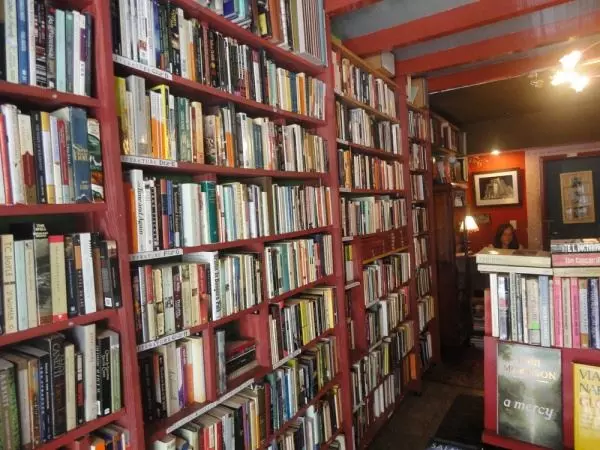
This bookstore is a great must-see for lovers of literature. Unlike the vast majority, it only sells texts in English.
You can find stories from Borges and various copies of translated Latin American authors. Comics and magazines are also sold.
They are usually used, so the price is affordable.
- Estados Unidos 617, C1101AAM CABA
- 01143007135
Pulpería Quilapan
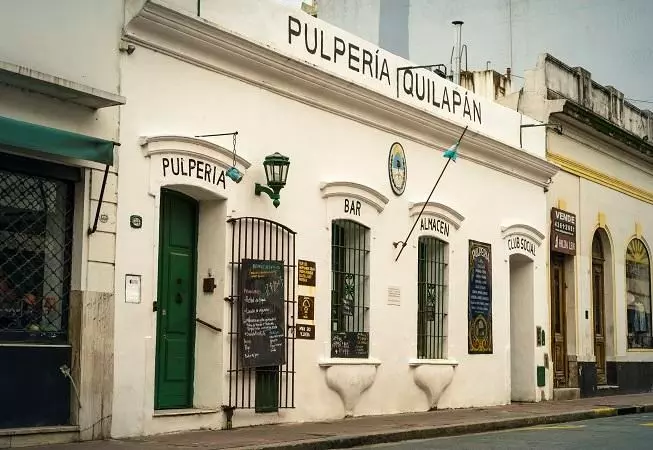
It is one of the most traditional restaurants in the neighborhood and proposes to immerse yourself in the gaucho culture.
The recommended dishes are empanadas from Salta and confit pork tenderloin. To accompany, they have their own patero wine.
The place offers folklore shows and guided tours of the old house.
- Defensa 1344, C1143 CABA
- 01143076288
- Website
The house of milk candy
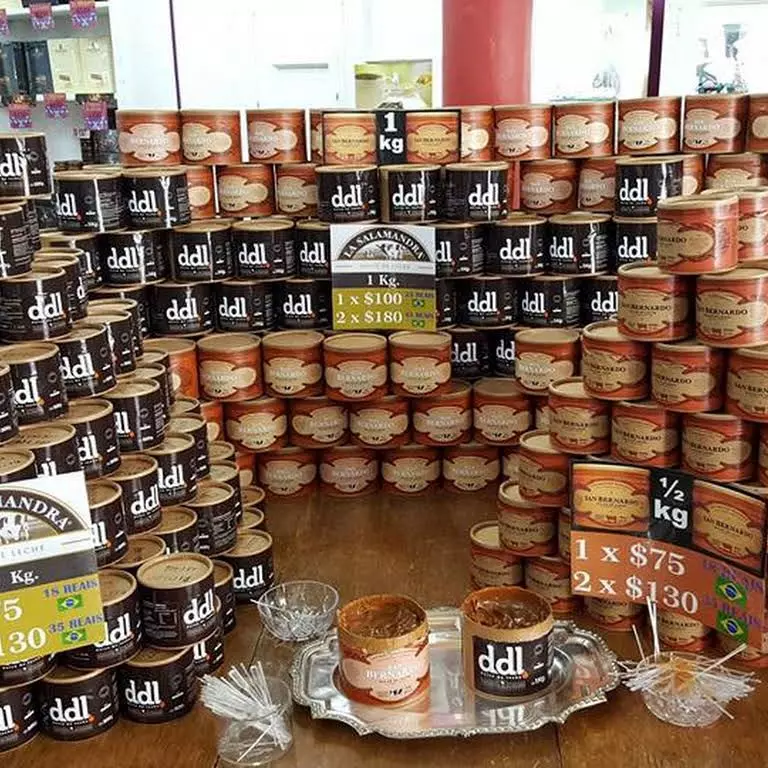
This may be the right place to buy a typical Argentine product, especially if sweetness is your downfall. It is a business dedicated mainly to the sale of dulce de leche. There are all brands and types.
In addition, you can find sweets, chocolates and other delicacies. It remains in Defense 733.
- Defensa 1047, C1065AAS CABA
- 011 4362-4437
cartoon ride
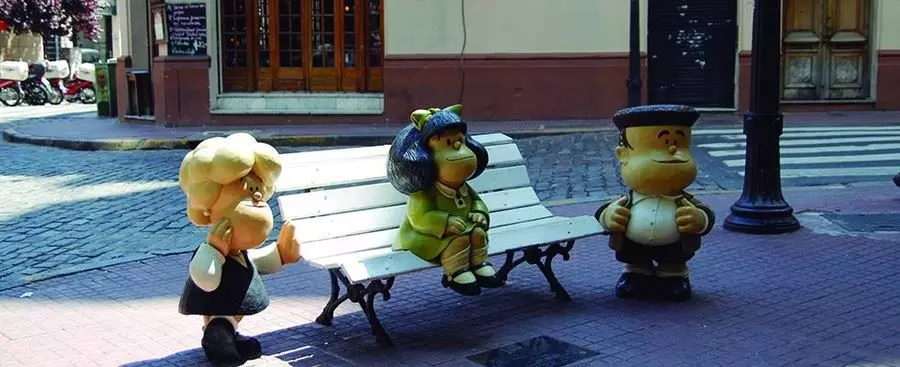
This is a circuit that pays homage to Argentine comic characters. At different points in San Telmo, Monserrat and Puerto Madero, you can find these sculptures.
Everyone's favourite: Mafalda. His image is in Defense and Chile. She is sitting on a bench next to Susanita and Manolito.
- Juana Manso 1181, Buenos Aires
- Website
Attis Bar
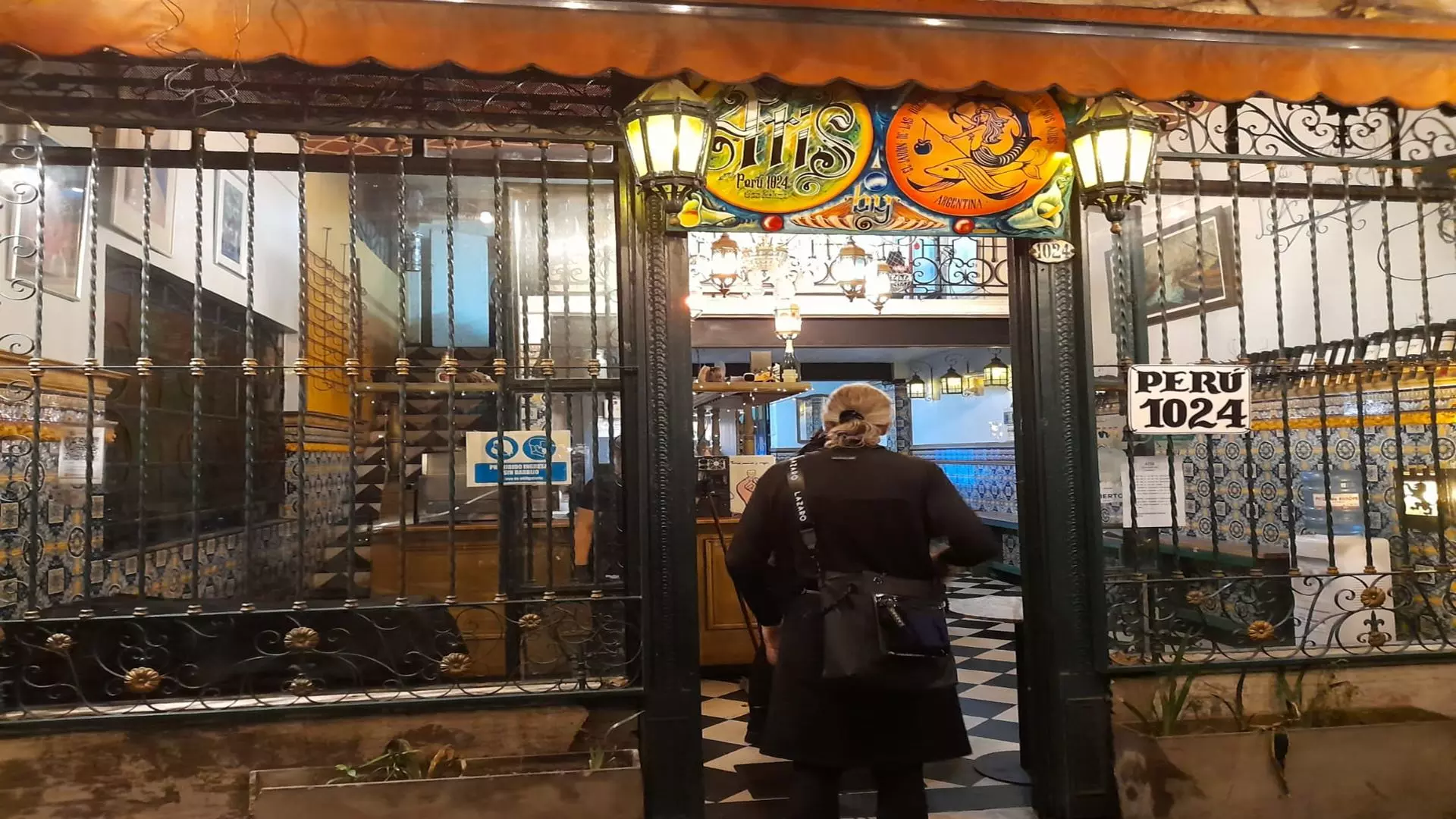
It is an excellent place to eat, have a drink and rest from all the walking. This bar is located a few meters from the San Telmo Market, on Peru Street.
It offers breakfast, lunch, snack and dinner service. Beyond its gastronomy, what delights diners is the architecture and the terrace.
The building is of 1890 and used to be a Jesuit convent, a house for immigrants, among other functions. Today, it is one of the newest bars in the neighborhood. Its garden, full of vines, is the favorite space for visitors and they take advantage of it to take photos.
- Perú 1024, C1068 CABA
Escape Games
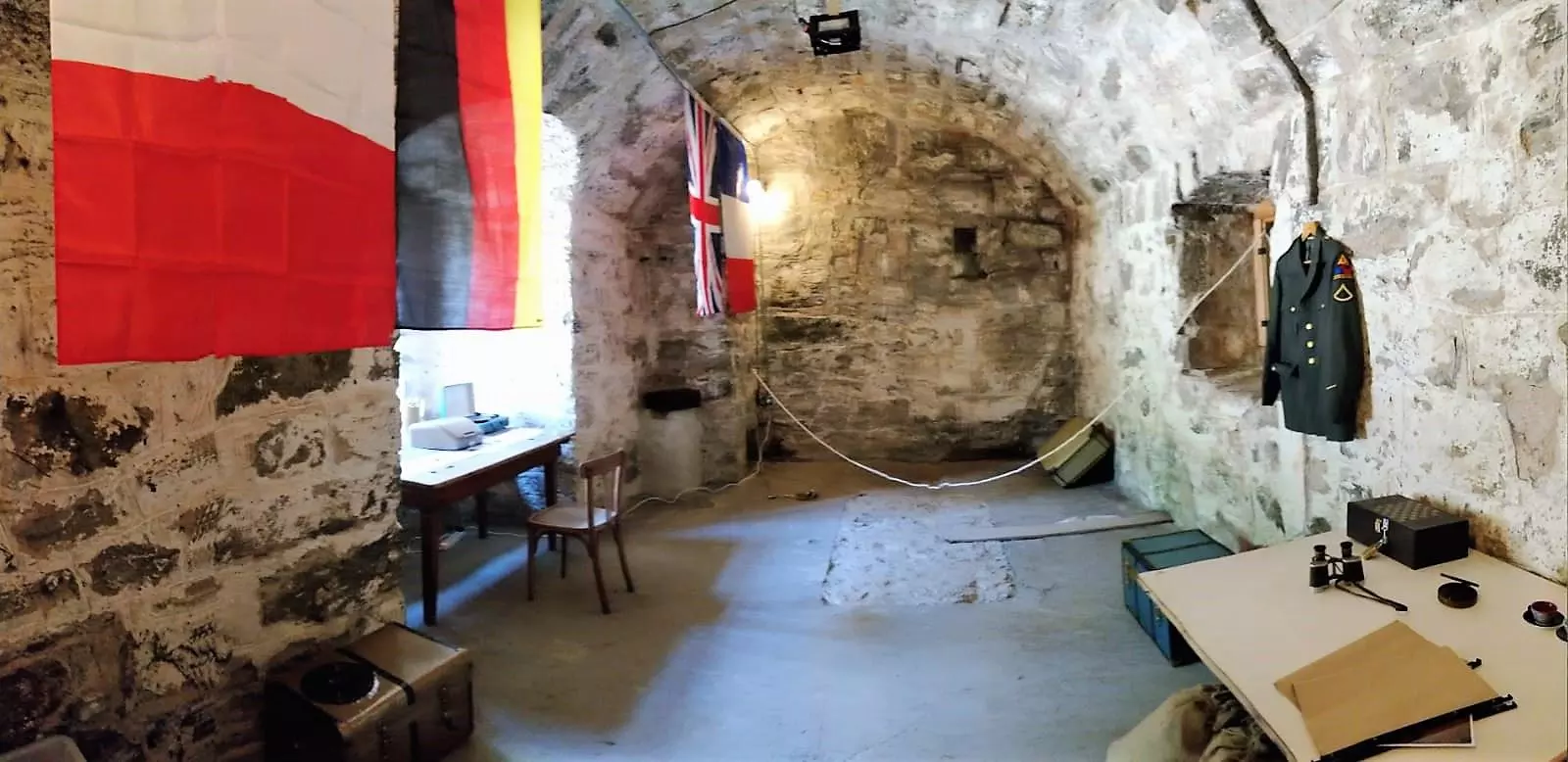
This is a program that is out of the ordinary and is for all those who are looking for an activity with adrenaline and fun.
It consists of entering a thematic room, there are Breaking Bad and El Conjuro, among others. Using logic and ingenuity, the participants have to manage to escape. They have one hour to do it.
- C1103ACM, Humberto 1º 623, C1103 CABA
- 011 4300-5737
San Telmo Market
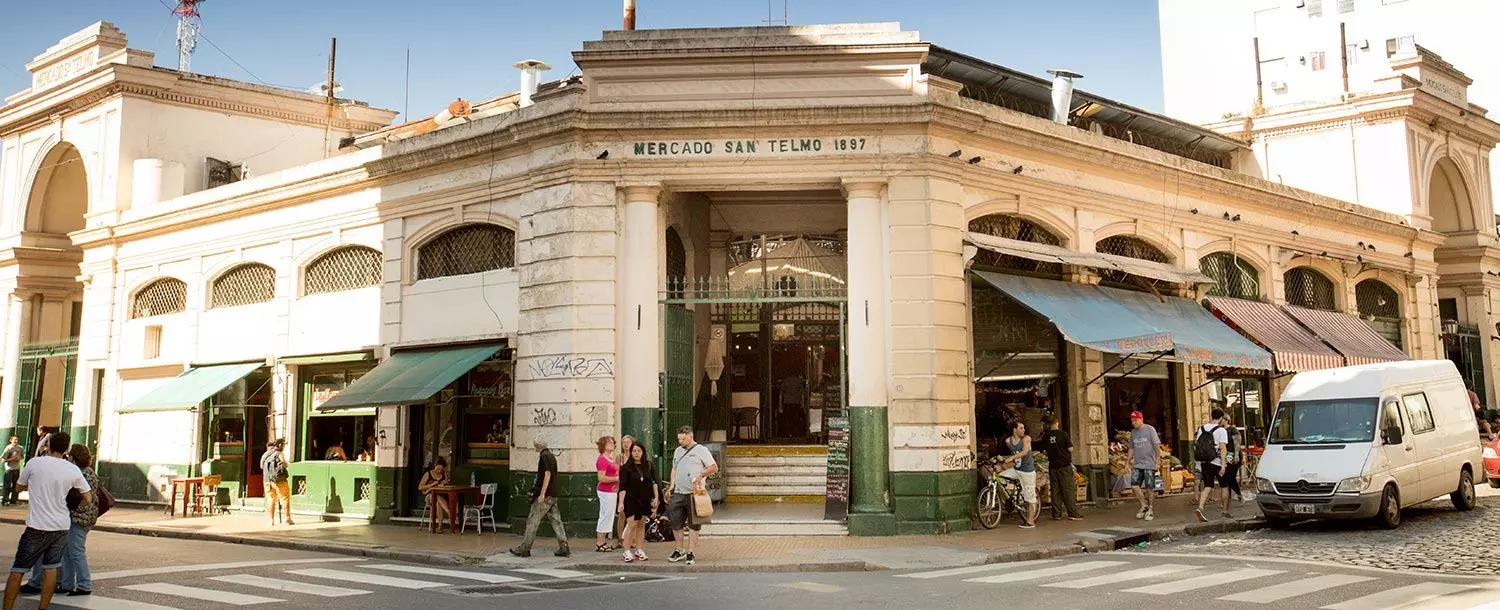
It is an internal market whose building has a typical Italian façade. It opened in 1897 to meet the needs of the immigrants arriving from Europe. The place retains its original structure of metal columns and beams, which transports visitors back in time.
Today , has stores that sell antiques, handicrafts, records and toys, fresh food and spices and has become an interesting gastronomic hub.
Coffe Town is the place that drives coffee lovers crazy. It is one of the main attractions of the place. It has coffee beans from all over the world.
Another one that catches the attention of visitors is Choripaneria, ideal for trying an Argentine classic with a twist of thread. They offer gourmet choripanes.
Keep in mind that Sunday is the busiest day , with a greater number of open stalls, but also a large influx of visitors. Many stalls only accept cash payments.
- Bolívar 970, CABA
- 011 4314-0133
Dorrego Square
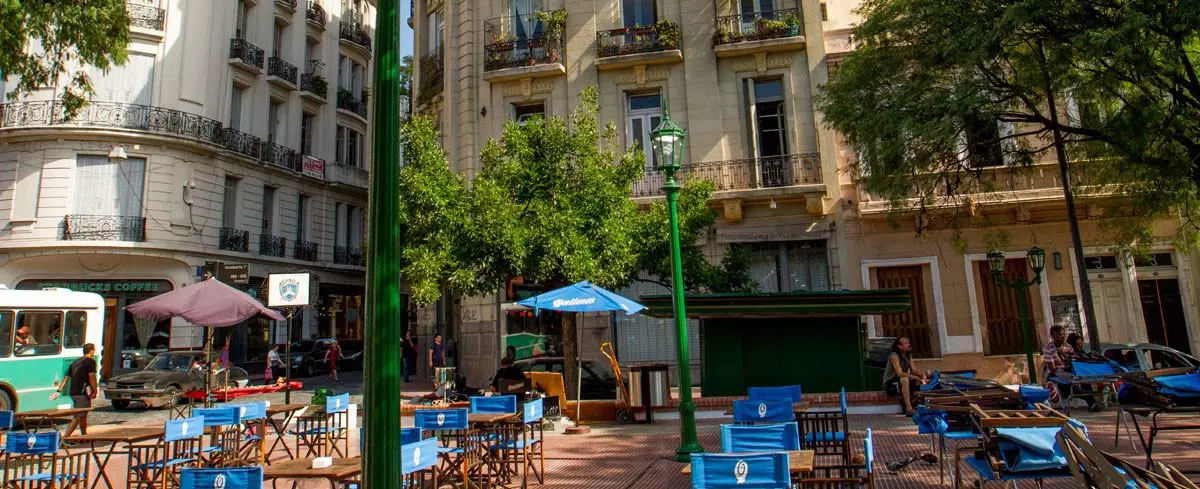
It is located in the heart of San Telmo, surrounded of bars and cafes. Every Sunday, an art and antiques fair is held there. The event is so successful that the stalls extend through the surrounding streets such as Defensa, Humberto Primo and part of the Giuffra Passage.
More than 250 stalls offer everything from antique furniture and accessories to paintings, collectible toys, books and magazines, posters, clothes, coins, photos and even glass soda siphons.
- Humberto 1º 400, C1103 CABA
- Website