
San Pedro de Atacama can be visited year-round, but the best time is from April to October , when there is almost no rain, the skies are clear, and the roads to the high plateau are open. Between December and March is the high-altitude rainy season, with storms that sometimes close roads. If you want to avoid crowds and pay less, April, May, September, and October are the most balanced months.
The climate in San Pedro de Atacama is dry and highly contrasting: the days are mild or warm, and the nights can drop below freezing in winter. Furthermore, the town sits at approximately 2,400 meters above sea level , and several excursions climb above 4,000 meters. In this guide, you'll find information on the weather month by month, what to expect in San Pedro de Atacama in September and October , whether there is snow , how to get there, and which excursions are best suited for each season.
Before choosing dates, check out the excursions in San Pedro de Atacama available and book in advance, especially for the dry season.

Where is San Pedro de Atacama located: altitude and how to get there
The travel date also depends on logistics. San Pedro de Atacama is a small town in the middle of the desert and doesn't have its own commercial airport , so almost all travelers arrive via Calama Airport with a pre-booked transfer . The distance between Calama and San Pedro de Atacama is about 100 km along Route 23, a journey of approximately 1 hour and 15 minutes by car. The road is paved and in good condition, and it crosses the Cordillera de la Sal (Salt Mountain Range).
Altitude also affects the trip. The town is at a moderate altitude, but the most famous attractions of the high plateau are much higher up . Therefore, it's best to dedicate the first day to acclimatizing and leave the higher excursions for later.
In the following sections you will understand where San Pedro de Atacama is located , its altitude and the best ways to get there from Santiago, Calama and Antofagasta .
San Pedro de Atacama: where is it located and what is its altitude
San Pedro de Atacama is located in the Antofagasta Region of northern Chile , about 1,600 km north of Santiago and near the borders with Bolivia and Argentina. The town sits in an oasis on the edge of the Atacama Salt Flat and at the foot of the Cordillera de la Sal (Salt Mountain Range).
San Pedro de Atacama sits at an altitude of approximately 2,400 meters above sea level . At this altitude, many people experience some fatigue or headaches on the first day, but this usually passes quickly. However, attractions such as the Tatio Geysers (nearly 4,300 m) or the high-altitude lagoons of Miscanti and Miñiques (around 4,200 m) can cause altitude sickness . To prevent it, drink plenty of water, eat light meals, and avoid strenuous activity for the first 24 hours.

San Pedro de Atacama Airport and how to get there from Santiago
San Pedro de Atacama doesn't have an airport as such: the closest is El Loa Airport in Calama , about 100 km from the town. From there you can get there by transfer, rental car, or bus.
To find out how to get to San Pedro de Atacama from Santiago , the most practical option is by plane: flights to Calama take around two hours. Then you take the road transfer. The direct bus from Santiago takes more than 20 hours, so it's only worthwhile if you have plenty of time and a tight budget.
San Pedro de Atacama from Antofagasta
The drive from Antofagasta to San Pedro de Atacama is about 310 km , which takes between 3 hours 40 minutes and 5 hours, depending on traffic and whether you stop in Calama. It's a comfortable route by rental car. If you're driving, fill up in Calama and bring water: there are few services along the way.
Climate in San Pedro de Atacama month by month
The climate in San Pedro de Atacama is that of a high-altitude desert. It rains very little in the town, the sun is strong during the day, and the temperature difference between day and night is significant . This difference can be 15°C or more, so it's advisable to wear layers of clothing in any month.

The season that most affects the trip is not the heat or the cold, but the rain. From December to March, the so-called Altiplano winter occurs, with storms in the mountains. The rest of the year is mostly dry, with clear skies.
Next, let's look in detail at the seasons and the two months that travelers search for the most: September and October .
Dry season: April to August
April through June is the best time to visit San Pedro de Atacama . The chance of rain drops to almost zero, the skies are mostly clear, and temperatures stabilize: days reach between 20 and 26°C and nights hover around 5°C. Furthermore, there are fewer tourists than in the summer, and hotels and tours can cost between 20% and 25% less .
In winter, from June to August, the weather is dry and sunny. Daytime temperatures are around 20 or 21°C, but at night they can drop below 0°C, especially at higher altitudes. This is the best time for stargazing because the sky is clearer and there are fewer clouds . To see the Tatio Geysers at dawn, you'll need warm clothing, a hat, and gloves.
If you're looking for peace and quiet, winter has another advantage: there are fewer people in the Valley of the Moon, the high-altitude lagoons, and the Atacama Salt Flat. The downside is the cold at night, which is felt more in campsites and accommodations without heating.

San Pedro de Atacama in September
San Pedro de Atacama in September is an ideal time to visit: it's the end of winter, there's little rain, and temperatures are starting to rise . On average, highs reach around 18 to 19 °C, and nights are cold, with lows that can drop to 4 °C.
The most important thing to know about the weather in San Pedro de Atacama in September is that it's still the dry season. The skies are clear, and excursions to the high plateau are running normally. It's a month of moderate visitor numbers: more people than in the height of winter, but fewer than during peak season.
San Pedro de Atacama in October: warmer and less rain
San Pedro de Atacama in October has warmer days, with average highs of around 21°C, and is one of the driest months of the year. Nights remain cool, but without the extreme cold of winter . It's a great time for walking, cycling, and day trips.
October is also part of the shoulder season, with fewer tourists than in the peak winter months and pleasant weather . If your goal is to combine outdoor activities with stargazing, October is the perfect time. After this month, temperatures rise and the rainy season approaches.

High plateau summer and winter: from December to March
Between December and March comes the rainy season. Visit South America describes it as the most unpredictable: it can be beautiful, but the rains can cause flash floods and make roads impassable. Storms tend to be concentrated in the higher elevations and can force the cancellation of excursions.
This doesn't mean you can't travel. In town, the weather is usually still dry and temperatures are higher. But it's a good idea to have a backup plan, check the forecast, and book tours with flexible cancellation policies.
San Pedro de Atacama with snow: is it possible?
Snow is very rare in the town of San Pedro de Atacama , as its altitude of 2,400 meters is insufficient for frequent snowfall. However, on the Altiplano, above 4,000 meters, it can snow during some winters and summer storms . When this happens, the landscape turns white, but some roads may be temporarily closed.

If you dream of seeing San Pedro de Atacama covered in snow , your best option is a high-altitude trip, such as to the Tatio Geysers or the high-altitude lagoons , and you need to be flexible with your travel dates. Always check road conditions before you leave. Snow is an unpredictable extra, not something that can be guaranteed.
What is the best time depending on what you want to do
There's no single answer to when it's best to visit San Pedro de Atacama , because it depends on what you're looking for. Those who want to see stars choose moonless nights and clear skies; those who prefer hiking look for mild days; and those traveling on a budget aim for the low season.
The good news is that tours in San Pedro de Atacama operate almost year-round. Some activities, like hot air ballooning, are weather dependent, while others, like hiking, are best enjoyed in mild temperatures.
As a simple rule: for stargazing in San Pedro de Atacama , the winter months (June to August) have the clearest skies. For hiking and cycling , autumn and spring (April to June, September, and October) are best; and to spend less , aim for April, May, and the winter months outside of school holidays.
Choose your tour in San Pedro de Atacama: excursions for every season
Excursions are the main reason to visit San Pedro de Atacama, and almost all of them are half-day excursions. This allows you to combine a morning tour with an afternoon one without wasting time. Let's look at the excursions in San Pedro de Atacama that are best suited to each time of year, with useful information about each location.
Astronomical tour in San Pedro de Atacama
The Atacama sky is one of the best in the world for stargazing . The dry air, the altitude, and the lack of light pollution explain why there are giant observatories in the region. If you're looking to see the Milky Way without expensive telescopes, this is the place.

The astronomical tour in San Pedro de Atacama begins with a talk that connects the Andean worldview with modern astronomy. Then, visitors arrive at an archaeoastronomical plaza, designed to reduce light pollution. There, they can observe stars, planets, star clusters, and nebulae with the naked eye and with high-precision telescopes .
The experience includes an audiovisual presentation about the universe and an individual astrophotography session, which leaves you with a souvenir photo. It's easy and suitable for almost everyone. In winter, bring a hat, gloves, and warm clothing, as the temperature drops considerably after sunset.
Astronomy Safari: Night observation in the desert
If you prefer a smaller group, the Astronomy Safari is another option for stargazing. Instead of an observation deck, this tour takes you further from town to a secluded spot in the desert, away from light pollution . The darker the location, the more stars you'll see.
The Astronomy Safari in the Atacama Desert is done by van, in groups of up to six people . Traditional wool chairs and blankets are provided for the cold. A certified guide explains the constellations and planets, and 16-inch and 12-inch telescopes are used.
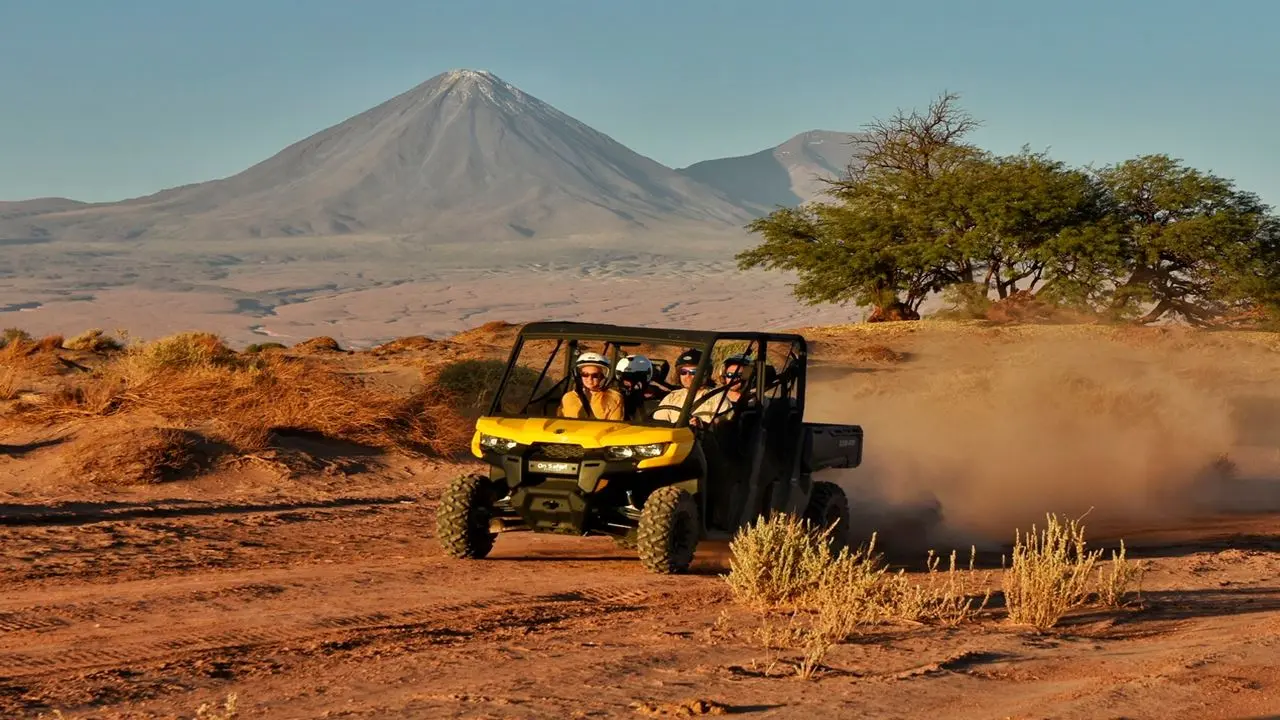
It's a relaxing and easy activity, and it works year-round. However, the full moon reduces the number of visible stars, so it's best to choose dates close to the new moon.
San Pedro de Atacama: the Valley of the Moon and the Salt Mountain Range
The Valley of the Moon is the most classic excursion in San Pedro de Atacama. It's located about 13 km west of town, within the Los Flamencos National Reserve, and is managed by local indigenous communities. The landscape seems otherworldly: salt, gypsum, and clay formations sculpted by wind and water over millions of years, with very little vegetation.
The San Pedro de Atacama, Moon Valley, and Salt Mountain Range tour includes a leisurely hike with stops at the Great Dune, the Amphitheater, Las Tres Marías (The Three Marys), and the Kari Lookout (also known as Coyote Rock) , located at the highest point of the mountain range. From there, you can watch the sunset, when the light paints the landscape in golden and reddish hues.
This is a year-round excursion, but in summer it's advisable to bring sunscreen and water, and in winter a jacket for when the sun goes down. Park entrance fees are not included in the tour and must be paid separately.

Hidden Lagoons of Baltinache
The Hidden Lagoons are seven turquoise saltwater lagoons in the heart of the desert , about 40 km south of the town and at an altitude of 2,400 meters. Their salinity is similar to that of Laguna Cejar and the Dead Sea, creating a striking contrast of intense blue against the light salt and sand soil.
The Laguna Baltinache or Hidden Lagoons excursion takes place along the road that connects San Pedro with Calama . It's a peaceful drive around the lagoons, with excellent spots for taking photos and admiring a landscape unlike any other in the world. There are morning and afternoon tours, and the afternoon tour allows you to enjoy the sunset.
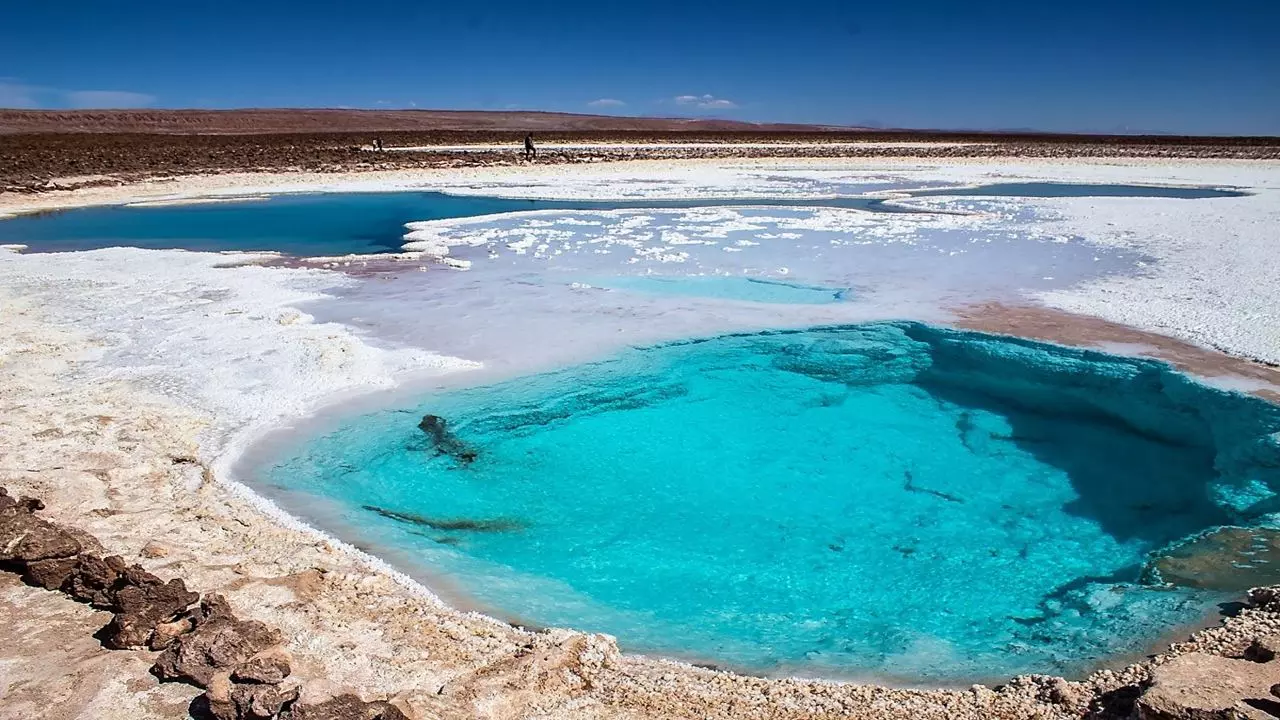
Important note: swimming is not allowed in these lagoons to protect the shallow ecosystem. If you'd like to float, try Laguna Cejar. The minimum age is 6, making it one of the most accessible excursions for families.
Trekking along the Salado River and hidden waterfall
If you're looking for the hidden waterfall of San Pedro de Atacama , trekking along the area's rivers is one of the best ways to get close to the pools and small waterfalls that form in the desert. The route is at an altitude of 3,200 meters and combines two very different landscapes in a single morning.
The trek along the Salado River begins in the Angostura Canyon, where you enter the Río Grande . This section boasts the most water and vegetation, with natural pools and small waterfalls. Further along, the vegetation disappears, and you walk along the Salado River, a nearly dry riverbed that flows through a salt flat and past eroded rock formations . The hike concludes with a visit to petroglyphs, the area's rock art.
It's about 5 km of medium difficulty over uneven terrain. It's an ideal activity for autumn and spring, when it's not extremely hot.

Hot air balloon flight over the desert
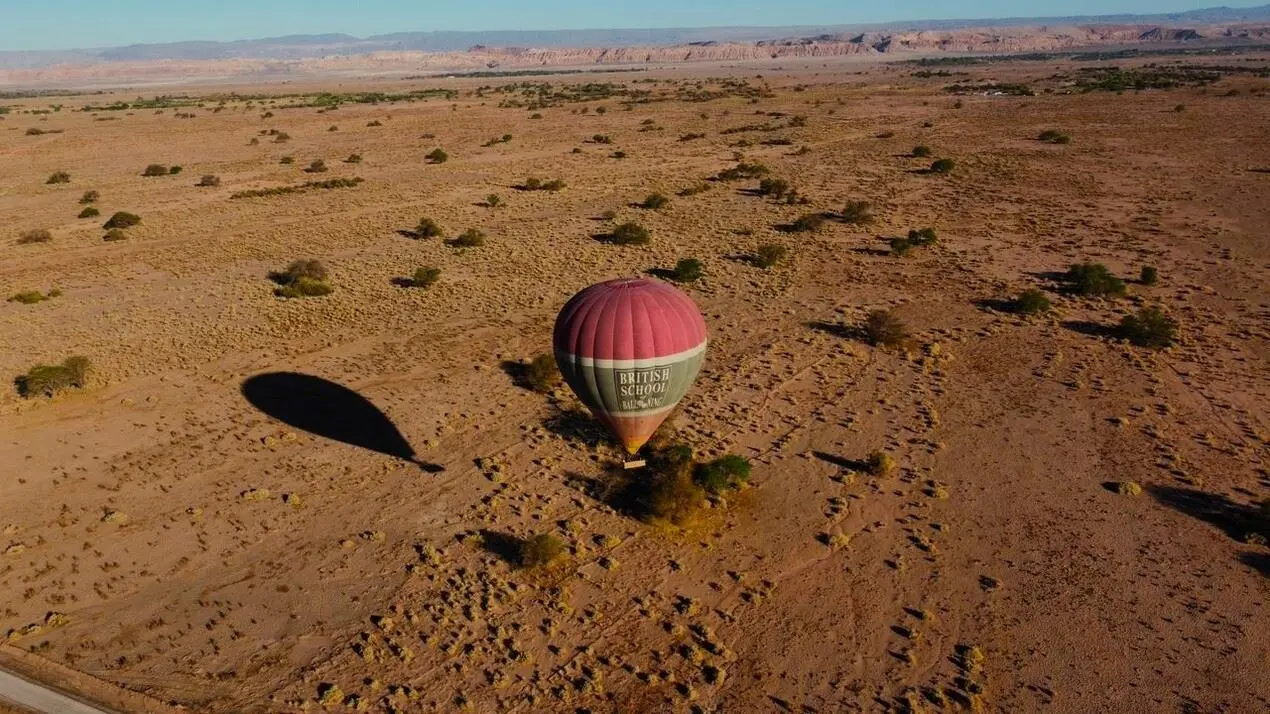
Watching the sunrise from the air is one of the most special experiences in San Pedro de Atacama . From above, you can better appreciate the vastness of the desert, and according to traveler reviews, you can make out volcanoes, salt flats, and the changing colors of the sky during sunrise .
The hot air balloon flight in San Pedro de Atacama is a tethered flight: the balloon ascends and descends in a controlled manner, anchored to the ground, and each flight carries up to six people. A light breakfast is served beforehand, and upon landing, a more substantial breakfast with sparkling wine is offered. At the end, the pilot provides a certificate with the flight details.
The physical exertion is low, but you need to be able to tolerate the altitude. It operates year-round, although it depends on the weather: strong winds can cancel the flight. Therefore, it's advisable to book it at the beginning of your trip, to allow for a few extra days in case of rescheduling.
Best of San Pedro de Atacama Package
If you'd rather not organize anything yourself, a package includes accommodation, transfers, and excursions . This is useful if it's your first time in the desert and you want to see the main sights without having to plan your own itinerary.
The Best of San Pedro de Atacama package lasts five days and four nights . It begins with a transfer from Calama airport. This is followed by a full-day excursion to the Atacama Salt Flat and the high-altitude lagoons, with stops at the Piedras Rojas viewpoint, the Miñiques and Miscanti lagoons, the town of Socaire, the Laguna Chaxa National Reserve, and the town of Toconao.
Another day is dedicated to the Valley of the Moon at sunset, with its statues and salt caverns. Another day departs very early for the El Tatio Geysers, the largest geothermal field in the Southern Hemisphere, and ends with a floatation in Laguna Cejar. The last day is free, and you return to the airport. Since it combines altitude and rest, the order of the excursions helps with acclimatization.
San Pedro de Atacama with children: when to go and what to keep in mind
Traveling to San Pedro de Atacama with children is possible and a lot of fun, but it requires choosing the right dates and activities. Moderate temperatures, without heavy rain or extreme cold, are the most important factors when traveling with kids. That's why April, May, September, and October are usually the most comfortable months.

You also have to consider the altitude, the strong sun, and the fatigue from long journeys. Many children adapt without problems, but it's best to pace the activities and not schedule high-altitude excursions on the first day.
These are the keys to planning a family trip.
What time of year to choose to travel with children
Autumn and spring offer the best balance. In winter, the nights are very cold, which tires young children during nighttime activities and early morning outings. In summer, there is a greater risk of thunderstorms at higher altitudes and very hot middays.
Minimum ages and activities suitable for children
Each excursion has its own minimum age. The Hidden Lagoons tour accepts participants from age 6, the Salado River trek from age 10, and the bike tour from age 15. The Astronomy Safari is listed as suitable for ages 10 and up , although it is indicated as family-friendly; please confirm this detail before booking.
For younger children, the Valley of the Moon and short walks around the town are the best options. Avoid hikes above 4,000 meters with young children and consult your pediatrician before traveling.
Where to eat in San Pedro de Atacama
Caracoles Street is the town's culinary hub , so you'll find most of the restaurants there, serving Chilean, Andean, and international cuisine . The easiest way to explore is to walk around this area and the surrounding plaza, choosing according to your budget.
Try dishes made with local ingredients, such as quinoa, llama meat, and Andean stews . Since many tours start early or end late, it's worth having a snack on hand and confirming what each tour includes. The three options below are easy to find and are among the highest-rated by travelers and locals.

Adobe: dinner with a campfire and Chilean wine in the heart of Caracoles
Adobe is located at Caracoles 211 and is known as a desert classic. It's one of San Pedro's most traditional spots: it opened in August 1997 and combines Chilean, Andean, and international cuisine, with dishes like quinoa risotto with mushrooms , sopaipillas with cochayuyo ceviche , and shrimp in pil-pil sauce.
What truly sets it apart is its open-air terrace with a crackling fire and live music , perfect for a special dinner under one of the desert's most star-filled skies. It also boasts a good selection of Chilean wines . There's often a line during peak hours, so it's best to arrive early.

El Charrúa Pizzeria: pizza with avocado to share
Pizzeria El Charrúa is a casual and convenient option on Caracoles Street . Their specialty is avocado pizza , a must-try combination thanks to the quality of the local Chilean ingredients. You can order half-and-half pizzas, which is useful when your group has different tastes, and the family-size pizza is enough for two people.
It's a good alternative when you're coming back from an excursion and want a quick, hearty, and hassle-free dinner right in the town center.

La Casona: drinks and live music before dinner
La Casona operates at Caracoles 195 A , in the historic center, and has three environments: a colonial hall, a Chilean space with a large bar and a terrace with an open-air stage and heaters for the cold.
Their specialty is the double pisco catedral , and the menu also includes classic Chilean cocktails like the pisco sour and the terremoto. In the afternoon , there's usually a happy hour and live music on the terrace, so it works well as a stop before dinner . They also offer Chilean food with vegetarian and vegan options.
Summary: When is the best time to visit San Pedro de Atacama
To remember the essentials:
Overall best time: April to June, with clear skies, almost no rain, and lower prices.
Best for stargazing: June to August, with dry and cold nights, although there are good nights all year round.
San Pedro de Atacama in September and October: pleasant weather, little rain and moderate crowds.
Rainy season: from December to March, with risk of storms and road closures at higher altitudes.
Snow: very rare in the village; possible on the high plateau above 4,000 meters.
Altitude: the village is at 2,400 meters and some excursions exceed 4,000.
Distances: Calama is about 100 km away (1 h 15 min) and Antofagasta is about 310 km away.
If you're still undecided, April, May, September, and October are the best months to choose from. Pick your dates, check out the excursions, and book in advance to make the most of your trip.