
In the far north of Chile, the Tarapacá Region stretches where the Atacama Desert meets the Pacific Ocean . Its regional capital, Iquique, boasts an extensive coastline that safeguards industrial and archaeological heritage. It has a unique combination: within a single city, there are beaches along the Pacific, a dune several kilometers long clinging to the houses, and a historic wooden center built with silver from the nitrate industry.
In short: Iquique is located in the Tarapacá region, in northern Chile; with three days you can reach the city, take a long excursion to the desert and enjoy some beach time; and the airport, Diego Aracena, is in Chucumata, about 48 km to the south.
This guide brings all that together: how to get there, what to see in the city, which excursions are worthwhile and for whom, where to stay, and how to plan your shopping. If you already have dates, you can browse excursions in Iquique and choose the ones you like best . And if you want to travel from your city with everything arranged, we invite you to check out our deals on accommodation, transfers, and activities in Iquique .

Where is Iquique and how to get there
The city is located on the northern coast of Chile, more than 1,800 kilometers from Santiago . Its main national transportation route is Route 5 North , the backbone of Chile's road network, which crosses the driest desert in the world. If you want to know how to get to Iquique from Santiago, Chile by land, keep in mind that the trip by bus or private vehicle takes 22 to 24 hours. Therefore, it's a good idea to consider rest stops in intermediate cities like La Serena or Antofagasta.
And that's why air travel is the most common way to get there. The direct flight from Santiago, Chile to Iquique takes about two and a half hours. The flight lands at Diego Aracena International Airport , located 45 kilometers south of the city of Iquique.
From Argentina, the overland journey is long and crosses the Andes Mountains via the Jama Pass , at approximately 4,200 meters. The typical route starts in Jujuy or Salta, passes through Susques, enters Chile, and descends to San Pedro de Atacama; from there it continues to Calama and arrives in Iquique.
From Salta to Iquique is about 1,000 km , roughly a fifteen-hour drive without stops; from Calama to Iquique, about five. Splitting the trip with an overnight stay in San Pedro de Atacama makes it more manageable and adds a stop that justifies the journey. By bus, there are connections with a transfer in Calama that take about eighteen hours.
Two warnings about the pass. It can close due to snow or ice, even in late October: this happened on October 27th and 29th, 2016. By early November, it was open, with Immigration services available from 8 am to 8 pm. Hours change, so confirm them with the Gendarmerie or other official sources on the day of your departure. And because of the altitude, avoid spending too much time in the pass area if you feel unwell.
Things to do in Iquique: urban activities and tours
Iquique invites you to combine coastal life with shopping and historical heritage . The city is divided between its historic center with Victorian architecture and its southern zone, with modern urban development. In the surrounding area, natural and cultural attractions extend to the vast Atacama Desert and the Andean highlands.
Many of the distances are long and require specially equipped vehicles, so organized tours are the safest option. Here are the most highly recommended:

Panoramic City Tour of Iquique
The center of Iquique is better understood if you know its origins. During the nitrate boom, the city was one of the richest in northern Chile, and that wealth left behind Oregon pine wood buildings, with Georgian influence, along the Paseo Baquedano ; the Clock Tower dates from 1877.
The Iquique city tour is the perfect way to get a first panoramic impression of the city and how it works. This guided tour includes transportation between points furthest from the city center . The first part is a walk along Paseo Baquedano, the pedestrian avenue lined with 19th-century mansions, a testament to the nitrate boom.

The tour continues to Plaza Prat to view the historic Clock Tower (built in 1877) and the exterior of the Municipal Theater . Afterward, a drive along the coast takes you through the Peninsula area. There, you'll enjoy panoramic views of the beaches, the Casino, and the urban development of the southern part of the city.
Then comes the less common part: a navigation through the bay, between fishing boats and the port, with a sea lion islet along the way, to the Emerald Buoy , which marks the place where the corvette sank during the Naval Battle of Iquique, on May 21, 1879. Finally, there is time to explore the commercial area and do some shopping.

Tour to the Humberstone and Santa Laura Saltpeter Works
Located 45 kilometers east of the city is one of the most important industrial sites in the Americas. The excursion to the Humberstone and Santa Laura Saltpeter Works takes you along Route A-16 towards these former mining settlements, declared a World Heritage Site by UNESCO in 2005.
This tour invites you to walk through ghost towns that housed thousands of workers during the oil boom , which lasted from the late 19th to the early 20th century. In Humberstone, the focus is on social life: you'll visit the old general store, the market, the hotel, and the imposing wooden theater that still stands . What's striking is the scale: it was an entire town in the middle of a waterless desert, and today it's frozen in time.

The tour then continues to the Pampa del Tamarugal National Reserve, with a stop at the CONAF environmental education center to learn how plants survive in saline soil, and ends at the Pintados Geoglyphs Park , where hundreds of figures are etched into the hillsides: people, animals, and geometric designs, created by the people who crossed this area centuries ago. It's the most historically rich excursion per hour; ideal for those who want to understand how people lived and worked in the desert.
Puchuldiza Geysers and the Altiplano Route
If you're traveling to Iquique in search of its extreme geography, the excursion to the Puchuldiza Geysers and the Altiplano Route is the perfect plan. This ascent into the Andes Mountains takes a full day: it departs early in the morning from Iquique and climbs along Route A-55 to over 4,200 meters above sea level, reaching the town of Colchane .
The main attraction is the Puchuldiza geothermal field . Here, groundwater boils due to volcanic activity and emerges in plumes of steam. During the Andean winter, sub-zero temperatures freeze the surrounding water, creating gigantic structures and blocks of ice around the steam vents .

The itinerary includes stops at bofedales (high-altitude wetlands) to observe llamas, alpacas, and vicuñas in their natural habitat . There is also time to visit indigenous villages such as Cariquima , renowned for preserving the ancestral techniques of Aymara weavers.
Cavancha, The best beach in Iquique, Chile
If your goal is to enjoy the sea, Cavancha beach is the main attraction . It's characterized by its warm waters (compared to the rest of the country) and waves suitable for safe swimming in its northern section. Meanwhile, the southern section is world-renowned for its hollow waves , which attract local and international surfers.

Cavancha boasts a complete infrastructure: pedestrian walkways, bike paths, palm-shaded rest areas, and a wide range of restaurants nearby . To the south lies Playa Brava , which is not suitable for swimming but features a large coastal park ideal for walking.
Rock art route: the Giant of Atacama
If geoglyphs are your main attraction, the Rock Art Route focuses on them for ten hours . It begins at the Atacama Giant , a human figure 86 meters high, covering approximately 3,000 m², on the slopes of Cerro Unita, about 84 km from Iquique.
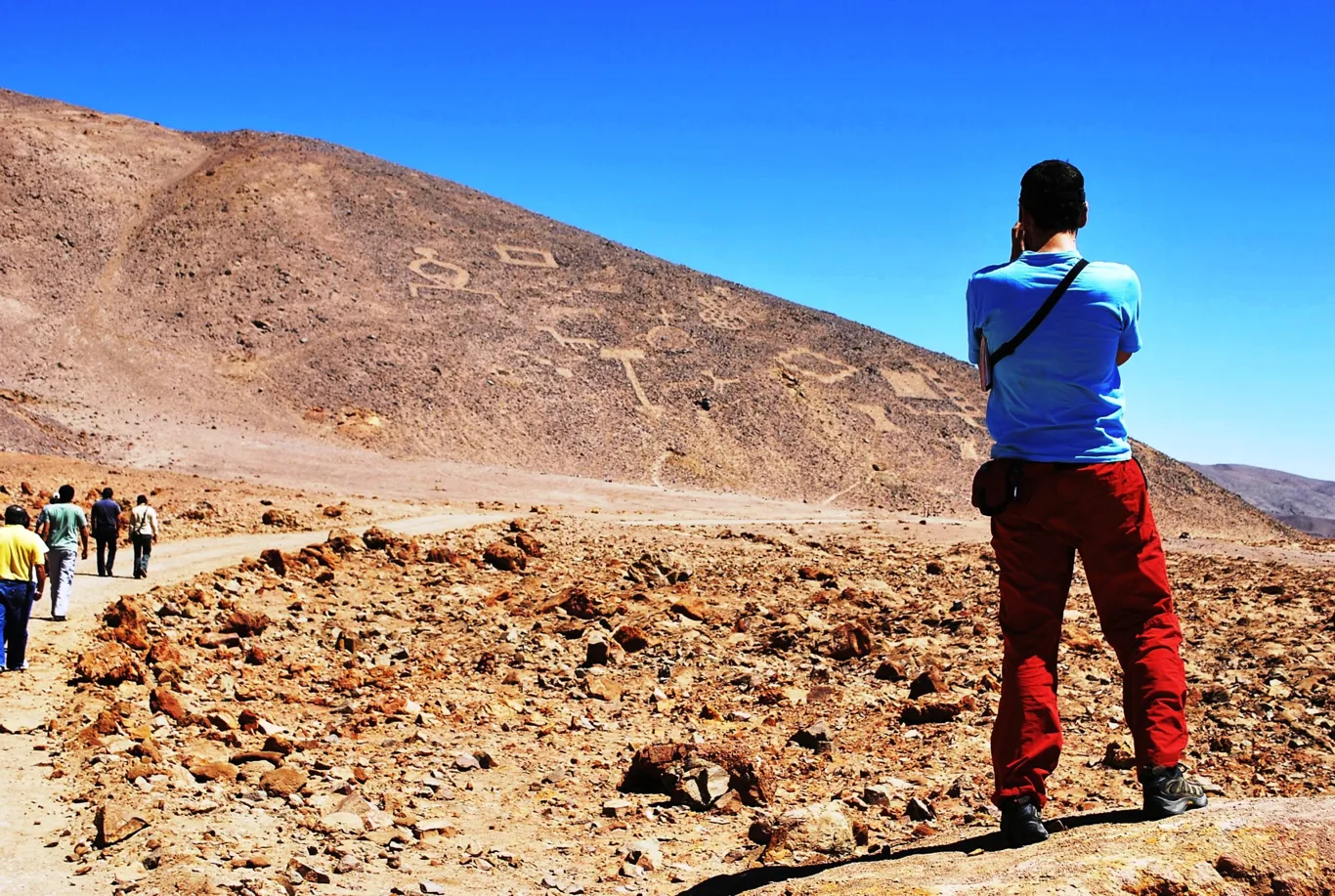
It was created between 1000 and 1400 AD, combining accumulated stones and disturbed earth, and its meaning is not known for certain: one hypothesis is that it represents Tunupa-Tarapacá, an Andean deity linked to thunder, lightning, and volcanoes. It is located near twenty other figures on the same hill and can be seen from a viewpoint a few minutes' walk from the parking lot.
Then you pass through Huara and the Tamarugal reserve, with a stop at the environmental center, and end in Pintados, which has more than 300 figures .
Pica, La Tirana and the nitrate towns
The tour to the Great Oasis of Pica and the nitrate mining towns lasts about eleven hours and is the most varied option for those who don't want to spend the whole day among ruins. It combines Humberstone and Santa Laura with two very different stops .
La Tirana is a small town that, every July between the 15th and 17th, welcomes hundreds of thousands of people and more than 200 dance troupes for the festival of the Virgen del Carmen . Tradition tells the story of Ñusta Huillac, daughter of an Inca priest , who fell in love with a Portuguese prisoner and was killed by her own warriors.
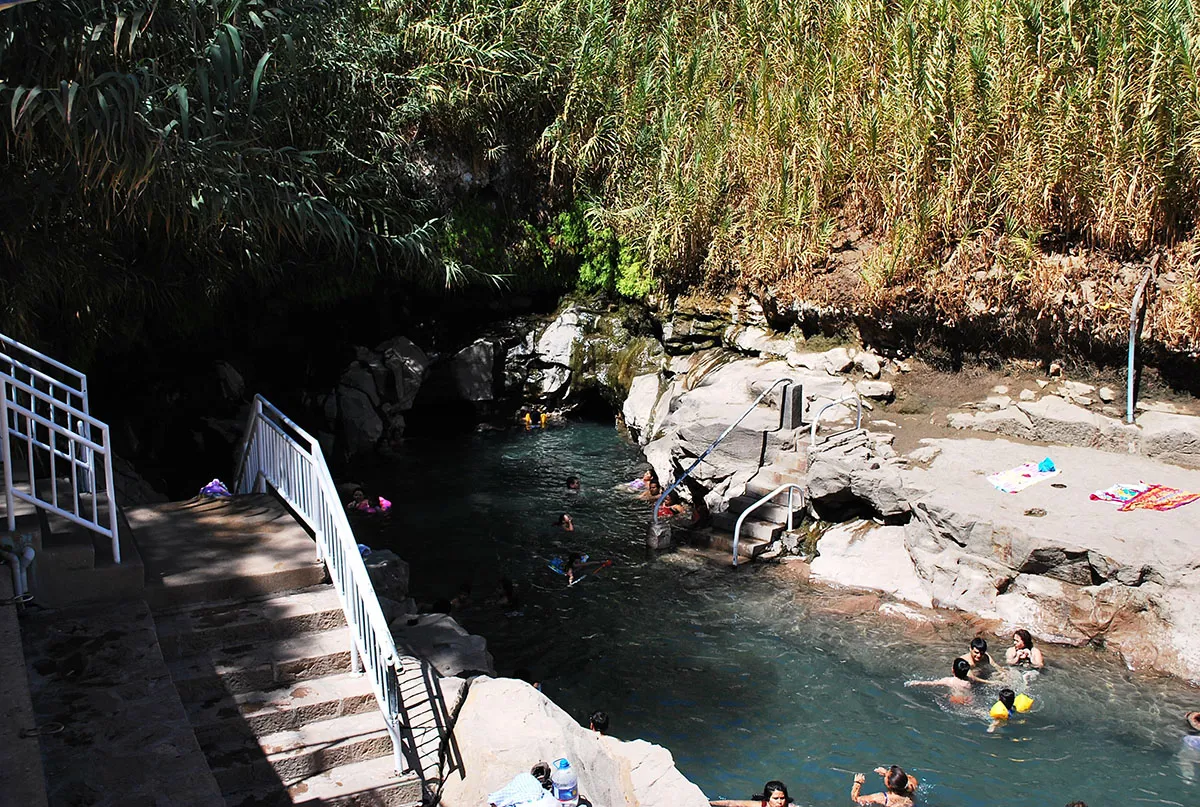
The second contrast is Pica , an oasis about 114 km from Iquique whose name in Quechua means "flower of the desert" and which has been inhabited for over 7,000 years. Mangoes, guavas, and citrus fruits grow there, including the Pica lemon, and you can sample natural juices, sweets, and alfajores (a type of cookie) from Pica. There is a semi-thermal pool, Cocha Resbaladero , at about 30°C, surrounded by rocks and vegetation (entrance fee not included). Further along the route, Matilla preserves an 18th-century Spanish wine press, a church, and a bell tower.
Altiplano: three very different excursions
The high plateau is several hours from the coast, and there are three ways to reach it from the city. All three involve a long journey, and the altitude can be a factor: therefore, it's advisable to consult a doctor if you have heart or respiratory problems, or if you are traveling pregnant or with young children. Bring warm clothing, even in summer.
The tour to Isluga Volcano National Park lasts approximately fourteen hours. It begins at the Atacama Giant and ascends through Chusmiza , an Andean village with hot springs, and through the Aroma and Marte valleys, with their unique geological formations. In Cariquima, there is an introduction to Aymara culture and cuisine. Once in the park, you'll see high-altitude landscapes, viscachas, llamas, and alpacas, and visit the ceremonial village of Isluga . The day concludes at the Enquelga hot springs, after passing through Mauque and Enquelga, with their traditional architecture. This tour is ideal for those who want to experience life on the Altiplano today.
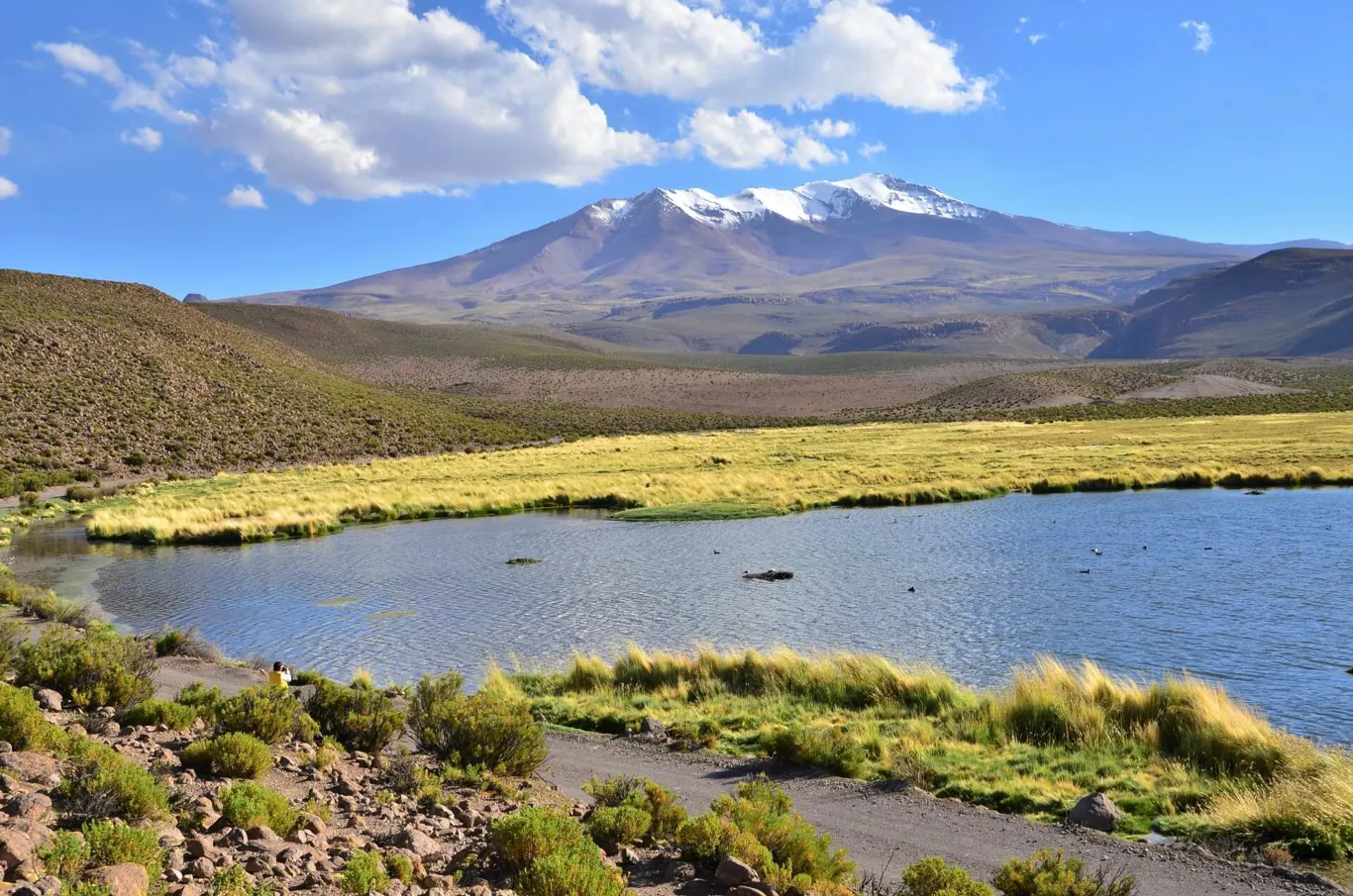
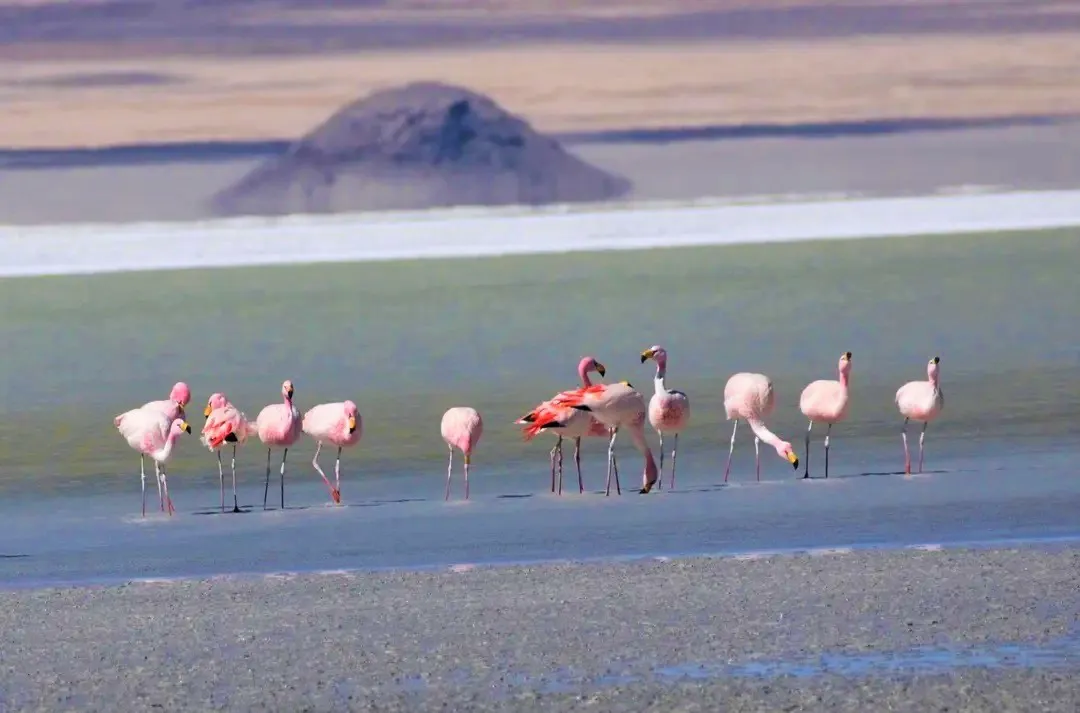
The Salar del Huasco National Park can be visited in a twelve-hour day. It is a high-altitude wetland, a Ramsar site since 1996 , surrounded by mountain ranges that reach nearly 5,000 meters. There you can see Chilean, Andean, and James's flamingos, as well as vicuñas, foxes, vizcachas, and, with a lot of luck, the Andean cat , one of the most endangered felines in South America.
The Red Lagoon is the most demanding. It begins in the Camiña ravine, with the petroglyphs and pictographs of Chilláiza , linked to ancient caravan routes between the coast, the valleys, and the high plateau. It continues through the agricultural village of Camiña and climbs to the lagoon, at about 3,700 meters, with the Green and Yellow Lagoons forming part of the same complex. There are local legends about its origin. It's the best option for those who tolerate altitude well and long days.
Places to visit in Iquique, Chile: museums and heritage
Historical and archaeological heritage occupies a central place among the main attractions of Iquique and its surroundings. This area of northern Chile was a key theater of the War of the Pacific (1879-1884) , a conflict that left visible marks on the territory. Visitors can explore sites linked to battles, stories, and ancestral memories , as well as artifacts that allow them to understand the region's power during that period.
Added to this is a valuable archaeological legacy. In Iquique, vestiges of the cultures that inhabited the desert and the coast are preserved, adapting to an extreme landscape through knowledge and practices that are now recognized in protected sites.
Let's see what places to visit to complete this part of the itinerary.

Esmeralda Corvette Museum
It is located on Avenida Arturo Prat Chacón , facing the harbor of Iquique. This museum offers an immersive experience of the Chilean corvette sunk during the Naval Battle of Iquique on May 21, 1879. It is a full-scale replica, built using the original 19th-century plans.
The exhibition allows visitors to explore the decks, the engine room, and the officers' quarters . The guided tour explains how the naval steam technology of the time worked, the living conditions of sailors at sea, and the geopolitical context that triggered the conflict between Chile, Peru, and Bolivia. It is one of the most educational and rigorous museums in the region.
Regional Museum of Iquique
Located on the central Paseo Baquedano , this museum is essential for understanding the anthropology of northern Chile. Its most valuable room is dedicated to the Chinchorro culture. There, mummies with artificial preparations dating back more than 7,000 years are exhibited (the oldest in the world, surpassing even the Egyptian ones).
In addition, the site has an ethnographic collection that explains the lifestyle of the Aymara people in the highlands and documents the industrial cycle of saltpeter through original tools and photographic records.
Dragon Hill
Dragon Hill is an immense dune, 320 meters high and 4 kilometers long, that encloses the city to the east. It is the epicenter of sandboarding in the region and is considered the largest urban dune in the world, which is why it was declared a Nature Sanctuary in 2005 .
Access is free, so both locals and tourists come to climb the ridge at sunset. This simple outing offers the best panoramic view of the contrast between the arid desert and the Pacific Ocean .

Shopping in ZOFRI
The Iquique Free Trade Zone is one of the reasons many Argentinians travel to the city. The mall operates within the walled city (Convention Building, no street number) and features shops, restaurants, services, and events . Its shopping center, "Mall Zofri," is considered the best outlet mall in Iquique, Chile . It houses hundreds of stores selling everything from cutting-edge technology and perfumes to auto parts and imported liquors , all without the burden of Value Added Tax (VAT).
Foreign tourists must carry an identity document or passport, as the tax exemption system has daily purchase limits regulated by Chilean customs.
Besides the indoor shopping centers, Iquique's open-air markets are ideal for buying local products. The Centenario Market and the Agricultural Fair are outdoor destinations where you can purchase tropical fruits from nearby oases (such as mangoes and lemons from Pica), quinoa from the highlands, and Andean textiles .
What you should keep in mind is the return trip. Entry rules for Argentina, such as how much you can bring in without declaring it or how many cell phones and laptops per person are allowed, change frequently: check the current information from ARCA before traveling and keep receipts for everything you buy. The duty-free allowance that Chilean Customs outlines for those entering the rest of Chile from a free trade zone is different and does not apply to those returning to Argentina. And since the customs area is large, it helps to go with a list and set aside an entire afternoon.
How to combine the days
| Days | Plan |
|---|---|
| 2 days | Tomorrow in the city center and the bay; sunset at Cerro Dragón. The following day, saltpeter mines and the geoglyphs of Pintados. |
| 3 days | Add a day at the beach in Cavancha and an afternoon in ZOFRI. |
| 4 days | Add a long excursion: Pica and La Tirana, the Atacama Giant, or the high plateau. |
Where to stay in Iquique
The distribution of accommodations and hotels in Iquique is well-defined. If you're looking for quick access to the beach and nightlife, it's best to book hotels in the Peninsula area and along Cavancha Beach . Therefore, the choice depends less on the hotel itself than on which part of the city you want to be close to. The listings don't include street addresses or measured distances, so the locations are approximate.
Some recommendations:
Cavancha: beach, restaurants and hotel life
It's the most convenient area for those who want to combine beach time with sightseeing. The four-star Terrado Cavancha is located on Cavancha Avenue and features a balcony overlooking the sea, a restaurant with ocean views, an outdoor pool, and parking.
The Hilton Garden Inn Iquique is a modern 11-story, 123-room building , built in 2016, with a pool and bar, two other bars, a rooftop terrace, free limited-capacity parking, and pets allowed; breakfast is available at an extra charge and it is minutes from the Casino.
The Holiday Inn Express is smaller, with six floors and 116 rooms, and includes a breakfast buffet, free parking, an outdoor pool, and a gym.

Oceanfront
Those who prioritize the view have two options. The four-star Terrado Suite Iquique offers ocean-view suites and penthouses , a swimming pool, spa, breakfast buffet, and gym, just a few minutes' walk from the Dreams Casino and the Esmeralda Corvette Museum.
The three-star Gavina Sens faces the Pacific Ocean, with rooms overlooking the sea or the city, an outdoor pool, a spa with treatments, and a gym; Paseo Baquedano is just minutes away.
Center: at the foot of the historic center
If you prefer walking downtown, the Ibis Iquique is three blocks from the waterfront, 1.6 km from Cavancha Beach and 2.6 km from the ZOFRI Mall, and steps from Baquedano Avenue. It has a restaurant, parking, and is pet-friendly, and most rates include complimentary breakfast.
The RQ Condell Apart Hotel has studios and multi-bedroom apartments with equipped kitchens, which is useful if you're traveling as a family or for several days; there's a breakfast buffet included in almost all of its rates.
Southern sector: quieter and further away
The four-star NH Iquique has 78 rooms and is located in a residential neighborhood with ocean views and gardens , about 32 km from the airport. It offers a shuttle service, an outdoor pool, a restaurant, and connecting rooms, which is convenient for families. Cavancha Beach is just a short taxi ride away.
In a similar area is the three-star Arenas Blancas Hotel , near Playa Brava, with a spa, sauna, gym, swimming pool, and buffet breakfast. Cavancha is about a fifteen-minute walk away.
How many days is it advisable to stay in Iquique?
With three days you can combine the city, a desert excursion, and some beach time. If you want to add the highlands, four days is enough.
How do you get to Iquique from Argentina?
By land, crossing the Jama Pass to San Pedro de Atacama and continuing to Calama and Iquique, or by plane with a layover in Santiago. From Salta it's about 1,000 km and about fifteen hours of driving without stopping.
Which excursion is best if it's my first time in the desert?
Saltpeter mines and geoglyphs of Pintados, or Pica and La Tirana. Those on the high plateau are longer and add to the height.
What is the Atacama Giant?
An 86-meter-high human figure drawn on the hillside of Unita Hill, made between 1000 and 1400 AD. Its meaning is not known for certain.
Can tourists shop at ZOFRI?
Yes, it's a mall open to the public. It's advisable to confirm the conditions on the official website and review the entry requirements for Argentina before returning.
What to do in Iquique in one day?
Explore the city center and the bay in the morning and watch the sunset at Cerro Dragón, or take a trip to the saltpeter mines.