
The Campo de Piedra Pómez (Pumice Stone Field), in Antofagasta de la Sierra, Catamarca , is a place that seems otherworldly. This gigantic desert of white stone and whimsical shapes is located at an altitude of over 3,000 meters in the west of the province , and is a paradise for adventurers.
The best time to visit Campo de Piedra Pómez is between April and November, when temperatures are more moderate and rainfall is scarce . During the summer, the heat can be intense and the roads become treacherous due to storms. However, if you arrange a visit with a qualified guide and stay in a nearby town, such as Antofagasta de la Sierra or El Peñón, you can travel to this northern paradise at any time of year.

It's important to know that access is via an unpaved road branching off the main highway, and it's not easy : 4x4 vehicles and a guide are recommended, as the roads are not marked and the terrain is sandy and uneven. Entrance fees can only be paid electronically, and it's best to arrive before 3:00 PM. It's 63 km from Antofagasta de la Sierra and 35 km from El Peñón.
Next, let's see how to get to the protected natural area of Campo de Piedra Púmez in Catamarca from other parts of the province. We'll also explore the best excursions in this area and what else there is to do in Antofagasta de la Sierra .
| Where | Antofagasta de la Sierra, Catamarca (Catamarca Puna) |
| Height | More than 3,000 m |
| Extension | A stretch of about 25 km of light-colored rock |
| From the Rock | 35 km |
| From Antofagasta de la Sierra | 63 km |
| From San Fernando del Valle de Catamarca | 550 km |
| Vehicle | 4x4 with guide, only following marked tracks |
| Pay | Electronically, at the ranger station or in advance |
What is the Pumice Stone Field and why does it have those shapes?
This is a field of light-colored volcanic rock, at over 3,000 meters, where the wind has sculpted shapes resembling waves, labyrinths, and sculptures over millions of years. The pumice stone was formed from ash and material ejected by eruptions, and it is such a porous and lightweight rock that it wears down easily . This is why the landscape appears so sculpted, and why it is also fragile: a wheel track leaves a mark that the wind takes a long time to erase.
Unlike other desert landscapes in Argentina, this one has a space-like aesthetic . As the sun moves across the sky, the formations shift from pure white to soft gold, and the shadows accentuate the natural shapes. That's why many compare hiking here to exploring the surface of the moon or Mars .
The color depends on the time of day. At midday, the rock is almost white and dazzling; in low light, it turns gold and pink, and the shadows of the formations lengthen. If your priority is photography, the afternoon shift offers better light, but leaves less room for the closing time.

Entrance to the Pumice Stone Field: how to pay and rules of care
From June 2025, entry to the protected area is payable electronically only , by card or bank transfer at the Ranger Station. Cash is not accepted, and fees vary depending on the category (foreigners, Argentinians, Catamarca residents, and others). There is an additional charge if you enter with a private 4x4 vehicle, so it's advisable to check the current rate before setting out .
Entry is permitted before 3:00 PM, and travel is restricted to marked tracks, 4x4 vehicles, and certified guides. This is not a mere formality: in February 2024, a pickup truck left the trail, leaving tracks approximately four centimeters deep, drove onto a rock formation, and caused it to collapse . The park ranger filed a report, and three people were detained. On terrain like this, even a single vehicle off the marked tracks causes irreparable damage.
Excursions to the Pumice Stone Field: which one to choose
There's more than one way to visit this spectacular landscape of the Catamarca highlands. Some tours offer a full-day adventure, others several days, combining the Pumice Stone Field with other landscapes of the highlands : salt flats, high-altitude lagoons, lava fields, natural hot springs, and villages. Keep in mind that the field is almost always visited in conjunction with another location, and this combination greatly changes the experience of the day.

Pumice Stone Field from Antofagasta de la Sierra
The excursion to the Pumice Stone Field is a day trip of about seven hours. Before reaching the field, the route passes through Carachi Pampa, a volcano with dark basalt flows that contrast with the salt flat and a colorful hill.
The next stop is Laguna de Carachi Pampa , where the water changes color in the sunlight, and Andean flamingos stand out against the monochromatic landscape. Here you can clearly see how highly saline waters, a fertile plain, and recent volcanic rock coexist within just a few kilometers.
Once at the Pumice Field , a half-hour walk offers the opportunity to explore this unique place with the guidance of a local expert. Upon returning, the silica sand dunes await, formed by the erosion of the Pumice Field.
Pumice Stone Field by 4x4 from El Peñón
If you're in El Peñón or planning to spend part of your stay there, you can join a 4x4 tour of the pumice desert . The speed adds a special character to the panoramic views. You'll also have the option of visiting Carachi Pampa or Dunas Blancas .
The activity takes between four and five hours. It's the shorter option, as the camp is 35 km away. It departs from El Peñón in the morning or afternoon, and offers free cancellation up to seven days in advance, a wider window than the other excursions.

La Rioja to Antofagasta de la Sierra package: volcanoes, salt flats and Campo de Piedra Pómez
The package tour to Antofagasta de la Sierra, featuring volcanoes, salt flats, and the Campo de Piedra Pómez (Pumice Stone Field), spans several days. The first day is for arrival. The second day includes a visit to Londres, the ruins of El Shincal (an Inca administrative center), Belén, the Cuesta de Randolfo, and Laguna Blanca before reaching Antofagasta de la Sierra .
The third leg includes, in addition to the Campo de Piedra Pómez (Pumice Stone Field), the Pucará de La Alumbrera, the Antofagasta volcano, and the Peñas Coloradas petroglyphs . The fourth leg goes to the Salar de Antofalla or the Galán volcano, depending on the weather, and the fifth leg is the return trip.
Best time to visit the Pumice Stone Field, month by month
From April to October, access is more predictable, as the risk of storms and unstable roads increases during the summer. A useful rule for any month: check the forecast the day before and confirm with the guide before setting out .
If you plan to spend more than one day in the area, leave a day off to avoid altitude sickness. The entire route is above 3,000 meters, and several points exceed 4,000 meters. If you're coming from sea level and haven't allowed yourself time to acclimatize, you'll likely experience headaches, nausea, and extreme fatigue on your first day. Drink water, eat light meals, avoid alcohol the first night, and walk slowly .
Tangol's salt flat excursions include oxygen tanks and satellite phones ; however, those with heart or respiratory problems should consult their doctor before traveling. Bring sunscreen and lip balm, sunglasses, layers of clothing, and water at any time of year: the high-altitude sun is intense, even in winter.
Pumice Stone Field in Autumn
April to June is the most comfortable time to visit: sunny days, cool nights, and less risk of rain . There's a greater temperature range than you'd expect in a desert, so you can go from a t-shirt to a jacket in just a few hours.
Pumice Stone Field in winter
In July and August, the nights are below freezing and the mornings start out very cold, although the midday sun warms things up nicely. The landscape is clearer and there are fewer people. For the morning shift, dress in layers and don't take off your hat until the sun is high.
Pumice Stone Field in Spring
In September and October, the days get longer and the temperatures gradually rise. It's still the season for firm footpaths , and it's the period when the longer mountain routes, like the one to Fiambalá, are still open.
Pumice Stone Field in summer
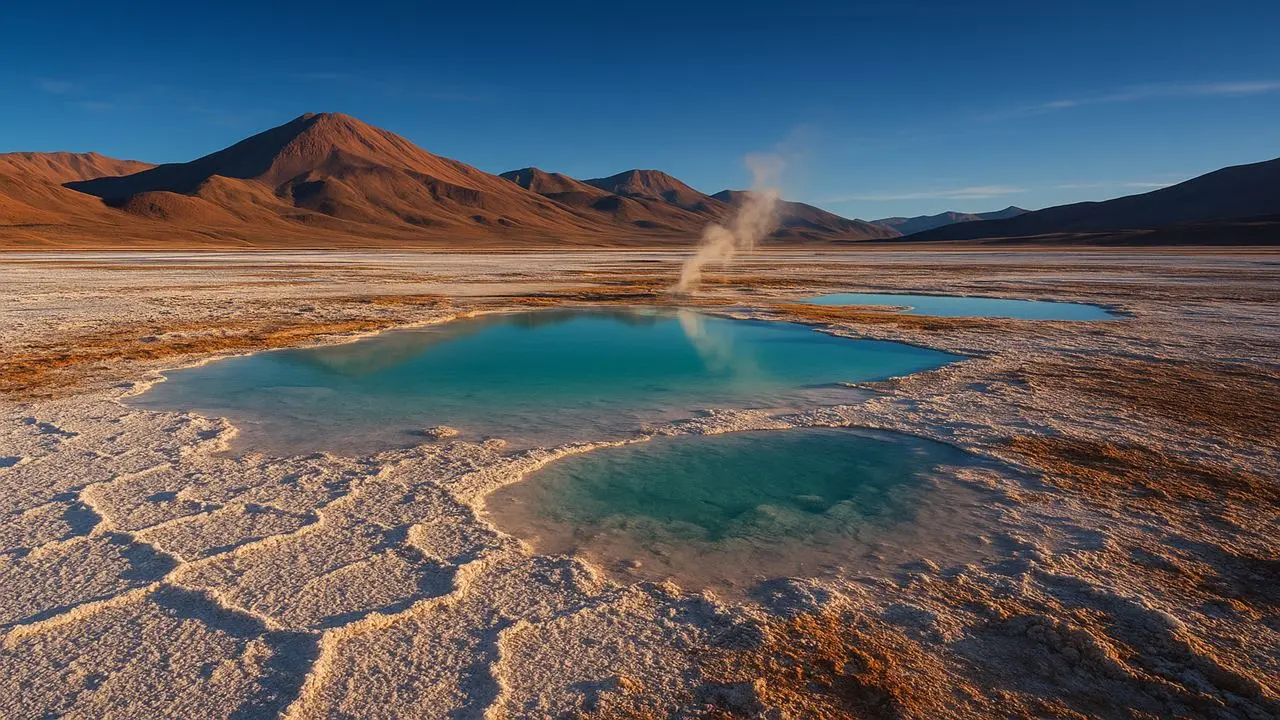
The most unpredictable time is from November to March. Summer storms at high altitude are brief but intense, and the sandy or gravel roads become unstable . The midday heat is intense due to the altitude and lack of shade. Visiting isn't impossible: tours operate, but it's advisable to book with flexible dates to allow for delays in case of road conditions.
How to get to the Pumice Stone Field
The property is located approximately 40 kilometers from the town of El Peñón and 530 kilometers from San Fernando del Valle de Catamarca , the provincial capital. It is accessed via a turnoff from Provincial Route (RP) 43, which is also the main access road to Antofagasta de la Sierra.
There's a practical detail that's often overlooked: in the Puna region, there's no cell phone signal along much of the route, and the distances between gas stations are long. Fill up whenever you can and bring water and food. Let's see how to get there from each point according to your travel itinerary.

From El Peñón and Antofagasta de la Sierra
The most direct access is from El Peñón , 35 km from the property. From Antofagasta de la Sierra it is 63 km via a gravel and sand road.
From San Fernando del Valle de Catamarca
From the provincial capital, it's about 550 km. To reach the entrance from San Fernando, take National Route 38 west for about 70 kilometers to Cumbicha, on the border with the province of La Rioja. From there, turn right onto National Route 60 heading north for another 130 kilometers. It's several hours of driving, and it's advisable to stay overnight in El Peñón or Antofagasta de la Sierra instead of trying to do a day trip.
From Fiambalá and Tinogasta: the road through Chuquisaca
To reach the pumice field from Fiambalá, take National Route 60 southeast until it connects with National Route 40 heading north , following the same route as from the capital. The distance from Tinogasta to the pumice field is slightly less, as this town is closer to National Route 40, so the journey is the same but shorter.
There is a mountain trail with a crossing of the Las Papas river, available only from April to October and recommended only with a guide.
What to do in Antofagasta de la Sierra
A visit to the White Desert is perhaps the best activity to do from Antofagasta de la Sierra, but it's not the only one. To begin, there's nothing better than a stroll through this small town in the Puna region, with its quiet streets and low houses, where the desert landscape and distant volcanoes set the pace of life . If you're already in town, one or two full-day excursions will completely transform the experience.

Excursion to the Galán Volcano
Just outside the town, the Galán Volcano is one of the most impressive attractions. Its 40-kilometer-diameter caldera forms a mountain that rises above a landscape of volcanic rock at almost 5,000 meters above sea level . The same excursion to Cerro Galán also includes visits to Laguna Diamante, Laguna Grande , and nearby viewpoints.
The route passes through Campo de las Tobas, with its pre-Hispanic rock art, and Cañón del Real Grande , with walls up to 70 meters high. From the viewpoint on the western rim, at 4,840 meters, the view overlooks Laguna Diamante; inside the volcano are geysers, Laguna del Pabellón, Los Peñones, and Laguna Grande. The return journey passes through El Peñón.

Excursion to the Antofalla Salt Flat
He The tour to the Antofalla Salt Flat takes between 9 and 10 hours. It's the most comprehensive excursion in terms of landscape changes: Laguna Colorada, Quebrada de Calalaste, a viewpoint overlooking the salt flat at 4,000 meters, Laguna Verde, and the town of Antofalla, where the church and mill date back to the mid-18th century. Surrounded by volcanoes and multicolored hills, the salt flat offers panoramic views that invite you to explore its edges and visit small lagoons teeming with wildlife.
On the way back, there are circular lagoons in Ojos de Campo and, in the Botijuela area, a thermal water pool next to an extinct geyser where you can dip your feet. Lunch in Antofalla is not included.

Excursion to the Salar del Hombre Muerto
The Salar del Hombre Muerto (Dead Man's Salt Flat) is a long day trip, taking 7 to 10 hours. It starts on Provincial Route 43 and begins with a viewpoint in Paicuqui, at over 3,500 meters, offering a view of the town. The route then follows the Trapiche River, a good spot for vicuñas, llamas, flamingos, and, with luck, partridges and trout, before reaching the salt flat viewpoint at 4,000 meters. On the return journey, the route passes by the Incahuasi mine, which, according to tradition, has been in operation since Inca times, and by the Laguna del Caro viewpoint.
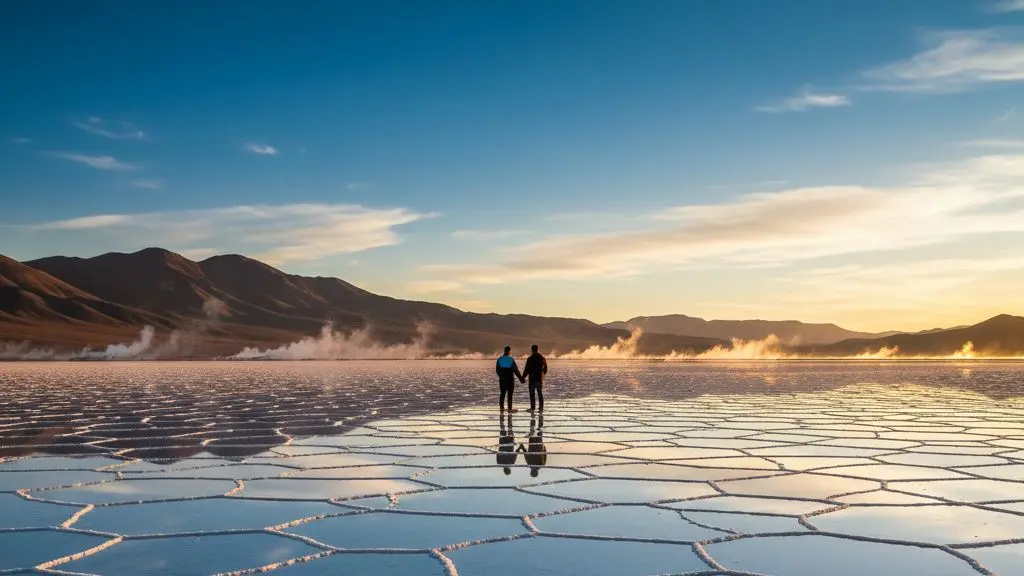
The area is known for its mining activity, but it also attracts tourists for its landscapes, where the salty soil reflects the sky like a mirror .
Is it possible to go to the Pumice Stone Field without a 4x4?
No: entry is by 4x4 and with a certified guide, by marked tracks.
How do I pay for entry to the Pumice Stone Field?
Only electronically, at the ranger station or in advance.
Until what time can you enter the Pumice Stone Field?
It is recommended to enter before 3 pm.
How long does the excursion to the Pumice Stone Field last?
An excursion from El Peñón takes between four and five hours; from Antofagasta de la Sierra, about seven.
Is it possible to reach the Campo de Piedra Pómez from Fiambalá?
There is a mountain road open from April to October. The new road through Chuquisaca was not yet open as of October 2026.
Is the Pumice Stone Field suitable for children?
The physical difficulty is low, but the altitude and travel time outweigh the walking. Check availability based on age.