
Buenos Aires has had art on its walls long before the term "street art" existed, and today you can find it in almost every neighborhood. The problem with finding it is its dispersion: it's spread across areas that are far apart, some pieces change from year to year, and others are located on blocks where there's nothing else to see. Knowing which neighborhood is best depending on the time you have makes a big difference to your route .
In this guide, you'll find the city's most famous murals, what you can see on your own, when a guided tour is recommended, and which excursions best cover each area. If you prefer to look directly at guided tours, they're all in the Buenos Aires excursions category.

How to explore the murals of Buenos Aires
The first decision is how much you want to travel. The murals in Palermo, Colegiales, and Villa Crespo can be explored on foot in an afternoon . La Boca can be seen in a short, focused visit. However, the murals in Villa Urquiza, the Maradona mural, and the soccer murals are spread out , and a car or a tour with transportation saves more time than you might think.
| Area | What are you going to see? | How to travel | For whom |
|---|---|---|---|
| Palermo Soho and Hollywood, Colegiales | Street art by various artists, in passageways and along party walls | On foot, with stretches of 2 to 4 km | For those who want to see a lot in a short amount of time |
| La Boca and Caminito | Colorful facades and works linked to Quinquela Martín | On foot, in a small area | Anyone visiting the neighborhood for the first time |
| Villa Urquiza | A large-scale mural by Martín Ron | Only one work is visited; you have to go all the way to the neighborhood | Who follows Martín Ron? |
| Pasteur-AMIA | Memorial work associated with the 1994 attack | Subway B and short walk | He's looking for historical context, not a photo tour |
| Constitution, San Telmo, La Paternal, Palermo | Murals of Maradona and Messi | By car or bicycle: the points are spaced apart | Those who come through football |
| San Telmo | Fileteado porteño, which is street painting from another tradition | On foot, with a class included. | Who wants to do something besides watch? |
Murals in Palermo and Colegiales: the easiest route to do on foot
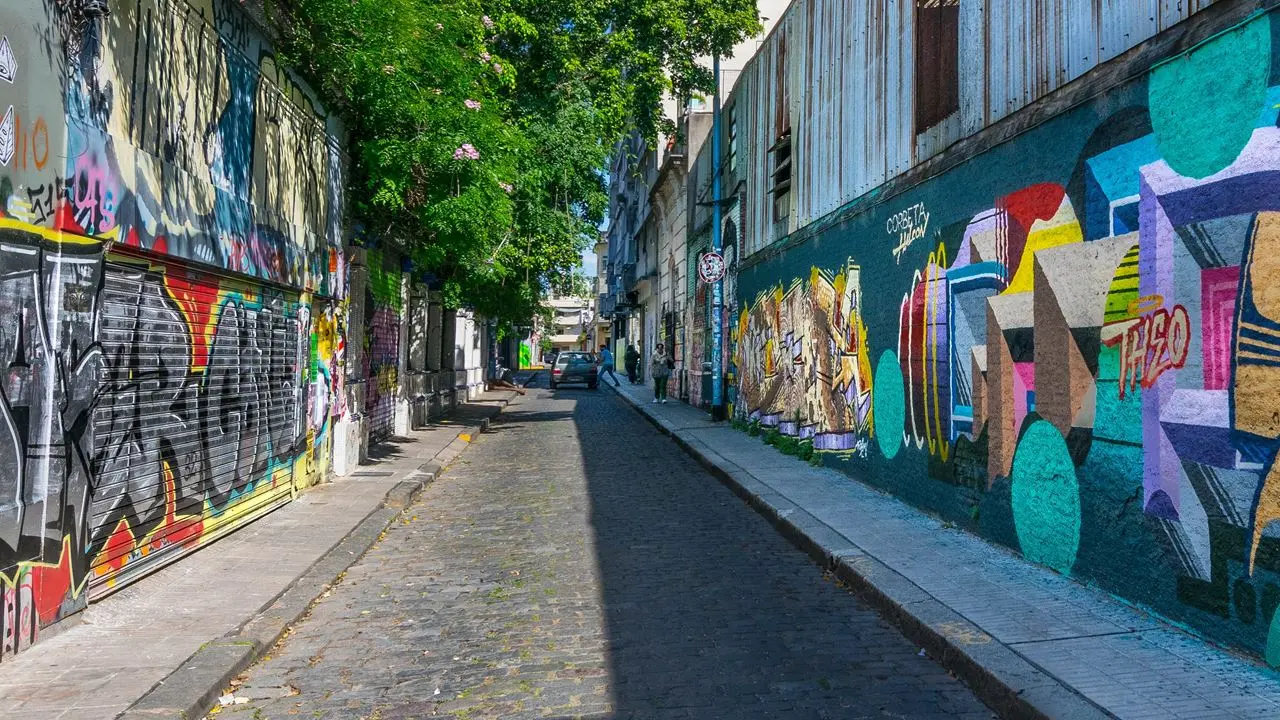
Palermo is the neighborhood with the most street art, so one visit is enough to see it all without much planning. A good starting point is Plaza Serrano , from where the streets and alleyways with the most artwork radiate outwards .
Street art in Palermo Soho
Among the works that are usually mentioned are the Astronaut on a bicycle by Chispart , the collage Love is in the Air in the Santa Rosa Passage and the painted facade of the Growlers bar .
The most important thing to know about street art in Palermo is its constant rotation: what you see in a photo from two years ago might be covered by another layer of paint. So, if you want to see current works and not go looking for a wall that's no longer there, a guide who regularly visits the area will save you from wandering around blindly .
The Palermo Graffiti Walking Tour departs from Plaza Serrano, operates in small groups, and covers between 2 and 4 kilometers on flat terrain. The itinerary is adjusted to accommodate new artwork and current cultural events, and this adjustment is the very reason for the tour's existence. There's a break for coffee, and the walk is suitable for children and teenagers, although some sidewalks are uneven.
Colegiales and Palermo Hollywood: art outside the tourist circuit
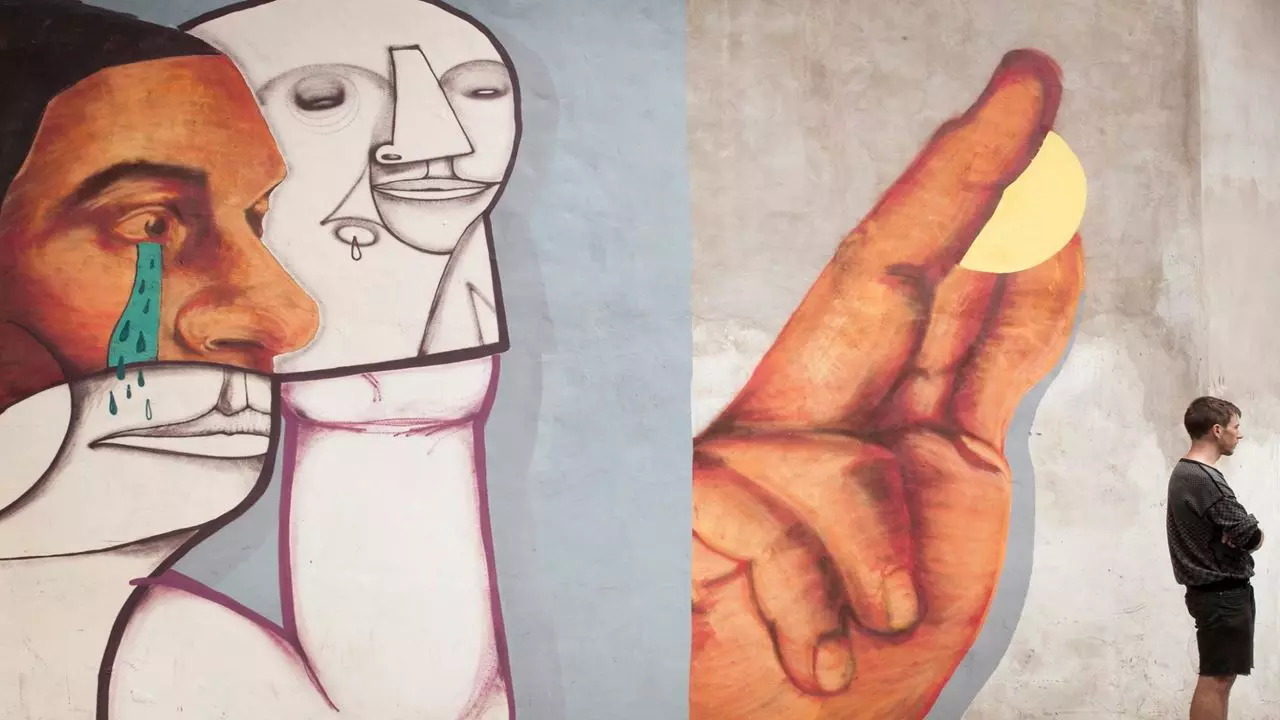
North of Palermo Soho, Colegiales and Palermo Hollywood have less tourist traffic and more alleyways with artworks not found in standard guidebooks . Palermo Hollywood gets its name from the many television production companies that set up shop there in the 1990s and 2000s, and its walls and facades are frequently adorned with murals.
For this section, there's the Graffiti Tour through Palermo and Colegiales , a two-hour afternoon walk with an English-speaking guide that aims to showcase hidden gems . It operates with a minimum of five passengers: if you're traveling alone or as a couple, check beforehand which departures are confirmed.
Murals in La Boca and Caminito: art, immigration and Quinquela Martín
In La Boca, the name that governs everything is that of Benito Quinquela Martín , the painter who captured the port and left his mark on the neighborhood. Caminito, the open-air museum, was born from his initiative, using an abandoned railway line . It's said that the colors of the houses come from leftover paint from ships, and although the anecdote is difficult to verify, it explains why the entire neighborhood seems painted with whatever was available.
The tour is short and designed for visitors: it's best to go with plenty of time, without rushing, and keeping in mind that the area gets crowded at midday. La Boca doesn't have a subway; you can get there by bus or car , and it's best not to stray too far from the main streets.

Murals by Martín Ron: from Villa Urquiza to the AMIA
Martín Ron is one of the most popular muralists on the streets of Buenos Aires, and for a specific reason: he paints on a building scale and in hyperrealism, and that makes his works recognizable from afar .
The Tale of the Parrots, in Villa Urquiza
In 2013, Martín Ron painted "The Tale of the Parrots ," a giant mural in Villa Urquiza, documented on Google Arts & Culture and in the Buenos Aires Street Art archive . It measures approximately 400 square meters and can be seen at the intersection of Holmberg and Rivera streets.
It's one of the few visits that makes sense just to see one piece of art: the neighborhood is residential and there are no other murals nearby, so it's best to combine it with another outing.
Walk of Remembrance: Pasteur–AMIA
The Walk of Remembrance brings together works of art at the Pasteur-AMIA station on subway line B and at the AMIA building , commemorating the 85 victims of the July 18, 1994 bombing. It's a place to visit with a different mindset: not a photo opportunity, but a site of remembrance, and it's best to visit it with respect and time. The station was renovated and reopened in July 2024, and AMIA unveiled a new facade for its 130th anniversary.
A few blocks away, at the western end of Plaza Houssay, there are three murals on the exterior walls of the Hospital de Clínicas in Buenos Aires. They were painted in 2019 by the artists Mariano Antedoménico ("El Marian"), Martín Ron, and Mariela Ajras , curated by Elio Kapszuk and commissioned by AMIA as the closing project for the Memory Corridor.

Murals of Maradona and Messi: the football route through Buenos Aires
The sports murals are the clearest example of why going with a guide is worthwhile, because the works are scattered throughout neighborhoods that are not connected on foot.
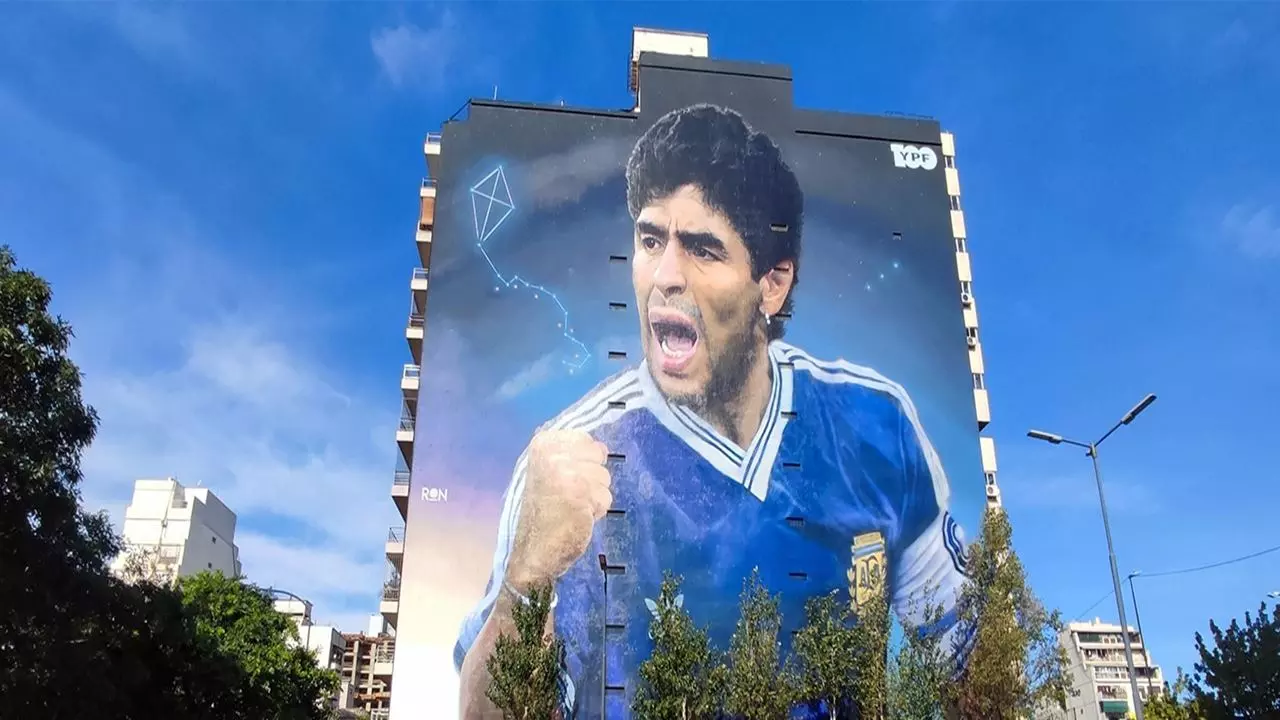
The Diego Maradona mural in Constitución , by Martín Ron, was inaugurated at the end of October 2022, near Maradona's birthday and shortly before the Qatar World Cup. The press publicized it as the world's largest mural dedicated to him.
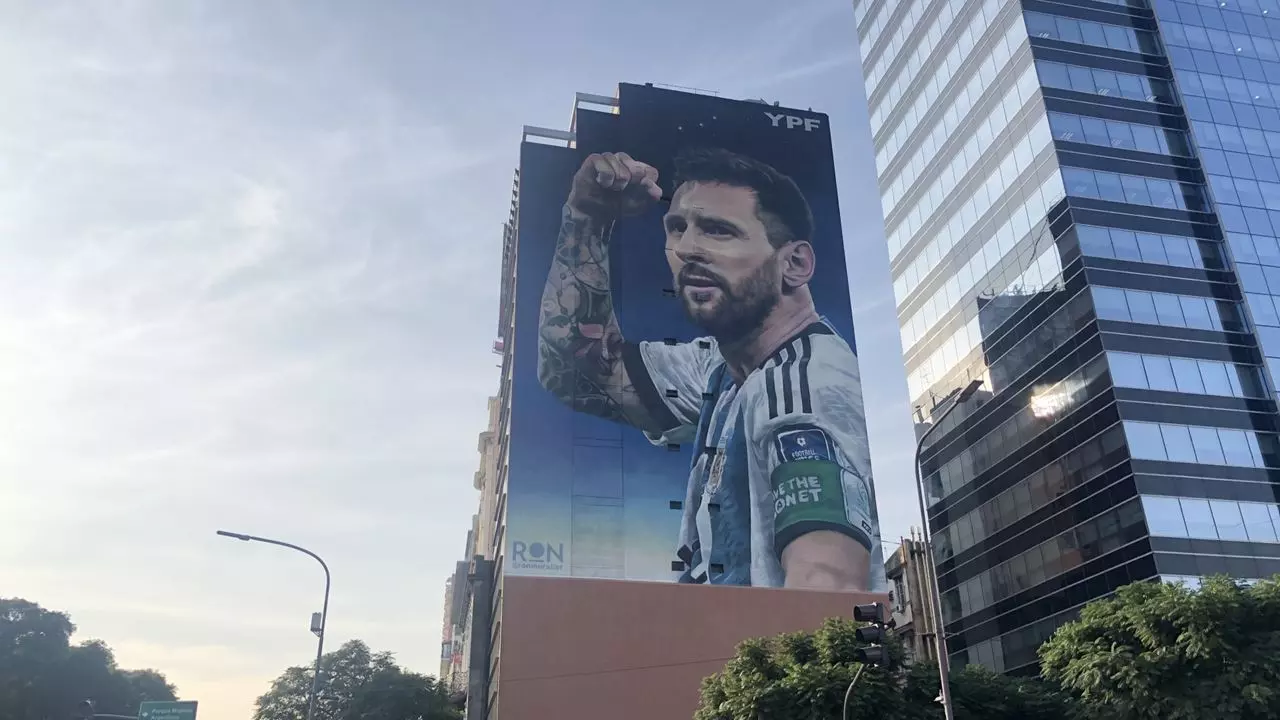
A year later, the same artist painted the Messi mural on 9 de Julio Avenue , which was finished on the first anniversary of the World Cup victory. Two other notable examples are the murals of Messi with the Cup and of "Dibu" Martínez at Gorriti 5428 and Atacalco 1705 .
The best way to learn about these works is through The Argentine Football Graffiti Tour departs at 2 PM from the Tangol office in San Telmo and is a car tour with some walking stops. It begins with three murals close to each other: Messi doing the "Topo Gigio," the gesture of putting his hands to his ears with which he celebrated a goal in the 2022 World Cup; Maradona with a ball; and Di María celebrating with his heart gesture.
Then you arrive at the giant mural of Maradona and another of Messi by the same author, and from there to the Diego Armando Maradona Stadium, in La Paternal , which is the stadium of Argentinos Juniors, the club where Maradona debuted in 1976.
The tour includes Maradona's first house after leaving Villa Fiorito. The return journey passes through Palermo, with murals of the 2022 World Cup-winning team (including the save by "Dibu" Martínez and Messi lifting the trophy) and the facade of a bar featuring Passarella, Maradona, and Messi. It ends around 5 PM at a café in Palermo.
Fileteado porteño: the street art of San Telmo that you can learn
Fileteado isn't a mural, but it's the oldest folk art tradition in the city . It originated as decoration for carts carrying merchandise in the early decades of the 20th century, later spreading to trucks and buses. It's characterized by flowers, swirls, and popular phrases, always painted with a brush and using continuous strokes. UNESCO included it on its list of intangible cultural heritage in 2015.
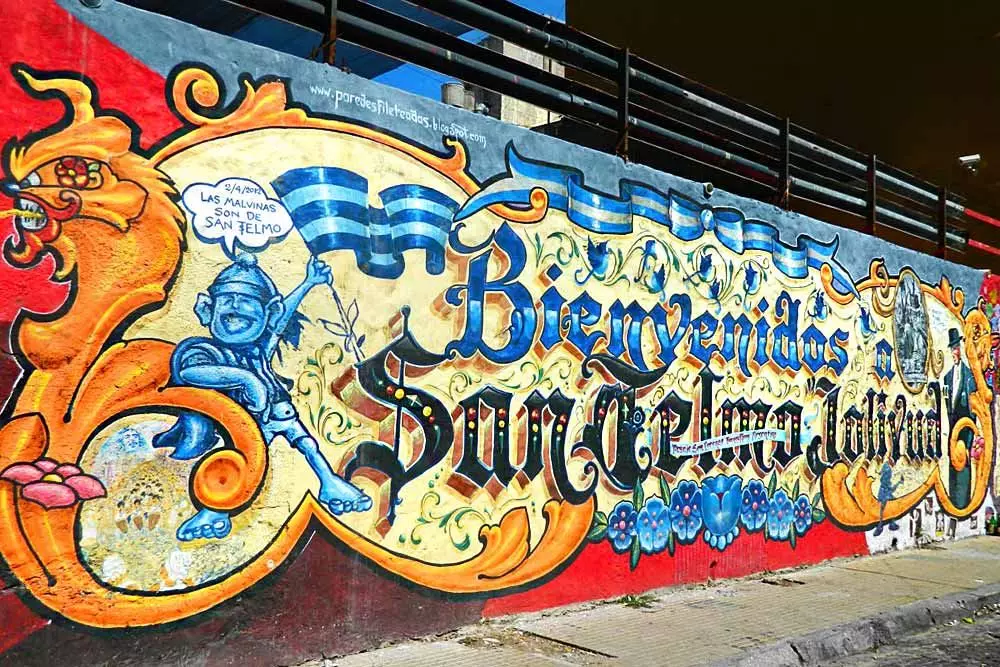
The Fileteado Porteño Tour combines a 3-hour walk through San Telmo with a class taught by a Master Fileteador (traditional Argentine sign painter). It departs from the Notable Bar El Federal, located at Carlos Calvo 599, and passes by the San Pedro González Telmo Church and the San Telmo Market. Tours run from Thursday to Sunday and include class materials and a certificate of participation. It's a great option if you want to take home something you've made yourself, not just photos.
Graffiti tour in Buenos Aires: which one to choose depending on your time
The four excursions cover different things, and the difference lies in the language, the days, and how much you walk.
| Excursion | Area | Approximate duration | When does it come out? | Language |
|---|---|---|---|---|
| Palermo Graffiti Walking Tour | Palermo (Serrano Square) | 2 hours | Monday, Wednesday, Friday and Saturday, 3:00 PM | Confirm (English or Spanish and English) |
| Graffiti Tour Palermo and Colegiales | Colegiales and Palermo Hollywood | 2 hours | Confirm days, 3:00 PM | English |
| Graffiti Tour Argentine Football | San Telmo, La Paternal and Palermo, by car | 3 hours + snack | Every day, 2:00 PM | Spanish, English and Portuguese |
| Porteño Fileteado Tour | San Telmo | 3 hours | Thursday to Sunday, 3:00 PM | Confirm |
If you only have an afternoon and want to see street art, the Palermo Graffiti Walking Tour is the simplest option. If you're there for the football, the driving tour is the only way to connect the points that would take a whole day to explore on foot. And if you're more interested in an experience than a photo walk, the fileteado (traditional Argentine decorative painting) class is the most unconventional.
Murals on your own or with a guide: what's best in each case
Going it alone works well in Palermo Soho and Caminito : the murals are visible and the route is short. A guide is recommended in three situations: when the murals change frequently (Palermo), when they are scattered (football murals), and when the value lies in the unseen history (Pasteur-AMIA, Caminito, and Quinquela). A guide also knows what was painted or covered up last week, and in a city where murals are constantly being renewed, that's worth more than a printed guidebook list.

Tips for visiting murals in Buenos Aires
The late afternoon light, when the sun is lower, is more comfortable for photographing walls than midday , which flattens the colors. Wear comfortable shoes: even the "easy" tours involve standing and walking several kilometers.
In La Boca and other less busy areas, keep an eye on your phone and avoid straying from main streets. Some tours are rescheduled in case of heavy rain; however, the fileteado tour, according to its information sheet, is not canceled due to bad weather, so bring an umbrella.
Finally, murals are works in the street: they are not touched, retouched, or painted over .
Where are there more murals in Buenos Aires?
Palermo has the most recent urban art, especially around Plaza Serrano and in Colegiales. La Boca has the oldest tradition. The largest murals are in Constitución, Villa Urquiza, and Belgrano, away from the main muralist circuits.
Where is the Maradona mural?
In the Constitución neighborhood. It's the work of Martín Ron and was inaugurated in October 2022. There are other works dedicated to Maradona in San Telmo, La Paternal and Palermo, which can be seen on the Argentine Football Graffiti Tour.
Can the murals be viewed for free?
Yes, the artworks are in public spaces and there's no charge to view them. What you pay for on a tour is the guide, the context of each piece, and, in some cases, transportation.
How long does a graffiti tour in Buenos Aires last?
The Palermo and Colegiales sessions last between 2 and 3 hours, and the football session around 3 hours, plus a snack. The schedules show different ranges, so it's best to confirm the time for your date.
In what language are the graffiti tours conducted?
It depends on the tour: the one in Colegiales is done in English, the football tour can be in Spanish, English or Portuguese, and for the Palermo tour you have to confirm the language when booking.
Is it safe to walk around murals?
In Palermo and Colegiales, during the day, yes, with the usual precautions you would in a big city. In La Boca, it's best to stay close to Caminito and the bustling streets.